
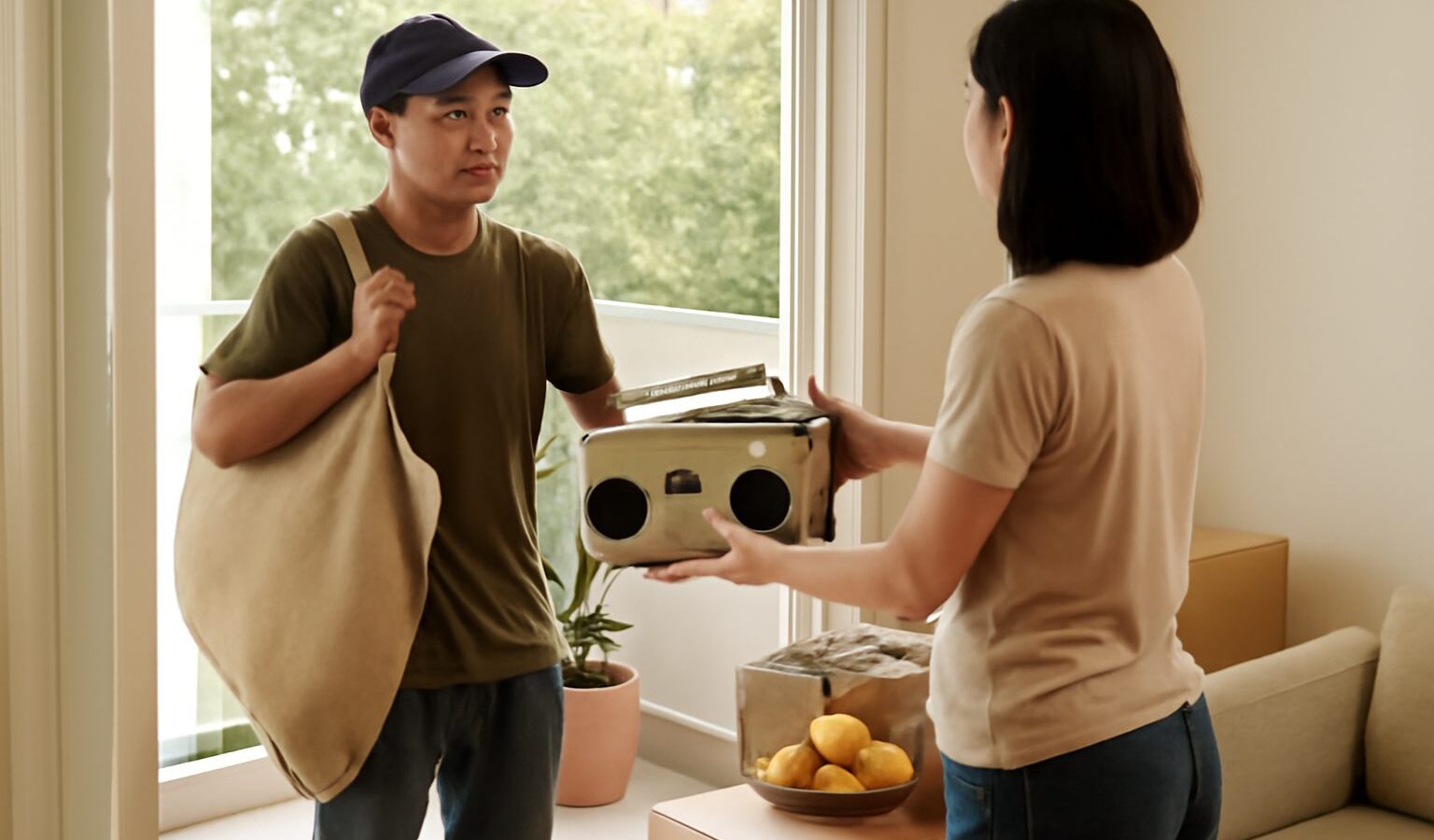
If you have just moved into a Singapore flat and hear a horn honking followed by a recorded call of “karung guni, poh zhi gu zua”, that is the karung guni man doing his rounds. The karung guni in Singapore are the local version of the rag-and-bone trade: mobile collectors who buy old newspapers, clothes, electronics and appliances door to door. For a newcomer clearing out packing boxes or an old television, they are one of the quickest ways to turn unwanted items into a bit of cash while keeping things out of the bin. This guide explains who they are, how they price things, and the other routes worth knowing when you want to sell, donate or recycle.
Who Are the Karung Guni and What They Collect
The name comes from the Malay words for a gunny sack, the coarse bag collectors once slung over their shoulder. Today most arrive by lorry or van, moving slowly through Housing and Development Board (HDB) estates and honking to announce themselves. They are small independent traders, not a company you can call, so meeting one is a matter of being home when they pass. In many blocks they come by on weekend mornings.
They typically take old newspapers and cardboard, worn clothes and shoes, working or broken electronics such as laptops and phones, kitchen appliances, and metal items like old woks or fans. Some also take furniture if it is small enough to carry. If you come from a mainland city, think of them as the neighbourhood 收废品 uncle, except they usually pay you rather than charge, and they weigh paper and metal by the kilo.
Karung Guni Versus Selling Online
The karung guni is convenient but rarely the top price. A newcomer clearing a flat usually mixes routes: sell anything with real resale value online, and hand the low-value bulk to the collector. The table below compares the common options so you can decide item by item.
| Route | Best for | Typical payout | Effort and speed |
|---|---|---|---|
| Karung guni man | Old paper, metal, tired appliances | Low, by weight or a token sum | Very easy, but you must be home when he passes |
| Carousell or Facebook groups | Furniture, gadgets, branded goods in good order | Highest, you set the price | More effort: photos, chats, meet-ups |
| Cash-for-electronics shops | Working phones, laptops, cameras | Moderate, instant | Easy, quick, prices vary by shop |
| Donation or recycling | Usable items nobody will buy | None, but a clear conscience | Easy, and it keeps items in use |
As a rule, if an item still works and someone would search for it, list it first. If it is only worth its weight in paper or scrap metal, the karung guni is the sensible choice.
Getting a Fair Price and Staying Safe
Karung guni pricing is informal and negotiable. Paper and metal go by weight, so a small kitchen scale at the door helps you sanity-check the figure. Appliances and electronics are priced by eye, based on what the collector thinks he can resell or strip for parts. It is normal to haggle politely, and equally normal to say no and keep the item.
A few sensible habits protect you. Wipe every phone, laptop or router back to factory settings and remove SIM and memory cards before handing it over, because you cannot get data back afterwards. Never give away documents, and shred anything with your name, NRIC or FIN, bank details or address rather than selling it as scrap paper. Deal at your doorway or the void deck in daylight, and if a collector pressures you or the situation feels off, simply close the door. These are ordinary traders, but the same caution you would use with any stranger applies.
Selling, Donating and Recycling the Rest
Singapore gives you good alternatives when the karung guni will not take something or you would rather it went to use.
- Carousell is the dominant local marketplace, closer to Xianyu than to Taobao, and it is where most resale happens. Meet in public, and use PayNow or cash rather than clicking unfamiliar payment links, as fake-buyer scams do exist.
- Facebook groups such as neighbourhood “buy nothing” and free-to-good-home pages are ideal for giving items away quickly.
- Charities including the Salvation Army and various thrift shops accept clean clothes, household goods and some furniture; several offer collection for larger donations.
- Recycling goes into the blue commingled bins found at most HDB blocks, for clean paper, cardboard, plastic, glass and metal. The national Recycle Right guidance from the National Environment Agency (NEA) explains what belongs there, and e-waste has its own bins and collection points under the producer-responsibility scheme.
Clearing electronics through official e-waste channels matters, because batteries and screens should not go into a general bin or, ideally, be broken up for scrap at your door.
Bulky Items and Town Council Disposal
Large items that nobody wants, such as a broken sofa, mattress or wardrobe, are handled through your town council rather than the karung guni. Every HDB estate falls under a town council, and each runs a bulky-item removal service. Arrangements and any charge differ between town councils, so check your own town council’s website or hotline for how many items you may dispose of and how to book a collection. Do not simply leave large items at the void deck or rubbish chute, as illegal dumping can attract enforcement action.
For a smooth handover, keep the item indoors or in an agreed spot until the scheduled date, and follow whatever labelling or slot your town council asks for. Between the karung guni for small stuff, online sales for anything of value, donation for usable goods and the town council for the truly bulky, a newcomer can clear a whole flat without much waste.
Explore more
Settling in means learning dozens of small local systems like this one. If parcels from home are still arriving, see our guide to receiving parcels and mail from China in Singapore. If you are fitting out a new place, read renovating your HDB flat, and for daily travel around town see SimplyGo and concession cards explained.