
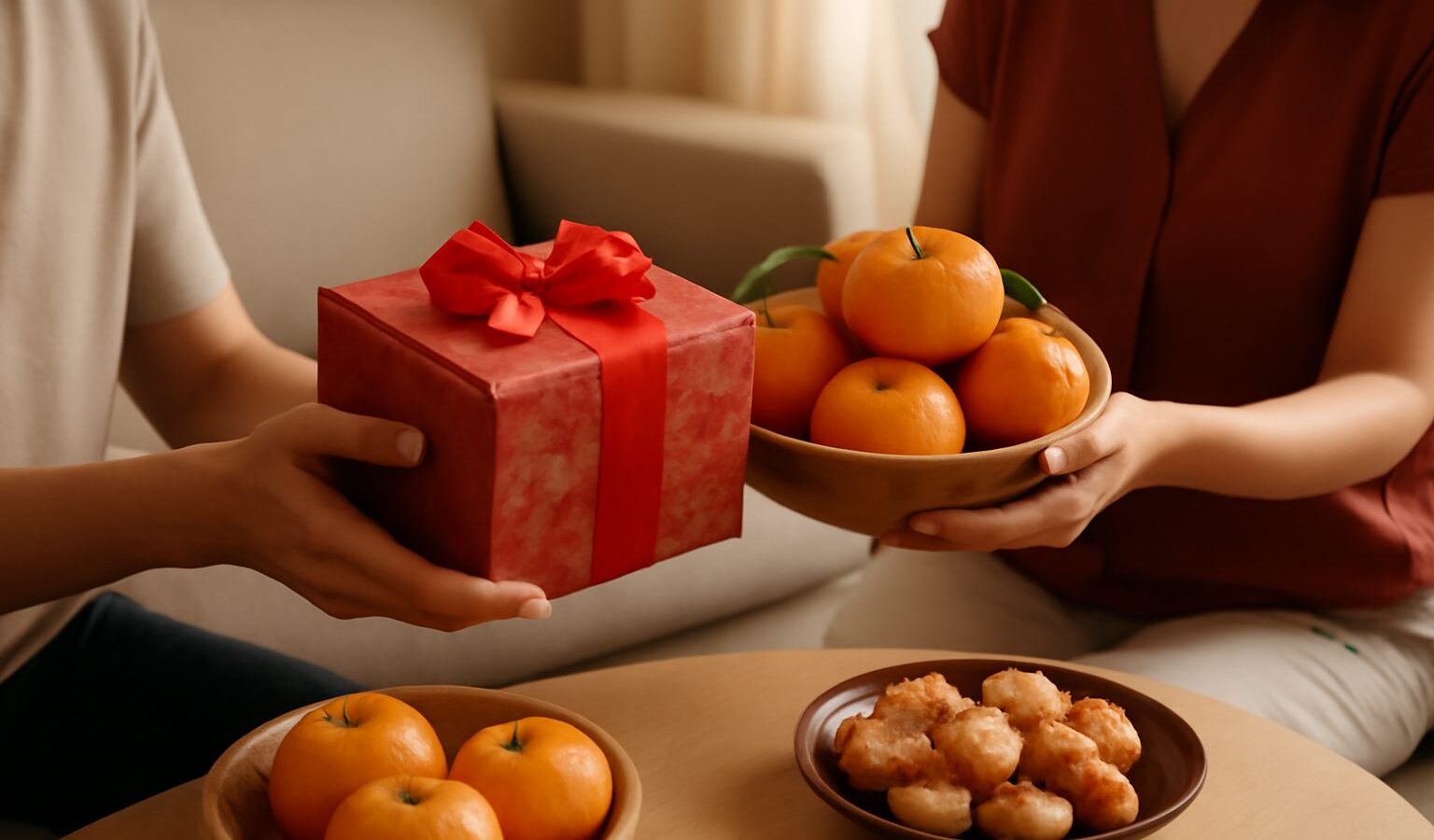
Chinese New Year visiting, often called bai nian (拜年, paying New Year calls), is one of the busiest social stretches of the Singapore year. Over the first few days you may drop by grandparents, uncles and aunts, a colleague’s open house and a friend’s new flat. Each visit raises the same small question: what should you actually bring?
This guide focuses on CNY house visiting gifts from the guest’s side. It covers the mandarin orange custom, which snacks and hampers suit which kind of host, and the items many Singapore families quietly prefer you leave at home. Customs vary a lot between families, dialect groups and generations, so treat everything here as commonly seen practice rather than strict rules.
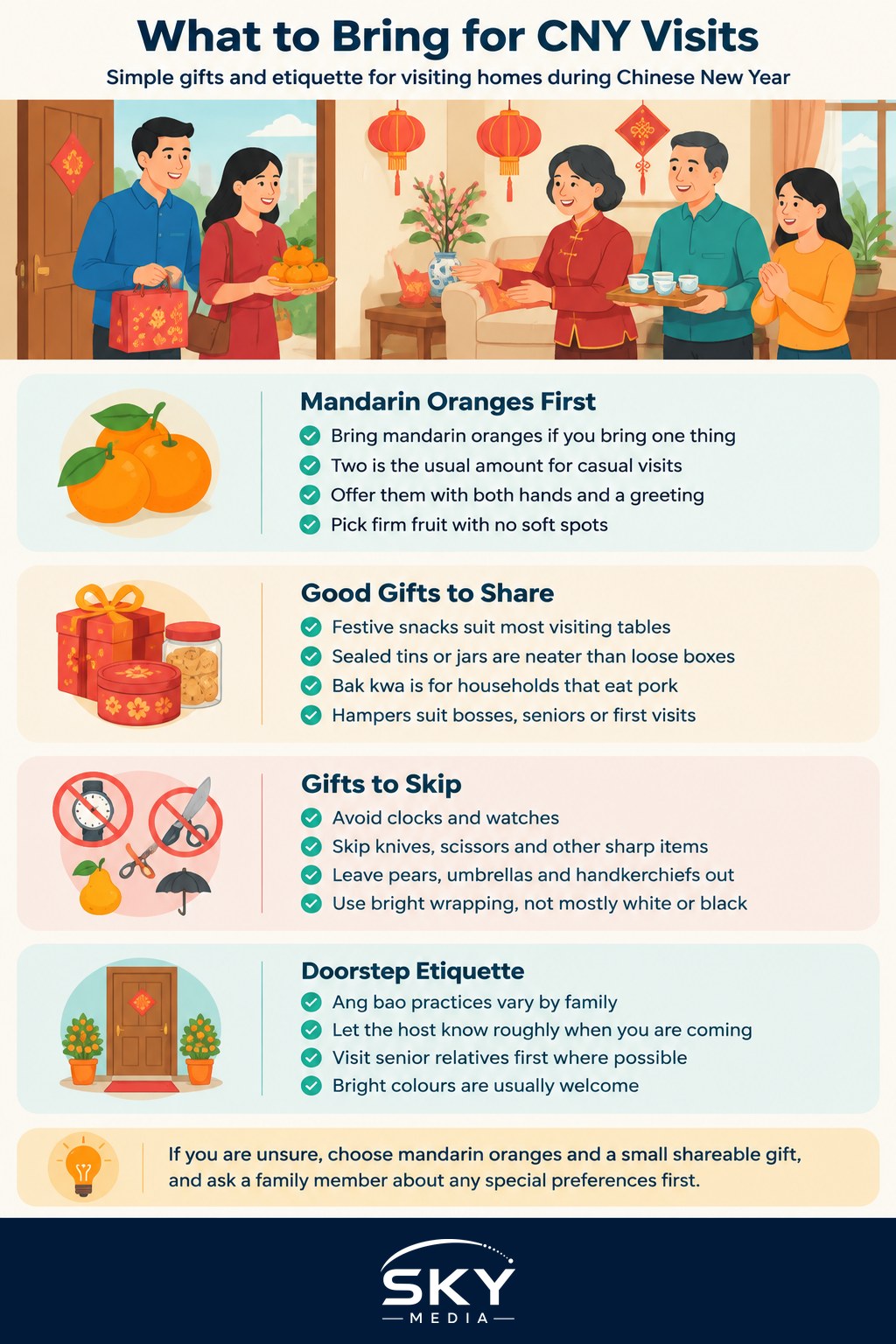
Mandarin Oranges: The Gift Almost Everyone Brings
If you bring only one thing, make it mandarin oranges. In Cantonese, the word for mandarin orange sounds like the word for gold, so the fruit is a small wish for prosperity. Handing them over is often the very first thing that happens at the door.
A few practical points:
- Bring an even number. Two oranges is the most common amount for a casual visit, because good things are said to come in pairs. Some guests bring four or more for a larger household, though a few families avoid the number four because it sounds like the word for death. If unsure, stick to two or six.
- Use both hands. Offer the oranges with both hands and a greeting such as “Gong xi fa cai” or “Xin nian kuai le”. Your host will usually take them and give you two of their own oranges back as you leave.
- Carry a spare bag. Many guests bring a small bag of oranges for the whole day’s visiting and refill from it at each stop. A paper or red bag looks neater than a plastic grocery bag.
- Pick firm, unblemished fruit. Check for soft spots, because a bruised orange is not a great symbol.
For close family, oranges plus a warm greeting are enough.
Snacks, Hampers and Other Gifts That Work
Beyond oranges, the right gift depends on who you are visiting and how close you are. A useful rule of thumb is to bring something the household can share with other visitors.
Festive snacks. Pineapple tarts, love letters (thin rolled egg biscuits), kueh bangkit and peanut cookies are classic choices because they sit on the visiting table for days. A sealed tin or jar is better than a loose box. For a rundown of what each snack is and why it appears, see our guide to Chinese New Year snacks and goodies.
Bak kwa. Sweet barbecued pork slices are a popular gift for close family, often bought in the weeks before the festival when queues form at bakeries and specialist shops. Only bring bak kwa if you know the household eats pork.
Hampers. A hamper suits a boss, a senior relative or a family you are visiting for the first time. Common contents include canned abalone, dried mushrooms, bird’s nest drinks, tea, biscuits and sometimes wine. Choose a hamper that fits the household: a teetotal family will not want a wine-heavy one.
Drinks. A carton of canned soft drinks or a case of packet drinks may seem plain, but many hosts appreciate it, because open houses burn through drinks fast.
Gifts Many Families Prefer You Avoid
Some items carry unlucky meanings because of how their names sound in Chinese, or because of what they are associated with. Not every family minds, but older relatives often do, so it is safer to skip them during the festive period.
- Clocks and watches. “Giving a clock” (送钟, song zhong) sounds like attending to someone at their deathbed. This is the best known taboo, and many people avoid it all year round.
- Sharp objects. Knives and scissors suggest cutting ties. Kitchen knife sets are a common accidental mistake as a housewarming present.
- Pears. The word for pear sounds like the word for separation, so pears are usually left off fruit baskets during the festival.
- Umbrellas. The word sounds similar to “to break up” in Cantonese and Mandarin.
- Shoes and handkerchiefs. Shoes can suggest walking away; handkerchiefs are linked to tears and farewells.
- Mostly white or black wrapping. These colours are associated with mourning. Red, gold and other bright colours are the safe choice.
- Anything in fours. Four of anything, including four oranges in some households, may be read as unlucky.
If you are unsure about a gift, ask your partner or a friend from the same family before buying.
Matching the Gift to the Host
The table below gives a quick guide to what usually works for different kinds of visits.
| Who you are visiting | Usually enough | A thoughtful extra | Check first |
|---|---|---|---|
| Grandparents and elderly relatives | Two mandarin oranges | Bird’s nest drinks, tea or a soft snack | Dietary needs such as diabetes or soft foods |
| Close friends or siblings | Two mandarin oranges | A tin of pineapple tarts or bak kwa | Whether they eat pork |
| Boss or senior colleague’s open house | Two mandarin oranges | A modest hamper or quality tea | Workplace gift policies |
| Friends hosting a large gathering | Two mandarin oranges | A carton of drinks or a shareable snack | Whether alcohol is welcome |
| Non-Chinese friends celebrating with you | Optional oranges | Snacks they can try for the first time | Halal or vegetarian requirements |
Gift value does not need to be high. For most visits, a thoughtful choice matters far more than price, and if you are visiting many homes, a fixed small budget per household keeps things manageable.
Ang Bao, Greetings and Other Etiquette at the Door
Gifts are only part of the picture. A few other habits help visits go smoothly.
Red packets. In many families, married adults give ang bao (red packets of money) to children and unmarried relatives, while unmarried guests receive rather than give. Practices differ, so ask what your family does. Ang bao are separate from your gift and are usually handed over during the visit rather than at the door.
Timing your arrival. Many families start visiting from the first day of the new year, with the most senior relatives visited first. Let your host know roughly when you will arrive, and avoid turning up very late at night.
Dress and behaviour. Bright colours are welcome; all black or all white outfits are generally avoided. Many families also prefer that guests avoid words linked to bad luck, such as talk of death or illness, during the first days.
For a fuller look at how to behave as a guest, including seating, food and conversation, read our guide to Chinese New Year visiting etiquette in Singapore. If you are curious about where the custom of visiting came from, our piece on the history of house visiting during festivals traces how it developed.
A Simple Plan Before Visiting Day
Shopping early saves stress, because supermarkets and bakeries get crowded in the final week before the festival, and some items sell out.
- List your visits. Write down every household, roughly in the order you plan to visit.
- Count your oranges. Allow two per household plus a few spares for surprise visits.
- Decide on extras. Mark which homes get a hamper, snacks or drinks, and note any dietary needs.
- Buy wrapping and bags. Red paper bags make carrying and handing over gifts easier.
- Prepare red packets separately. Keep ang bao in a different pouch from your gifts so you do not mix them up.
- Keep a cooler bag in the car. Snacks and chocolates can soften in Singapore heat if left in a parked car between visits.
With oranges in hand and a gift that suits the household, you can focus on what the visits are really about: catching up, eating well and wishing everyone a good year ahead.