
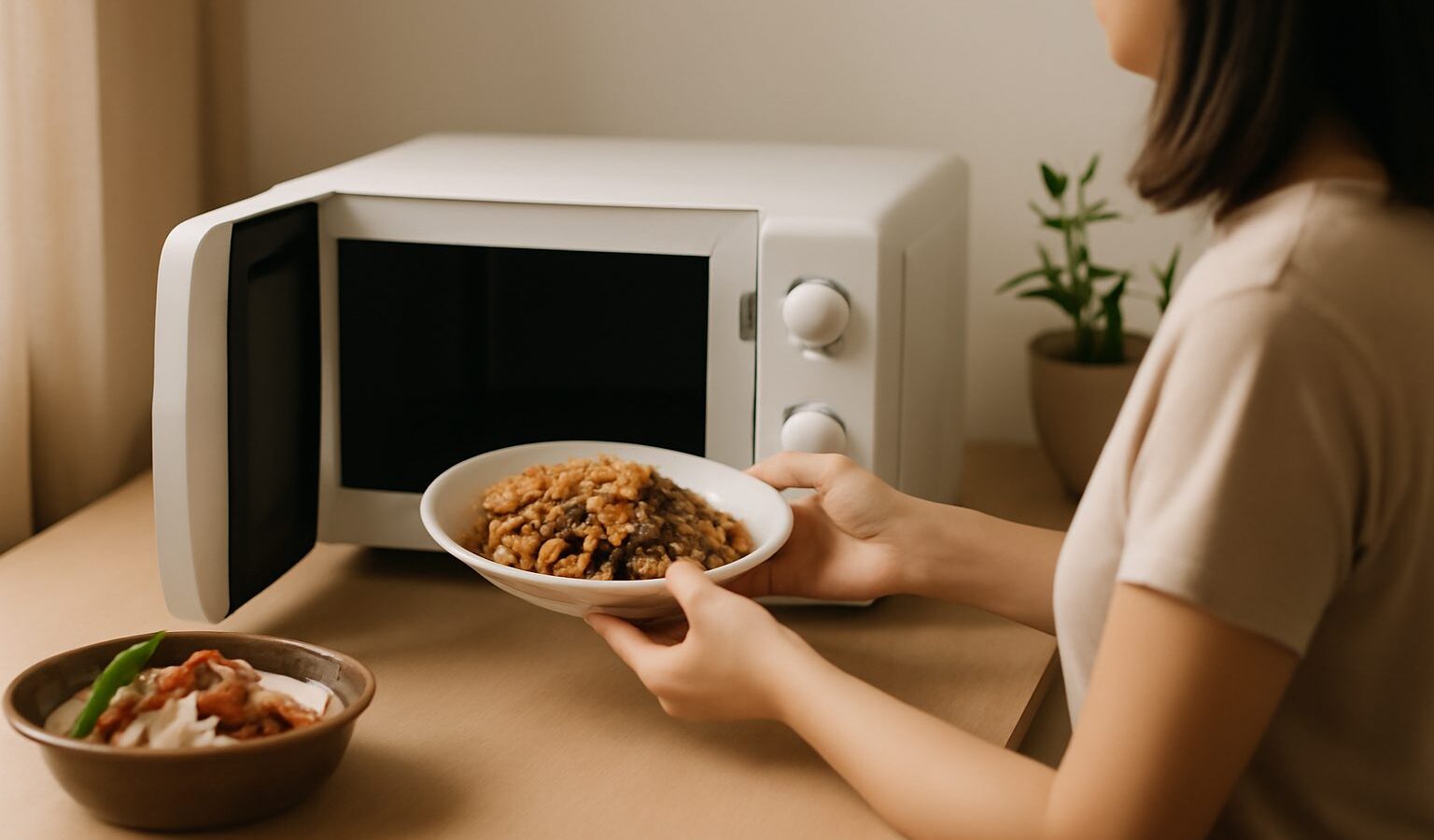
Most of us have done it: bought one packet of char kway teow too many, or brought home half a plate of chicken rice and a bag of goreng pisang. The next day, the microwave turns it into soggy noodles, rubbery chicken and limp fritters. The good news is that you can reheat hawker food well if you treat each type of dish a little differently. The goal is texture recovery: getting moisture back into rice, keeping noodles from turning mushy, and bringing crunch back to fried snacks.
This guide is about rescuing leftovers, not general food storage. It covers the main hawker food groups, the best tool for each, and the basic food safety steps that apply to all of them.
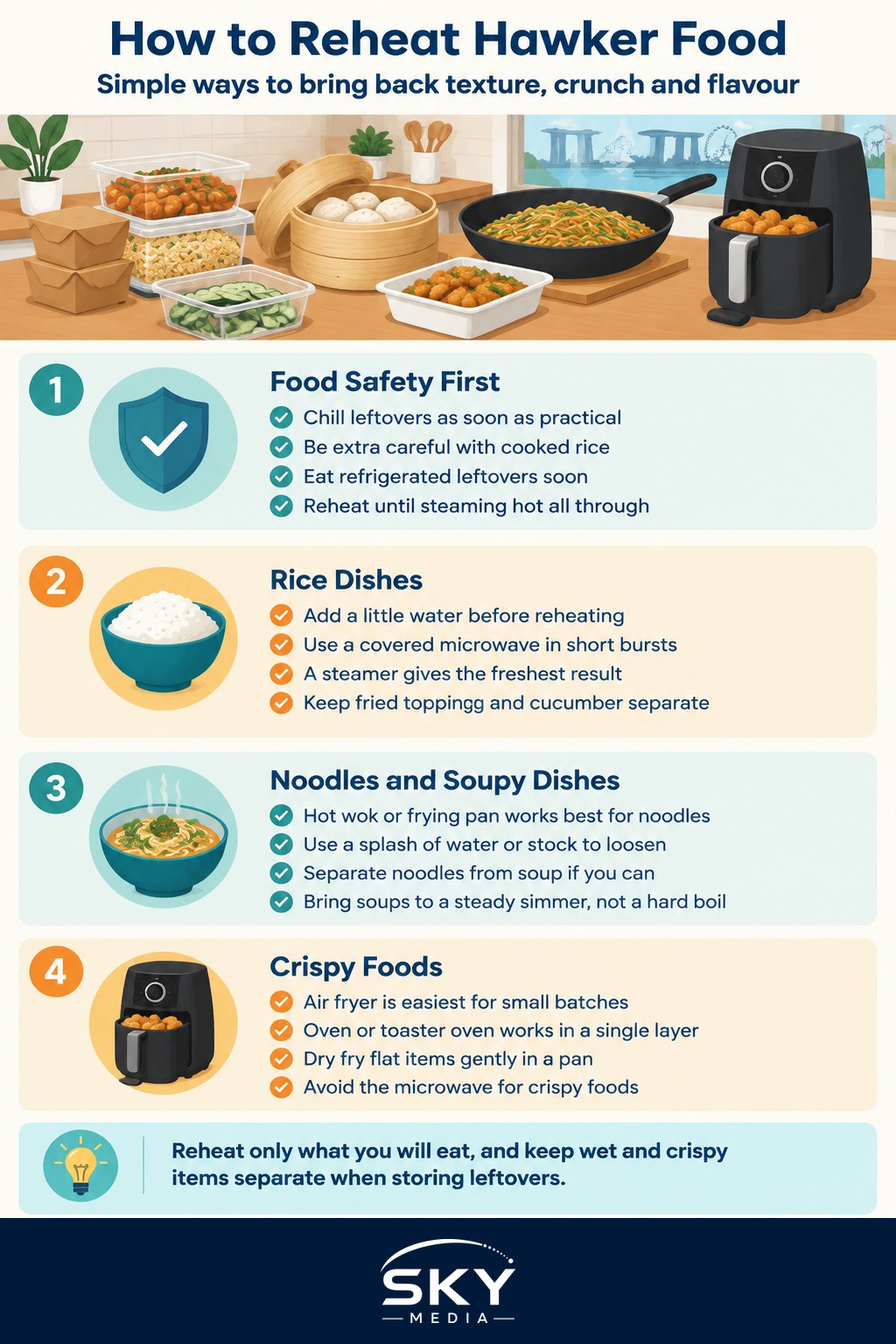
Food Safety Basics Before You Reheat
Texture matters, but safety comes first. Hawker food is often bought hot and then left out on the table or in a bag for a while, which is where problems start.
- Chill leftovers promptly. Do not leave cooked food sitting at room temperature for long, especially in Singapore’s warm climate. Transfer it to a clean, shallow container and refrigerate as soon as practical.
- Be extra careful with rice. Cooked rice left out at room temperature can allow certain bacteria to grow, and reheating may not make it safe again. Cool and refrigerate rice quickly.
- Eat leftovers soon. Aim to finish refrigerated leftovers within a short period, and throw away anything that smells or looks off.
- Reheat until steaming hot all the way through, then eat it. Avoid reheating the same portion more than once.
For current, official advice on handling and storing cooked food, check the Singapore Food Agency (SFA) website. This guide is general information, not a substitute for that guidance.
Rice Dishes: Chicken Rice, Nasi Lemak and Economy Rice
Refrigerated rice dries out and hardens as its starch firms up. The fix is a little moisture plus gentle, even heat.
- Microwave method: sprinkle a tablespoon or so of water over the rice, cover with a damp paper towel or a microwave-safe lid, and heat in short bursts, stirring between each. This steams the grains back to softness.
- Steamer method: for chicken rice or nasi lemak rice, a few minutes in a steamer gives the most “fresh” result and keeps the grains fragrant.
- Pan method: if the rice is going to become fried rice anyway, break up the clumps, add a splash of oil and fry on high heat.
Separate the toppings before reheating. Poached chicken is better warmed briefly in a steamer or covered in the microwave on lower power, as high heat dries it out. Keep fried items like ikan bilis, peanuts and fried chicken aside and crisp them separately. Cucumber, sambal on the side and raw garnishes are better served cold or at room temperature than heated.
Fried Noodles: Char Kway Teow, Hokkien Mee and Mee Goreng
Fried noodles are the trickiest, because the microwave steams them into a soft, clumped mass and loses the wok-fried aroma.
- Best method: a hot wok or frying pan. Heat the pan first, add a little oil, then the noodles. Loosen them with a splash of water or stock, toss quickly and let them sit for a moment to recover some char. Do not overcrowd the pan.
- Prawn noodles or wetter styles like Hokkien mee benefit from a spoonful of stock or water so they do not dry out.
- Keep add-ons separate where you can. Bean sprouts and chives wilt fast, so add fresh ones if you have them. Seafood such as prawns and cockles should be heated just until hot to avoid turning tough.
If you only have a microwave, spread the noodles out on a plate, sprinkle with water, cover loosely and heat on medium in short bursts, tossing in between.
Soups and Soupy Noodles: Fishball Soup, Laksa and Bak Kut Teh
Soups reheat well, but noodles left sitting in broth soak it up and turn soft.
- Separate noodles and soup before refrigerating if you can. Reheat the soup on the stove until it is boiling, then pour it over the noodles, or blanch the noodles quickly in hot water first.
- Laksa and curry-based soups with coconut milk can split if boiled hard for a long time. Bring them up to a steady simmer, stirring, and serve as soon as they are hot through.
- Bak kut teh and herbal soups reheat easily on the stove. Top up with a little water if the broth has reduced.
- Fishballs, fishcake and tofu can go into the simmering soup for the last few minutes so they heat through without falling apart.
If you are cooking these dishes from scratch rather than reheating, our guide on how to cook hawker favourites at home covers the basics.
Fried Snacks: Goreng Pisang, Curry Puffs, You Tiao and Ngoh Hiang
The microwave is the enemy of anything crispy. Dry heat brings back crunch.
- Air fryer: the easiest option for small batches. A few minutes at a moderate temperature usually restores crispness. Check often so the outside does not burn before the inside is hot.
- Oven or toaster oven: place items on a rack or tray in a single layer. This works well for curry puffs, spring rolls and you tiao.
- Dry frying pan: useful for flat items such as prawn crackers or ngoh hiang slices. Heat gently, turning once.
Ngoh hiang and other fried rolls often turn soggy overnight because their filling releases moisture. Slice them first so heat reaches the centre. Our ngoh hiang and lor bak guide explains the dishes themselves.
Quick Reference: Best Way to Reheat Each Type
This table sums up the main hawker food groups and the most reliable reheating approach for each.
| Food type | Best reheating method | Key tip for texture | Avoid |
|---|---|---|---|
| Plain or flavoured rice | Steamer or covered microwave with water | Add a little water and stir between bursts | Heating dry and uncovered |
| Fried noodles | Hot wok or frying pan | Loosen with a splash of water or stock | Long microwave blasts |
| Soupy noodles | Stove, with noodles and soup separated | Pour boiling soup over noodles to serve | Storing noodles in the broth |
| Coconut curries and laksa | Gentle simmer on the stove | Stir and heat steadily | Hard, prolonged boiling |
| Fried snacks | Air fryer or oven in a single layer | Keep items spaced out | Microwave |
| Grilled satay and meats | Pan or oven, covered at first | Brush with a little sauce or oil | High heat for too long |
Habits That Make Leftovers Better
A little planning at the stall makes reheating much easier:
- Ask for sauce and gravy on the side when buying extra food to take away, so rice and fritters do not sit in liquid.
- Pack crispy and wet items separately at home, using separate containers.
- Portion before chilling so you only reheat what you will eat.
- Label the container with the day it was cooked, so nothing gets forgotten at the back of the fridge.
- Freshen the dish with a squeeze of lime, fresh chilli, spring onions or a fried egg. A small fresh element makes reheated food taste far less tired.
With these simple techniques, tomorrow’s leftovers can taste nearly as good as they did at the hawker centre, and much less food ends up in the bin.
Frequently Asked Questions
How long can leftover hawker food stay in the fridge? Eat refrigerated leftovers within a short time, and throw out anything that smells or looks off. Rice and seafood deserve extra caution. The Singapore Food Agency publishes current advice on storing cooked food, so check it for exact timings rather than relying on guesswork.
Can I freeze leftover hawker food and reheat it later? Many dishes freeze reasonably well if portioned and cooled quickly, such as soups, curries and plain rice. Fried snacks and fresh noodles lose texture. Freeze in single portions so you thaw only what you will eat, and reheat until steaming hot.
Is it safe to microwave hawker food in its takeaway packaging? Only if the container is labelled microwave-safe. Polystyrene boxes, some plastic bags and foil or lined paper should not go into the microwave. When in doubt, transfer the food to a ceramic plate or a microwave-safe bowl first.
What is the best way to reheat hawker food in an office pantry? With only a microwave, add a little water, cover loosely and heat in short bursts, stirring between. Keep crispy items aside and eat them cold or crisp them later at home. If food has sat out for hours, it is safer not to eat it.
Should young children or older adults avoid eating reheated leftovers? They are more vulnerable to food poisoning, so extra care with storage and reheating matters. Chill food quickly, reheat until steaming hot throughout and skip anything that has been left out too long. Ask a doctor about specific health conditions.