
Order ngoh hiang in Singapore and you get one of the most generous plates in the hawker centre: a mixed platter of golden fritters, meaty rolls, prawn crackers, sausages and firm tofu, all snipped into bite-size pieces and served with a sweet-savoury sauce and fiery chilli. It is finger food, comfort food and a shared feast rolled into one. Yet many diners are unsure exactly what ngoh hiang is, how it relates to lor bak, and how to build a good plate. This guide clears up the confusion and helps you order like a regular.
What Ngoh Hiang Actually Is
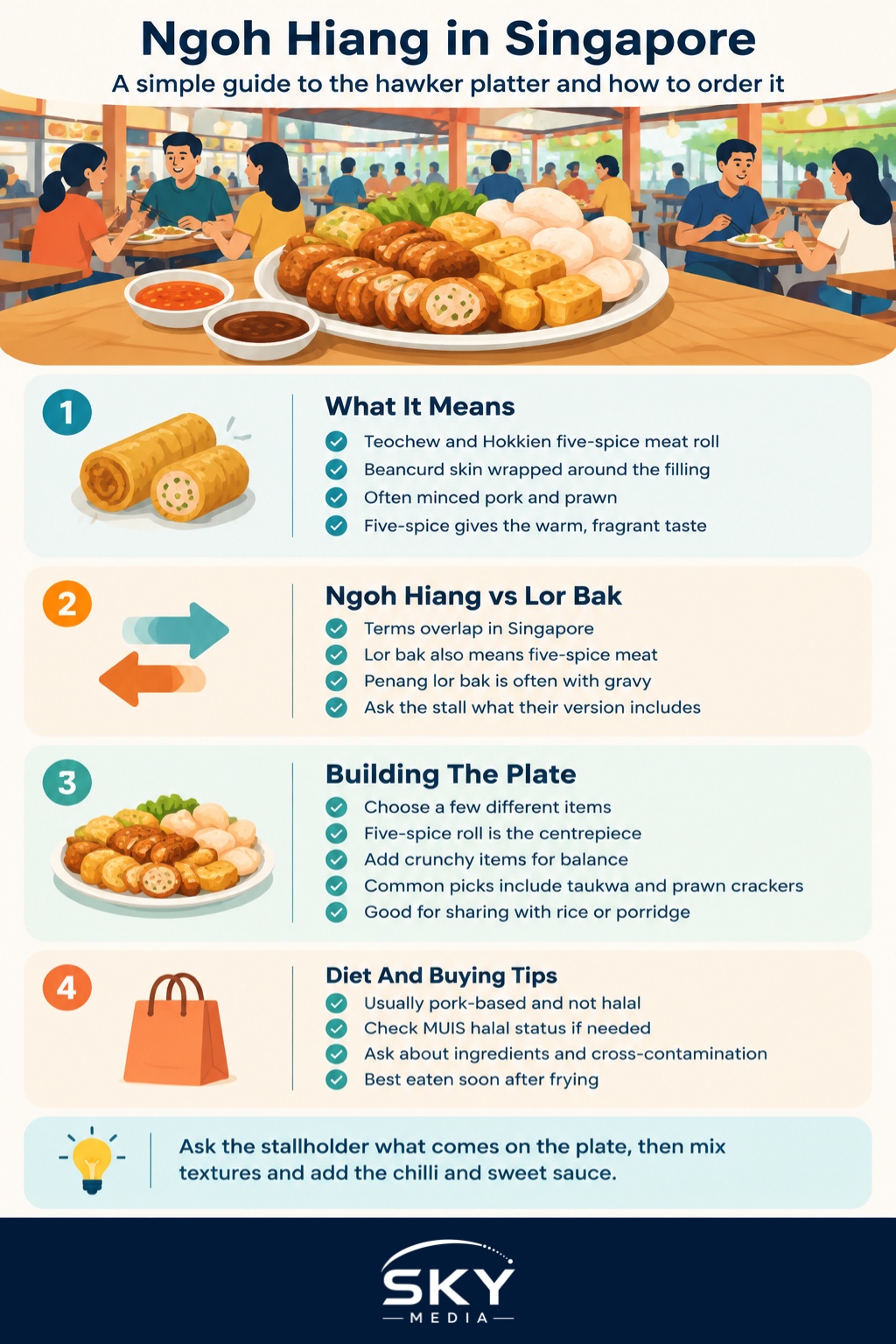
At its heart, ngoh hiang refers to a Teochew and Hokkien style five-spice meat roll. The name points to the five-spice powder (star anise, cloves, cinnamon, fennel and Sichuan pepper) that gives the filling its warm, fragrant character. Minced pork and prawn, seasoned and often mixed with water chestnut for crunch, are wrapped in a thin sheet of beancurd skin, then steamed and deep-fried until the skin turns crisp and blistered.
Over time, “ngoh hiang” came to describe not just that single roll but the whole assorted platter it anchors. When you point at a ngoh hiang stall today, you are usually choosing from a spread of fried items to make up a mixed plate, with the five-spice roll as the star.
Ngoh Hiang and Lor Bak: What Is the Difference
This is where people get tangled up, and understandably so. “Lor bak” (sometimes spelt loh bak) literally means braised or five-spice meat, and in Singapore the terms overlap heavily. In many stalls and homes, ngoh hiang and lor bak point to more or less the same five-spice beancurd-skin roll and the platter around it.
The nuance is regional. In Penang and parts of Malaysia, lor bak more specifically means the meat roll itself, often served with a starchy braised gravy (lor) for dipping and a chilli sauce alongside. In Singapore, the platter is usually served dry with a thick sweet sauce and sambal-style chilli rather than a pourable gravy. So if a menu lists both, do not overthink it: ask the stallholder what comes on the plate, since each stall has its own spread and naming habit.
Building a Great Ngoh Hiang Platter
Half the fun is assembling your own mix. A typical stall lets you choose a handful of items, which are then cut up, arranged and sauced. Common components include:
- The five-spice roll: the essential centrepiece, crisp outside and savoury inside.
- Prawn fritters (hae cho): prawn and pork paste in beancurd skin, springy and sweet.
- Fried prawn crackers or ngoh hiang “keropok”: for crunch and to scoop up sauce.
- Sausages: including Chinese-style or egg sausage, mild and comforting.
- Firm beancurd (taukwa): fried until golden, a good vegetarian-leaning pick if it is cooked separately.
- Century egg or fish cake: for extra variety on the plate.
Order-of-the-day tips: mix textures rather than picking three similar fritters, add at least one crunchy item to balance the soft ones, and do not skip the chilli and sweet sauce, which tie everything together. For a group, one large mixed platter with rice or plain porridge on the side makes an easy, sharable meal.
Where to Find It and What It Costs
Ngoh hiang is a hawker-centre and food-court staple, and you will spot dedicated stalls as well as Teochew porridge and economic rice stalls that keep a tray of five-spice rolls going. Older neighbourhoods and heritage hawker centres are reliable hunting grounds, and some traditional stalls sell it as a takeaway snack by weight or by piece.
Because stalls come and go and prices shift over time, treat any amount you read online as a rough, illustrative guide and check the actual stall on the day. It is generally an affordable, budget-friendly plate that scales with how many items you pick, so you can keep it light or turn it into a spread. Many stalls also appear on delivery apps, though fried food travels best when eaten soon after cooking, so order for prompt pickup where you can.
A Quick Comparison to Help You Order
If you are still weighing up the platter, this table sums up the key items and who they suit.
| Item | What it is | Texture | Best for |
|---|---|---|---|
| Five-spice roll (ngoh hiang) | Pork and prawn in beancurd skin | Crisp outside, savoury inside | The classic must-order |
| Prawn fritter (hae cho) | Prawn and pork paste roll | Springy and juicy | Seafood lovers |
| Prawn cracker | Fried starch cracker | Light and crunchy | Balancing softer items |
| Fried taukwa | Firm beancurd cube | Golden, soft centre | Lighter, less meaty bites |
Halal, Dietary Notes and Eating Well
A few practical points help you enjoy ngoh hiang with confidence. Traditional versions are pork-based and are usually not halal, and the same fryer may be shared across items, so if halal status matters to you, look for MUIS halal certification or a clearly halal stall and ask before ordering rather than assuming. Vegetarian diners should note that beancurd skin rolls and even the taukwa can be fried alongside meat, and sauces may contain shrimp or fish, so check the ingredients and ask about cross-contamination; this is general information rather than dietary or medical advice, and anyone with an allergy should confirm with the stall and speak to a doctor or accredited dietitian if needed.
As deep-fried food, ngoh hiang is best enjoyed as a treat balanced with vegetables and a lighter main. If you take some home, keep it out of our tropical heat, refrigerate leftovers promptly, reheat until piping hot to restore the crunch, and when in doubt, throw it out.
Explore more
Enjoyed this deep-dive into a hawker classic? Keep tasting your way through Singapore with our guide to sambal stingray and barbecue seafood for another smoky, shareable feast, or explore satay bee hoon, a peanut-sauced local one-off. For more wok-fried comfort, our beef hor fun guide is a satisfying next read.
Frequently Asked Questions
Is ngoh hiang the same thing as lor bak? In Singapore the two terms overlap heavily and often point to the same five-spice beancurd-skin roll and its platter. In Penang and parts of Malaysia, lor bak more specifically means the meat roll, served with a starchy gravy. Ask the stallholder what is on the plate.
What gives ngoh hiang its distinctive flavour? It comes from five-spice powder, made of star anise, cloves, cinnamon, fennel and Sichuan pepper. The minced pork and prawn filling, often with water chestnut for crunch, is wrapped in beancurd skin and fried. The warm spice is what defines the taste.
How do I choose items for a balanced ngoh hiang platter? Mix textures instead of picking three similar fritters, and include at least one crunchy item against the soft ones. Do not skip the chilli and sweet sauce, which tie everything together. For a group, add rice or plain porridge on the side.
Does ngoh hiang taste better eaten straight away? Yes, fried food is at its best soon after cooking, when the skin is crisp. If you take it home, reheat until piping hot to restore the crunch, and refrigerate leftovers promptly. When ordering delivery, choose prompt pickup where possible.
Can vegetarians eat anything on a ngoh hiang platter? Fried taukwa is a lighter, less meaty option, but check whether it is cooked in the same oil as meat. Sauces may contain shrimp or fish, so ask about the ingredients and cross-contamination. Anyone with an allergy should confirm with the stall.
Further reading: How to Make Ngoh Hiang at Home: Five-Spice Meat Rolls · Kong Bak Pau and Braised Pork Belly in Singapore: A Dish Guide