
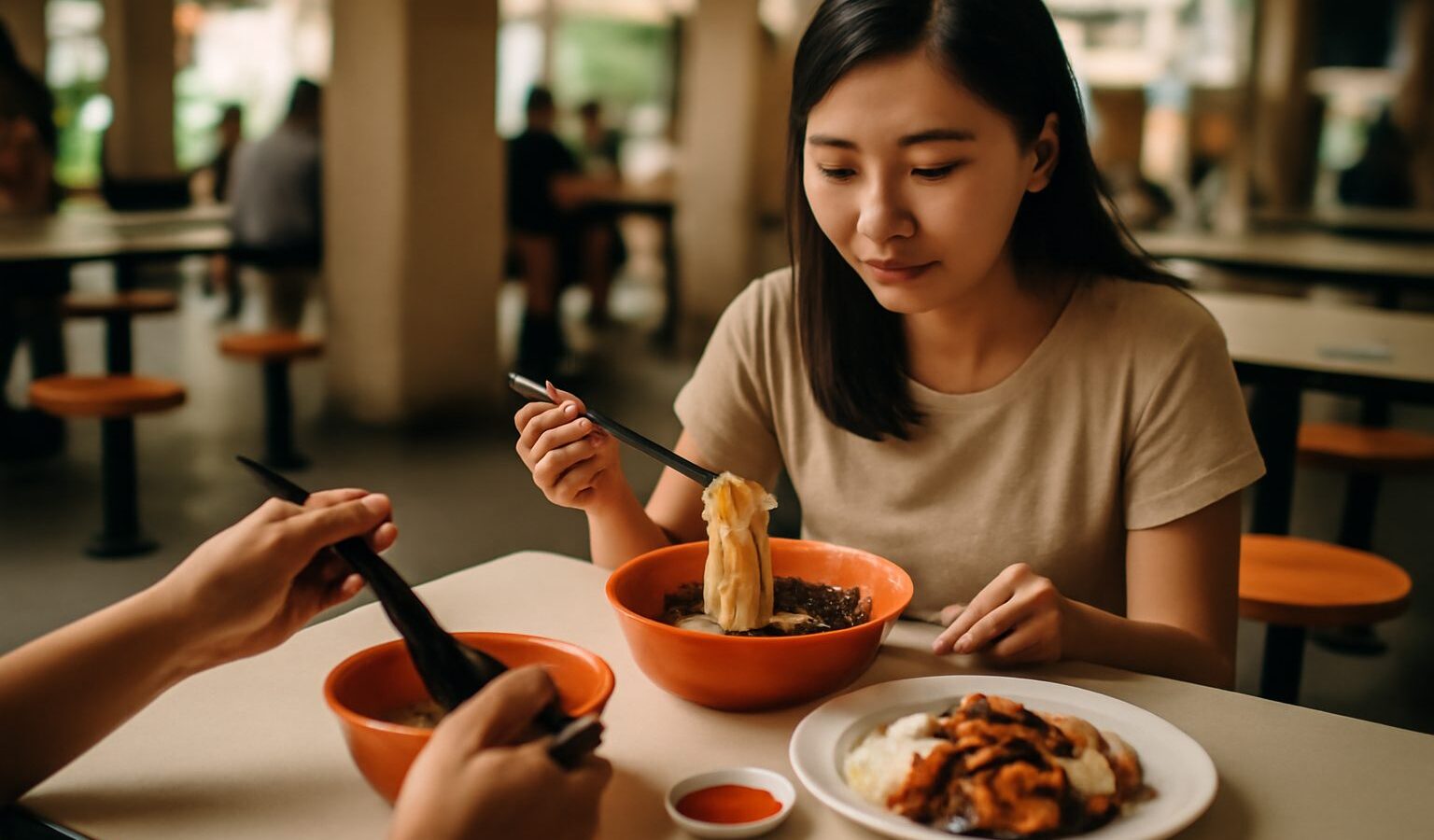
Few things capture everyday life here like a busy hawker centre at lunchtime. The hawker culture Singapore is celebrated for offers affordable, delicious meals from stalls that have often perfected a single dish over decades. If the unwritten rules feel a little mysterious at first, this guide will help you tuck in with ease.
Food courts, the air conditioned cousins of hawker centres found in malls, work in much the same way. Learn the basics once and you will feel at home in both.
How Ordering Works
At a hawker centre, each stall specialises in its own dishes, so you order directly at the stall rather than from a single counter. Browse the rows, decide what you fancy, and join the queue at your chosen stall. Menus are usually displayed above the stall, often with photos and prices.
A few pointers make ordering smooth:
- Know roughly what you want before you reach the front, as queues move quickly.
- Say the dish name and any preferences clearly, such as less spicy or no chilli.
- Some popular stalls ask you to wait and collect, while others bring it to your table for a small consideration.
- If a stall has a long queue, that is often a good sign, so be patient.
In a food court, the format is similar, though some outlets use a central ordering or payment system. When in doubt, watch what others do for a moment, and follow suit.
Choping a Table
Here is the custom that surprises many newcomers most. During busy periods, people reserve a seat before they queue for food, a practice known as “choping”. The traditional marker is a packet of tissues placed on the table, though an umbrella or a small personal item is sometimes used.
The etiquette is simple but real. A tissue packet on an empty seat means it is taken, so look for a genuinely free table rather than moving someone’s marker. Equally, chope only what you need, and do not reserve a large table for a single diner during the lunch rush. It is a system built on mutual trust, and it works because most people respect it.
Sharing Tables
Seating is communal, especially at peak hours, so sharing a table with strangers is completely normal and expected. If seats are scarce, a polite “excuse me, is this taken?” is all it takes to join an occupied table. There is no need for conversation, and a friendly nod is enough.
Sharing works best with a little consideration. Keep your belongings and trays within your own space, mind your volume, and gather your things promptly when you leave so the next person can sit. This easy give and take is part of what keeps hawker centres flowing during their busiest moments.
Self Clearing Your Tray
This is now the expected norm, so it is worth getting right. After eating, you clear your own table by returning your tray, crockery and used tissues to the designated tray return points, which are usually stationed around the centre. Many have separate slots for different types of crockery and for halal and non halal utensils, so glance at the labels.
Clearing up takes a moment and makes a real difference. It frees the table faster for the next diner and shows respect for the cleaning staff, many of whom are older workers. Returning your tray has become a settled part of hawker culture, so make it a habit from your very first meal.
Cash Versus E-payment
Payment customs have modernised, but cash still has its place. Many stalls now display QR codes for electronic payment, which is quick and convenient. Others, particularly older or smaller stalls, still prefer cash, so carrying small notes and coins is always wise.
The table below sets out the common situations at a glance.
| Situation | Best approach | Note |
|---|---|---|
| Small traditional stall | Cash, small notes | Some may not take cards |
| Stall with a QR code | E-payment or cash | Scan and confirm the amount |
| Food court outlet | E-payment or cash | Often a central till |
| Busy lunch rush | Have exact change ready | Speeds up the queue |
Keep a little cash on you even if you usually pay electronically, since a stall’s payment terminal or your signal can occasionally let you down.
Small Courtesies That Help
Beyond the main customs, a handful of small habits will help you fit right in. Return borrowed items like sauce dishes, keep the table tidy for the next person, and be patient with older stallholders who may work at their own pace. During the busiest hours, eat at a comfortable but not leisurely pace when seats are in high demand.
If you are dining with a group, one person can chope a table while the others queue at different stalls, which is exactly how many locals manage a shared meal. Just coordinate so nobody is left holding trays with nowhere to sit.
It also helps to know a few practical touches. Drinks are usually ordered from a separate beverage stall, and the friendly uncle or auntie running it may bring your kopi to the table. Cutlery, chopsticks and napkins are often self service from a shared caddy, so grab what you need. If you have dietary needs, many centres clearly signpost halal, vegetarian and other options, and stallholders are generally happy to answer a polite question about ingredients.
Enjoying the Everyday Feast
Adjusting to the hawker culture Singapore treasures is really about a few friendly customs: order at the stall, chope a seat considerately, share tables with good grace, clear your own tray, and keep some cash handy. Get those right and you unlock a world of affordable, wonderful food that sits at the heart of local life.
Do not worry about the odd fumble as you learn. Everyone was new once, and a warm smile smooths over any small mistake. Soon enough you will have your own favourite stalls and your own lunchtime routine.
Explore more: Chope and Queue Culture in Singapore · Singapore Social Norms · How to Navigate Wet Markets in Singapore