

Working out your renovation cost in Singapore is the part of homeownership that keeps most new owners up at night. The number depends on your flat type, its condition, how much you build, and the finishes you choose, so two neighbours with identical layouts can spend wildly different amounts. Just as important as the money is the calendar: a renovation that runs late can mean paying rent and a mortgage at the same time. This guide walks through what drives the price, a realistic timeline from keys to move-in, and how to keep both under control.
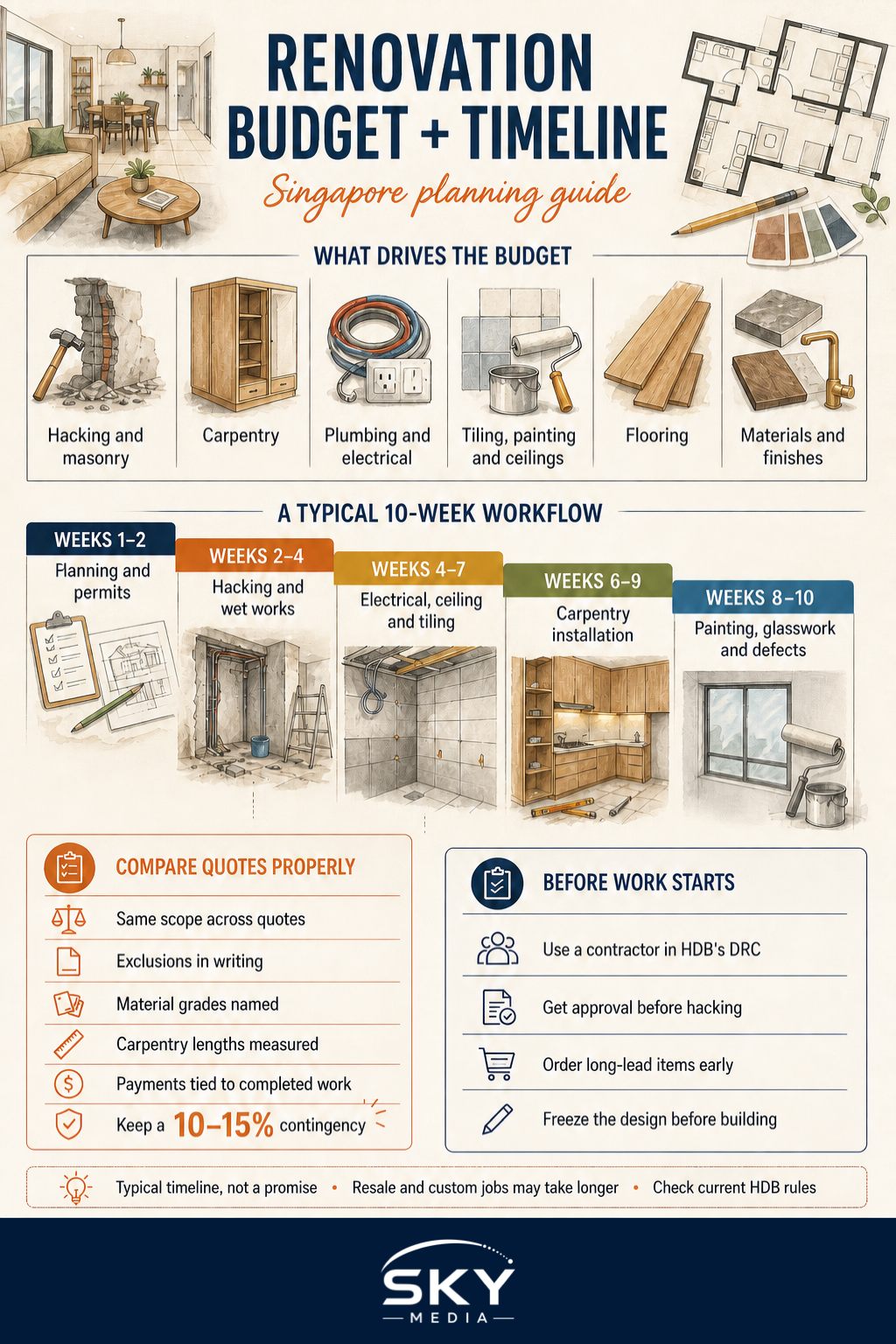
What Actually Drives Your Renovation Cost
Most quotes are built from a handful of big-ticket items, and understanding them helps you read a quotation instead of just staring at the bottom line.
- Hacking and masonry. Removing walls, relaying floors, and building up new structures. Resale flats usually cost more here because you are undoing someone else’s work first.
- Carpentry. Built-in wardrobes, kitchen cabinets, and feature shelving are often the single largest line item. Carpentry is priced by the running foot, so length and material matter more than you expect.
- Plumbing and electrical. Moving points, adding sockets, and rewiring. Older resale units frequently need a full rewire to be safe.
- Tiling, painting, and ceiling works. Surface finishes that cover a lot of area, so small price differences per square foot add up quickly.
- Flooring. Overlay vinyl sits at the affordable end, while tiles and engineered timber cost more to supply and lay.
A brand-new Build-To-Order (BTO) flat generally costs less to renovate because the space is already a clean slate. A resale flat carries the extra burden of hacking, disposal, and repairs before any new work begins, which is why the same wishlist can cost noticeably more in an older unit.
A Realistic Cost Range by Flat Type
The figures below are broad planning bands drawn from typical market patterns, not quotes. Renovation cost in Singapore moves with material prices, labour supply, and how much you customise, so always confirm current numbers with several contractors before you budget. Treat this table as a way to sanity-check a quotation, not a promise.
| Home type | Typical scope | Where most owners land |
|---|---|---|
| New BTO (3-room) | Basic carpentry, painting, light flooring | Lower end of the market |
| New BTO (4 to 5-room) | Full kitchen, wardrobes, some feature walls | Mid range |
| Resale HDB | Hacking, rewire, new kitchen and bathrooms | Upper mid to high |
| Condominium | Custom carpentry, premium finishes | High and highly variable |
Two homes of the same size can differ by tens of thousands simply because one owner chose laminate and the other chose real stone. The lesson is that flat type sets a floor, but your finishes set the ceiling.
Reading a Quotation Without Getting Caught Out
A cheap headline figure often hides gaps that reappear as “variation orders” later. When you compare quotes, look past the total and check that each includes the same scope.
- Confirm what is excluded. Hacking disposal, haulage, and protection of common areas are commonly left out of a low quote.
- Check material grades. “Quartz top” and “solid surface” are not the same thing, and the price gap is real.
- Watch the carpentry length. Ask for measurements in running feet so you can compare like for like.
- Read the payment schedule. Reputable firms stage payments against completed work rather than asking for most of it upfront.
- Keep a contingency. Set aside roughly ten to fifteen percent for surprises, especially in resale flats where problems hide behind old walls.
If you have not shortlisted anyone yet, our guide to choosing a renovation contractor covers how to vet firms and spot warning signs before you sign.
A Typical Renovation Timeline
For an HDB flat, plan for roughly two to three months of actual works, longer for extensive resale jobs or bespoke carpentry. The sequence usually runs like this:
- Weeks 1 to 2: Planning and permits. Finalise the design, confirm the quote, and sort approvals. HDB flats have rules on what you can and cannot do, so read up on HDB renovation rules and permits before demolition day.
- Weeks 2 to 4: Hacking and wet works. Demolition, plumbing, and any masonry. This is the messiest, noisiest stage.
- Weeks 4 to 7: Electrical, ceiling, and tiling. The bones of the home take shape.
- Weeks 6 to 9: Carpentry installation. Wardrobes and kitchen cabinets go in once site measurements are locked.
- Weeks 8 to 10: Painting, glasswork, and defects. Final finishes, followed by a defects check before handover.
Only HDB-registered renovation contractors may carry out works in HDB flats, and works have permitted hours and noise limits. Building on the wrong day, or hacking a structural wall, can trigger fines and stop-work orders, so let your contractor handle the submissions.
Timing the Money So You Do Not Overpay
The financial squeeze in a renovation is rarely the total cost; it is the overlap between paying for two homes at once. A few habits keep that overlap short.
- Book your contractor early. Popular firms are reserved months ahead, and a late start pushes your whole move-in date back.
- Freeze your design before works begin. Mid-project changes are the most expensive kind, because they mean redoing finished work.
- Order long-lead items first. Custom doors, imported tiles, and certain appliances can take weeks to arrive and stall everything else.
- Line up your move. If you are coming from a rental, count backwards from your handover date so you are not paying an extra month of rent. Our renovating your HDB flat guide has a fuller checklist for coordinating the whole process.
Building smaller, staged phases can also spread the cost. Many owners finish the essential rooms first, live in the flat, then add feature carpentry a year later once they know how they really use the space.
This article is general information to help you plan, not personalised financial or professional advice. Always confirm current prices, rules, and lead times with a licensed contractor and the relevant authorities before committing.
Explore More
For the next steps, read our guides on choosing a renovation contractor and the full picture of renovating your HDB flat. If you are weighing who should run the project, compare an interior designer versus a contractor, and check the kitchen renovation guide since the kitchen is often where the budget concentrates.