
Finding a home is often the first real hurdle for anyone landing on the island, and renting in Singapore comes with its own vocabulary, customs and paperwork. The good news: the market is well organised, the housing stock is generally high quality, and once you understand the options and the process, it moves quickly. This guide walks you through the main types of rental homes, who each one suits, how the process works from viewing to keys, and the pitfalls worth avoiding.
A quick word before we start: rules, taxes and typical costs shift over time, and the market swings with demand. Treat every figure here as a rough guide, not a quote, and verify current norms before you commit.
The main rental options
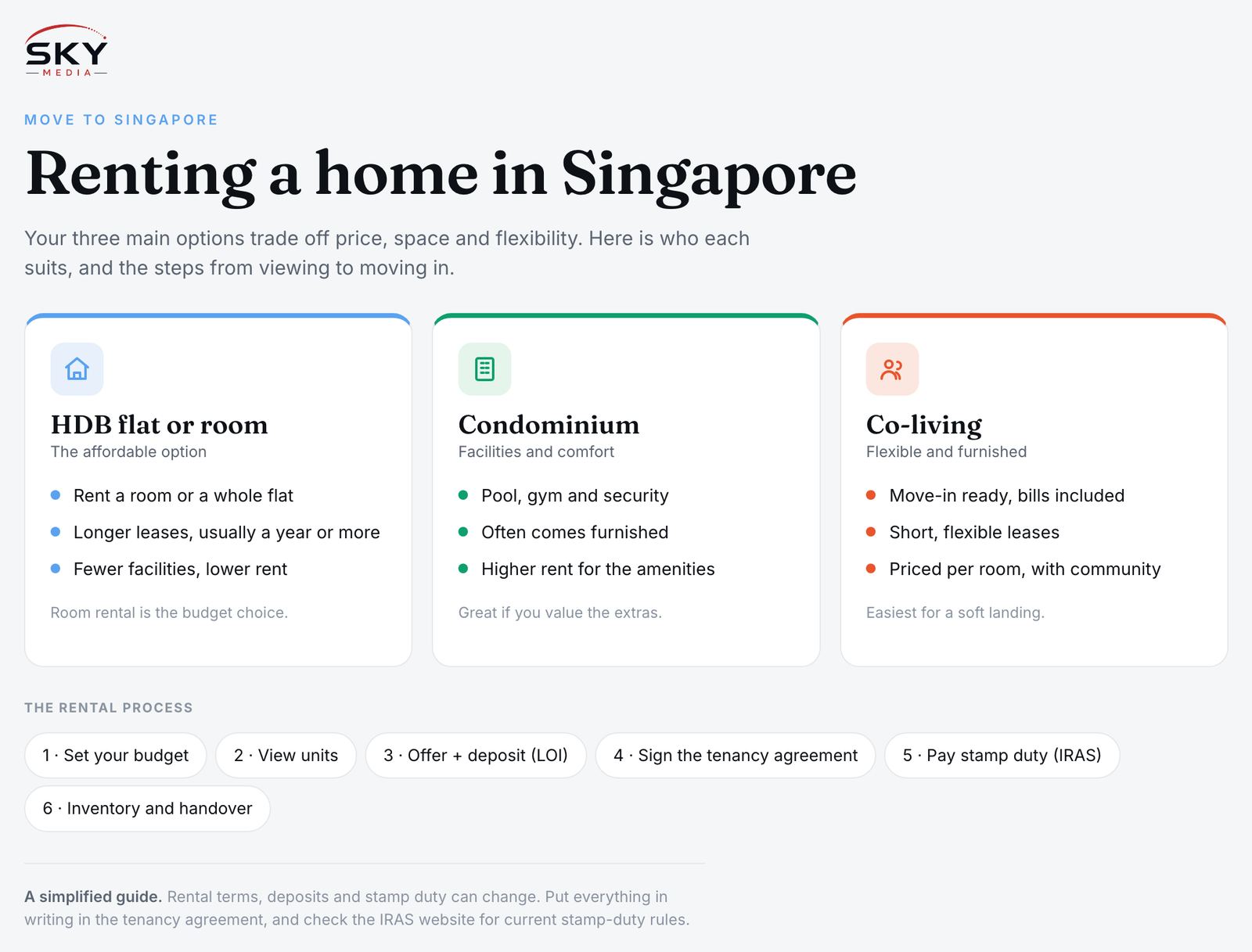
Singapore’s rental market splits into a few clear categories. Each has a different feel, price point and rulebook.
Whole HDB flat
HDB flats are public housing, and they make up the bulk of homes here. Renting a whole flat gives you the most space for your money, real neighbourhoods, wet markets and hawker centres on your doorstep, and sizes from cosy two-room units up to generous executive flats. This suits families, couples, or groups of friends who want room to breathe. Note that HDB rental has eligibility rules for tenants, and there are limits on how many people can live in a flat, so an hdb rental works best when your household and pass type fit those conditions.
HDB room rental
If a whole flat is more than you need, renting a single room in an occupied HDB flat is the most affordable way in. You share the kitchen, living room and sometimes a bathroom with the owner or other tenants. Room rental in Singapore is popular with students, young professionals and anyone arriving solo who wants to keep costs down while they find their feet. Common rooms and master rooms (with an attached bathroom) are priced differently, with the master room costing more.
Condominium unit
A condo rental in Singapore is the private-housing route. You pay a premium, but you typically get facilities: a swimming pool, gym, function rooms, security and sometimes tennis courts or a playground. Condos appeal to those who value amenities, a quieter managed environment, or a central location. As with HDB, you can rent a whole unit or just a room within one.
Co-living
Co-living is the newer, flexible option. A provider takes a flat or condo unit, furnishes it fully, and rents out rooms with bills, WiFi, cleaning and often community events bundled into one monthly price. Leases can be short, deposits are usually lighter, and you can often move in with a suitcase and nothing else. Co-living suits newcomers who want zero setup hassle, shorter commitments, or a ready-made social circle. You pay for that convenience, so per-square-foot it is rarely the cheapest choice.
Serviced apartments
At the top end sit serviced apartments: hotel-style living with housekeeping, reception and full furnishing, rented by the day, week or month. They are ideal for a soft landing in your first few weeks, or for short work postings, but they are the priciest way to stay long term.
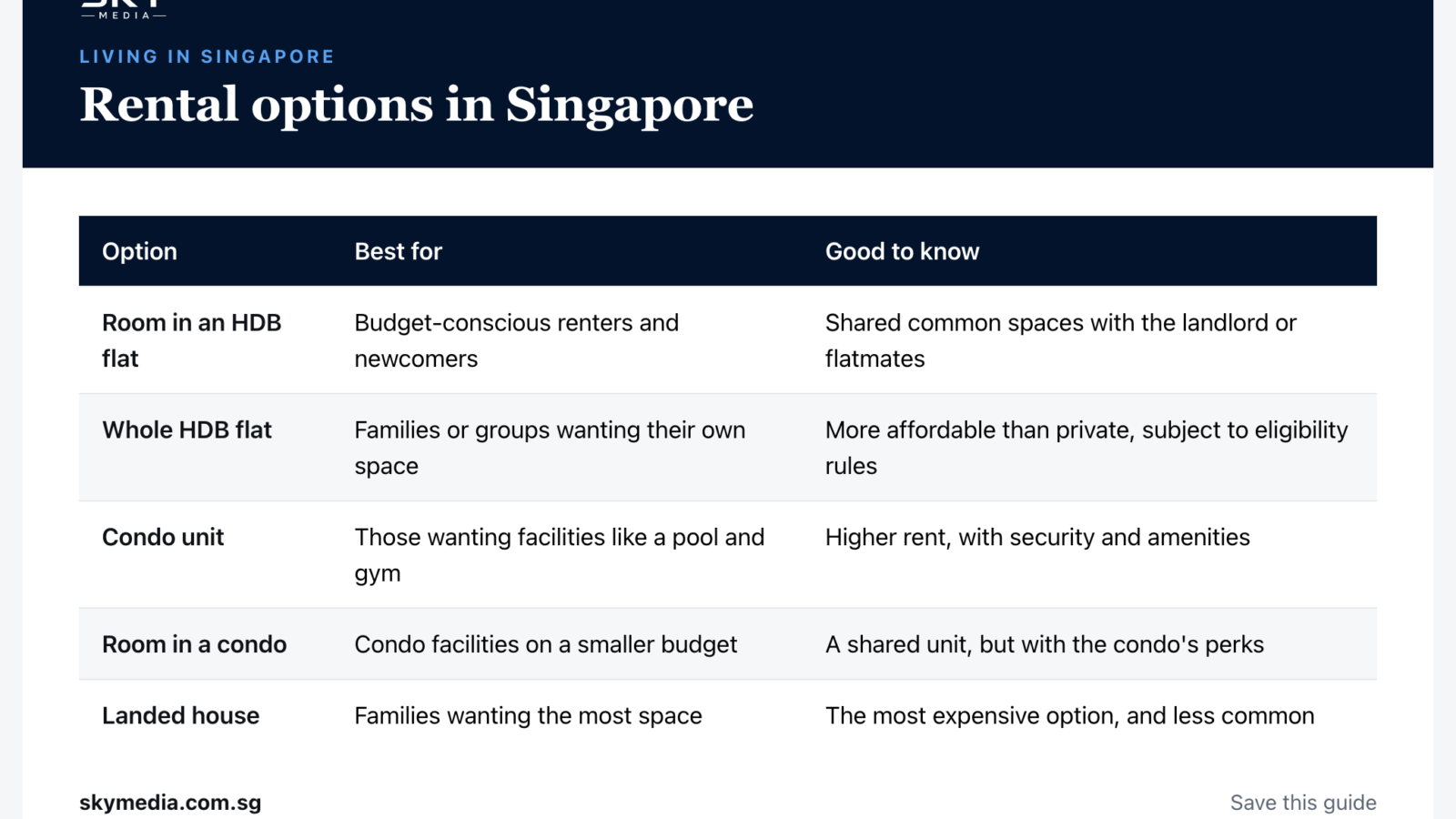
Here is how the main rental options compare:
| Option | Best for | Good to know |
|---|---|---|
| Room in an HDB flat | Budget-conscious renters and newcomers | Shared common spaces with the landlord or flatmates |
| Whole HDB flat | Families or groups wanting their own space | More affordable than private, subject to eligibility rules |
| Condo unit | Those wanting facilities like a pool and gym | Higher rent, with security and amenities |
| Room in a condo | Condo facilities on a smaller budget | A shared unit, but with the condo’s perks |
| Landed house | Families wanting the most space | The most expensive option, and less common |
Rough budget ranges by type
Prices vary enormously by location, size, age of the building and how the market is moving, so hold these loosely. As a very rough ordering from most to least affordable per person:
- HDB room: the budget entry point, especially for a common room outside the central area.
- Co-living room: a step up, but bills and furnishing are included, which can narrow the gap.
- Whole HDB flat: strong value if you are splitting it or need family space.
- Condo room / whole condo: a clear premium for facilities and private-housing address.
- Serviced apartment: the highest ongoing cost, offset only by zero setup and full flexibility.
Location is the biggest lever. The same budget stretches much further away from the city core, so decide early how you want to trade off rent against commute. Our guide to where to live in Singapore can help you weigh neighbourhoods, and the cost of living in Singapore piece puts rent in context with everything else.
The renting process, step by step
The path from searching to signing is fairly standard.
- Set your budget and shortlist areas. Factor in commute, MRT access, and whether you need furnishing.
- Search listings or engage an agent. Property portals list most homes. Many tenants use a property agent, who should be licensed with the Council for Estate Agencies (CEA); you can check an agent’s registration on the CEA public register.
- Attend viewings. See units in person where you can. Photos flatter; a viewing reveals noise, light, water pressure and the real state of the furnishings.
- Make an offer. You submit a Letter of Intent (LOI) stating your proposed rent, lease length, move-in date and any requests. A good-faith deposit usually accompanies it.
- Sign the tenancy agreement. Once terms are agreed, both parties sign the tenancy agreement (see below).
- Pay the deposit and stamp the document. You hand over the security deposit and advance rent, and the agreement is stamped.
- Handover. Do a joint inventory check, photograph everything, note existing defects in writing, and collect the keys.
A note on agent fees
Who pays the agent depends on the lease length and local custom, and it can differ for shorter leases. Agree who is paying, and how much, in writing before you proceed, so there are no surprises.
The tenancy agreement, deposits and stamp duty
The tenancy agreement is the contract that governs your rental. Read it fully before signing. Key things to look for:
- Lease term and rent: most leases run for one or two years. Longer leases sometimes come with a rent-review clause.
- Security deposit: as a common norm, roughly one month’s rent per year of lease is held as a deposit and refunded at the end, less any legitimate deductions. Get the deposit and its return conditions in writing.
- What is included: clarify whether furnishing, WiFi, aircon servicing, and utilities are covered, and who arranges each. Fully furnished, partly furnished and unfurnished mean very different things here.
- The minor repairs clause: tenants are often responsible for small repairs up to a capped amount per incident, with the landlord covering larger items. Check the cap.
- Aircon servicing: frequently the tenant’s duty. Confirm the schedule.
Diplomatic clause: if you may be posted out of Singapore, ask for a diplomatic clause. It lets you end the lease early (commonly after a minimum period, with notice) if your employment relocates you overseas. It is not automatic, so negotiate it in before signing.
Stamp duty on the tenancy agreement is a tax payable to IRAS, calculated on the rent and lease period. It is usually the tenant’s responsibility to arrange and pay. The document should be stamped promptly after signing; an unstamped agreement is not properly enforceable. Confirm the current rate and process on the IRAS website, as figures and rules change.
Common pitfalls to avoid
- Skipping the inventory check. Undocumented existing damage can be deducted from your deposit later. Photograph and list everything on day one.
- Vague inclusions. “Furnished” is not a standard. Get an itemised list of what stays.
- Unlicensed agents or fake listings. Verify the agent on the CEA register, and be wary of anyone asking for money before you have viewed a real unit or seen proof of ownership.
- Ignoring eligibility rules. HDB and some estates have tenant eligibility and occupancy limits. Confirm you and your household qualify.
- Not budgeting for setup. Deposits, advance rent, stamp duty and moving costs land all at once. Plan the cash flow.
- Forgetting your pass status. Your rental options and lease length can hinge on your immigration pass, so line these up together.
Quick checklist before you sign
- [ ] Agent verified on the CEA register
- [ ] Tenancy agreement read in full, including repair cap and aircon terms
- [ ] Deposit amount and refund conditions written down
- [ ] Inclusions listed item by item
- [ ] Diplomatic clause negotiated if relevant
- [ ] Stamp duty responsibility and amount confirmed
- [ ] Inventory photographed at handover
Once you have the keys, the fun part begins. If you have taken a bare or part-furnished place, our guide to setting up your HDB home covers the practical first steps, from utilities to furnishing on a budget.
Renting in Singapore rewards a little homework. Understand your options, read the paperwork, document everything, and confirm the current rules with the official sources, and you will settle in smoothly.
Explore more: Where to live in Singapore · Setting up your HDB home · Cost of living in Singapore