
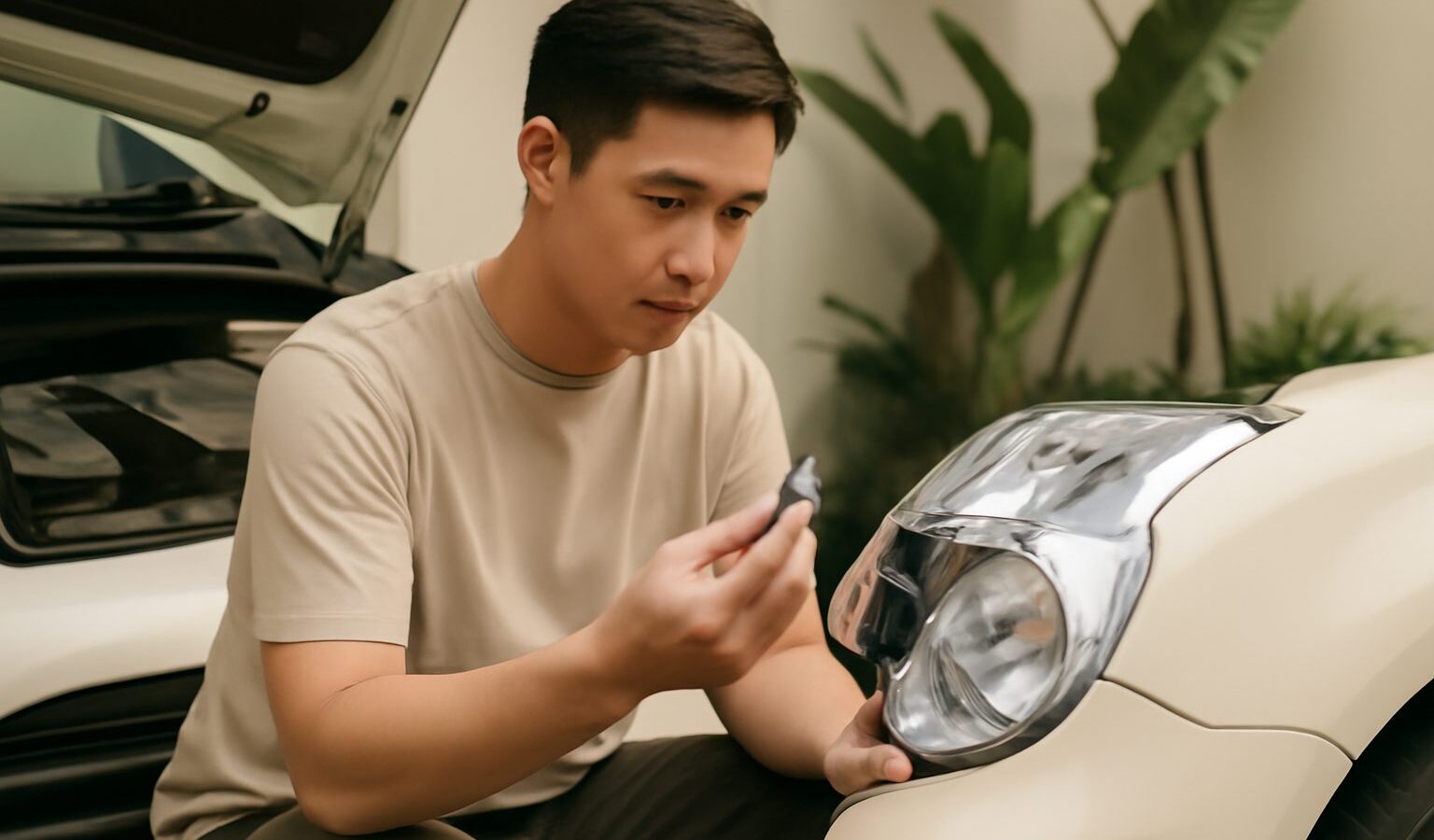
A blown bulb is one of the most common car faults, and driving with a dead headlight or brake light is both unsafe and something you can be pulled up for. The good news is that replacing a car bulb singapore drivers often deal with is, for many models, a simple job you can do yourself in a carpark. The key word is often. Some bulbs are easy, some are fiddly, and a few are best left to a workshop. This guide helps you tell the difference and do the easy ones safely.
First, work out which bulb has gone
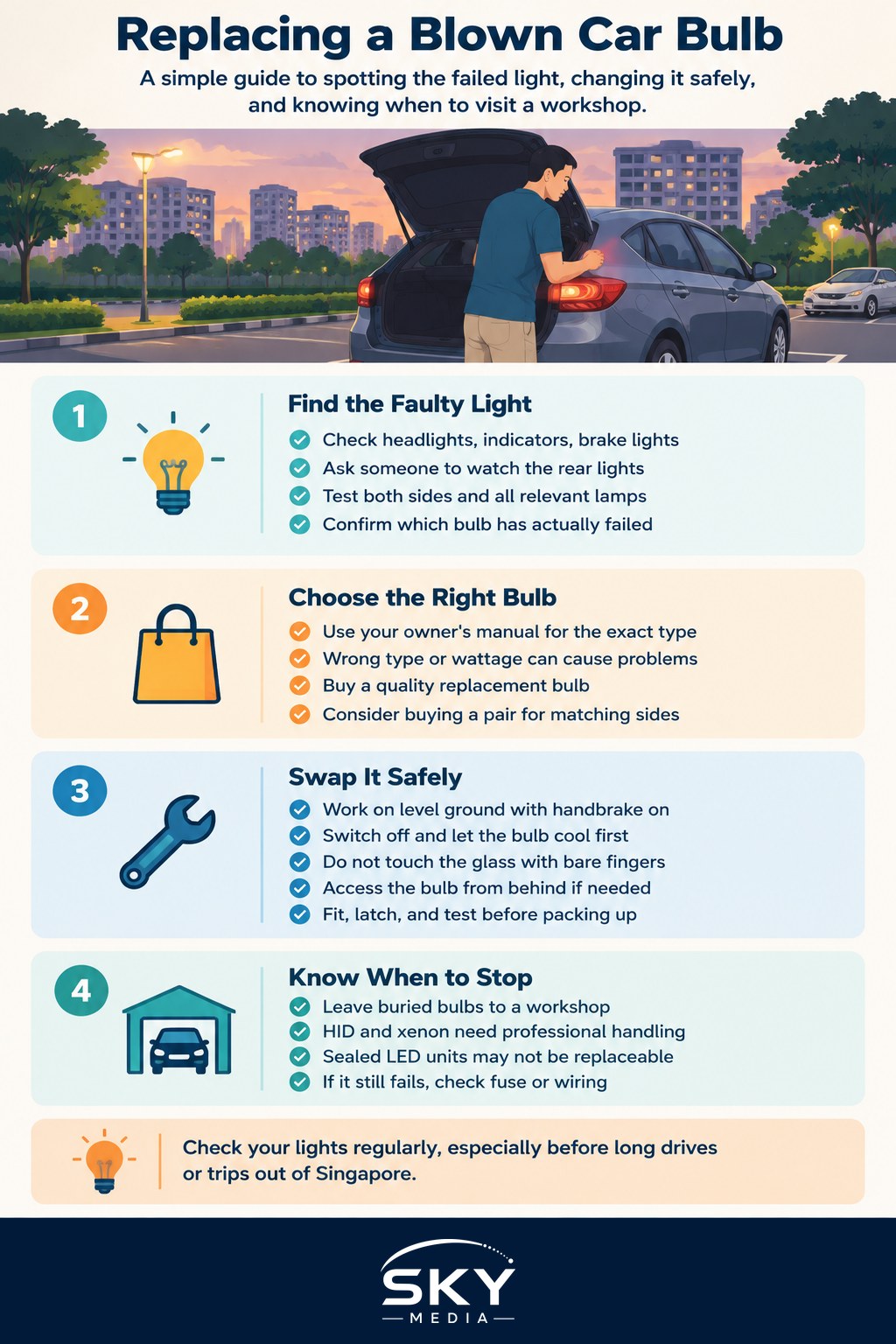
Before you buy anything, confirm which light has failed. Walk around the car with the relevant lights switched on, or ask someone to help. Check the front headlights on both low and high beam, the front and rear indicators, the brake lights, the reversing light, the rear position lights, and the number plate light. Press the brake pedal while someone watches the rear, and test the indicators on both sides.
Once you know which one is out, find the correct replacement. Your owner’s manual lists the exact bulb type for each position, and this matters more than people think. Fitting the wrong wattage or type can dazzle other drivers, damage the housing, or simply not work. Buy a quality replacement, and it is often worth buying a pair so both sides match and you have a spare.
A quick note before you start. If a bulb has been on, it will be hot. Switch the lights off and let the bulb cool before you touch it. This is a safety-first job, not a race.
The safe way to change a bulb
Work with the engine off and the key out, on level ground with the handbrake on. Here is the general approach, though the exact steps vary by car, so always follow your owner’s manual.
- Let it cool. A bulb that was just on can burn you. Give it a few minutes.
- Do not touch the glass with bare fingers. This is the single most important tip for headlight bulbs. The oil from your skin creates a hot spot on the glass that can shorten the bulb’s life or make it fail early. Hold the new bulb by its metal base or plastic collar, or use a clean cloth or glove.
- Access the back of the light. For many headlights you reach the bulb from behind, inside the engine bay. You may need to remove a cover, a clip, or a rubber boot. Some cars need a wheel or a panel removed, which is a sign the job is getting harder.
- Unclip the old bulb. Disconnect the connector, release the retaining clip or twist the holder, and withdraw the old bulb. Note how it sits so the new one goes in the same way.
- Fit the new bulb. Seat it correctly, refit the clip or holder, and reconnect the connector. Make sure everything is properly latched, because our hot and wet climate will find any gap and let moisture in.
- Test it. Switch on and check the new bulb works before you pack up.
Interior bulbs, number plate lights, and many rear cluster bulbs are usually the easiest, because you can often reach them without tools or with a small screwdriver. Front headlight bulbs range from easy to genuinely awkward depending on the model.
When to leave it to a workshop
Not every bulb is a DIY job, and there is no shame in driving to a workshop. Consider getting help when:
- The bulb is buried and you would need to remove the bumper, a wheel, or major panels to reach it.
- Your car uses HID or xenon units, which run at high voltage and should be handled by a professional.
- The failed light is an LED unit built into a sealed cluster, which often cannot be swapped as a single bulb.
- You replace the bulb and it still does not work, which points to a fuse, wiring, or connector fault rather than the bulb itself.
- The dashboard shows a warning even after a correct replacement.
If you are unsure whether a warning light is telling you something more serious, our guide to understanding dashboard warning lights in Singapore can help you read the signs. And if the job is clearly beyond a quick swap, choosing a car workshop in Singapore explains how to find a trustworthy one.
Keep bulbs part of your routine checks
A blown bulb is easy to miss because you rarely see your own rear lights. Build a quick lighting check into your habits, especially before a long drive or a trip up to Malaysia, where a faulty light is the last thing you want at a checkpoint at night. Our checklist for what to check before a long drive includes lights among the essentials, and it is a five-minute habit worth keeping.
The bottom line
Replacing a blown bulb is well within reach for many drivers, as long as you let the bulb cool, avoid touching the glass with bare fingers, use the exact bulb your owner’s manual specifies, and seat everything properly against our humid weather. Do the simple swaps yourself and save money, but know your limits. If the bulb is buried, the system is high voltage or sealed LED, or the new bulb still will not light, hand it to a qualified workshop rather than risk a botched job on something as safety-critical as your lights.
Frequently Asked Questions
How can I tell which bulb has blown? Walk around the car with the lights on, or ask someone to help. Check headlights on low and high beam, indicators, brake lights, reversing, rear position and number plate lights. Your owner’s manual lists the right bulb type for each position.
Can I drive with a blown brake light or headlight? It is unsafe and something you can be pulled up for, so replace it before driving. If you cannot fix it yourself, go to a workshop rather than carry on. Rear lights are easy to miss because you rarely see them.
Why shouldn’t I touch the glass of a headlight bulb? The oil from your skin creates a hot spot on the glass that can shorten the bulb’s life or make it fail early. Hold the new bulb by its base or collar, or use a clean cloth or glove.
Should I replace both headlight bulbs together? It is often worth buying a pair, so both sides match in brightness and you have a spare. Bulbs of the same age tend to wear at a similar rate. Use the exact type your manual specifies.
What if the new bulb still does not light up? It points to a fuse, wiring or connector fault rather than the bulb. Check that the bulb is seated and latched properly, then take the car to a qualified workshop if it still fails. Do the same if a dashboard warning stays on.
Further reading: Replacing Your Wiper Blades