

Most older people in Singapore are cared for with love by family, helpers and care staff. But abuse and neglect do happen, often behind closed doors and often by someone the senior depends on. If you are worried about an elderly neighbour, relative or friend, knowing how to report elder abuse in Singapore, and what happens after you do, can make a real difference. This guide focuses on neglect, physical and emotional abuse. For money-related exploitation, see our separate guide on protecting seniors from financial abuse.
This article is general information, not legal or medical advice. If someone is in immediate danger, call the Police on 999 or SCDF on 995 for medical emergencies.
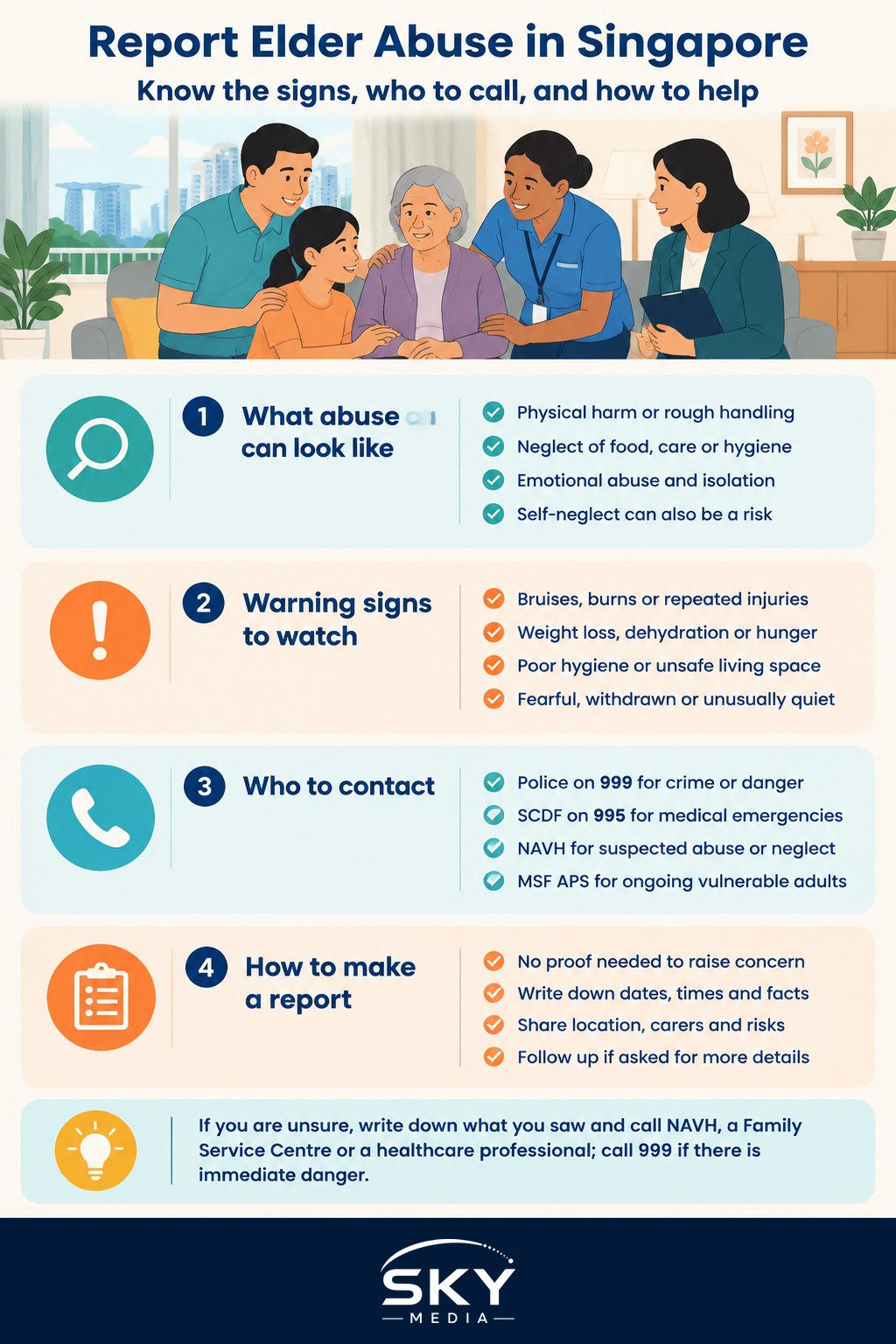
What Elder Abuse and Neglect Look Like
Elder abuse is any act, or failure to act, that causes harm or distress to an older person within a relationship of trust. It can take several forms:
- Physical abuse. Hitting, pushing, rough handling, or restraining someone without good reason, for example tying them to a bed or chair.
- Neglect. Failing to provide food, water, hygiene, medicine, medical care or a safe living space for someone who cannot manage alone.
- Self-neglect. An older person who is no longer able to look after themselves and is living in conditions that put their health or safety at risk.
- Emotional or psychological abuse. Threats, humiliation, constant shouting, isolating them from friends and family, or frightening them into compliance.
- Sexual abuse. Any unwanted sexual contact.
- Financial abuse. Taking money, property or documents through pressure or deception, which is covered in more depth in our separate guide.
Abuse can happen at home, in a care facility, or in the community, and the person responsible may be a family member, a caregiver, a domestic helper or someone else in a position of trust.
Warning Signs to Watch For
No single sign proves abuse, and many have innocent explanations, especially in frail seniors who bruise or fall easily. Look for patterns, and for explanations that do not add up.
Physical signs
- Unexplained bruises, burns, cuts or fractures, particularly in different stages of healing.
- Marks on wrists or ankles that suggest restraint.
- Repeated “falls” or injuries with vague or changing stories.
Signs of neglect
- Noticeable weight loss, dehydration or hunger.
- Poor hygiene, soiled clothing or bedding, untreated bedsores.
- Missing glasses, hearing aids, dentures or walking aids.
- Medicine not being taken, or medical appointments repeatedly missed.
- A home that is unsafe, very dirty or without basic utilities.
Behavioural signs
- The senior seems fearful, withdrawn, anxious or unusually quiet, especially around a particular person.
- A caregiver refuses to let you speak to them alone.
- Sudden isolation from friends, neighbours or community activities.
Who to Contact and When
| Situation | Who to contact | What they can do |
|---|---|---|
| Immediate danger or a crime in progress | Police on 999 | Respond urgently and investigate offences |
| Serious injury or medical emergency | SCDF on 995 | Send an ambulance and get the person to hospital |
| Suspected abuse, neglect or self-neglect, not life-threatening | National Anti-Violence and Sexual Harassment Helpline (NAVH) | Take your report and connect it to the right agency |
| Ongoing concerns about a vulnerable adult | MSF’s Adult Protective Service, through the helpline or a Family Service Centre | Assess the situation and coordinate protection |
| Concerns about care in a nursing home or care facility | The facility’s management, then MOH or the Agency for Integrated Care | Look into care standards and complaints |
The NAVH is a 24-hour national helpline run with the Ministry of Social and Family Development (MSF). At the time of writing, its number is 1800-777-0000. Check MSF’s website for the latest contact details and any online reporting options.
You can also approach a Family Service Centre, a Senior Activity Centre or Active Ageing Centre, a polyclinic or GP, or the social worker at a hospital. These professionals know how to refer cases to the right teams.
The Vulnerable Adults Act in Plain Terms
The Vulnerable Adults Act (VAA) gives the state powers to step in when an adult cannot protect themselves from abuse, neglect or self-neglect because of physical or mental infirmity, disability or incapacity. It applies to adults generally, which includes many frail or cognitively impaired seniors.
In broad terms, the Act allows MSF officers to:
- Enter premises to assess whether a vulnerable adult is at risk.
- Remove the person to a safe place in urgent situations.
- Apply to the court for orders to protect the person, such as restricting contact with the person causing harm or requiring them to receive care or counselling.
The law is designed to balance protection with respect for the older person’s own wishes. Where a senior still has mental capacity and does not want intervention, officers generally need to take their views into account. The details, including how and when these powers can be used, are set out in the Act and on MSF’s website, which is the source to check for current information.
Abuse can also be a criminal offence under other laws, which is why the Police may become involved. If you need to make a formal report about a crime, our guide on how to file a police report explains the process.
How to Make a Report
You do not need proof to raise a concern. Professionals will do the assessment. What helps is clear, factual information.
- Note what you have seen or heard. Write down dates, times, injuries, comments and conditions. Stick to facts, not conclusions.
- Keep the person safe if you can. If they are in danger, call 999 first.
- Call the helpline or speak to a professional. Explain who the senior is, where they live, what you have observed and any immediate risks.
- Share any useful details. Names of caregivers, the senior’s health conditions, language and dialect spoken, and whether they live alone.
- Follow up if asked. Agencies may contact you for more information. Privacy rules mean they may not be able to tell you everything they do.
Reports made in good faith are encouraged. If you are worried about being identified, ask the helpline how your details will be handled.
Supporting the Senior Through the Process
The older person may feel ashamed, afraid of losing their home or caregiver, or protective of the person hurting them, especially if it is their own child. A few gentle steps help:
- Talk to them privately, in their preferred language or dialect, and listen without judgement.
- Reassure them that it is not their fault and that help exists.
- Respect their choices where they are able to make them, while making sure professionals know about the risk.
- Help them stay connected to friends, neighbours and community activities. For families looking for alternative care options, our guide to finding Chinese-speaking elder care may help.
When You Are the Caregiver Who Is Struggling
Sometimes neglect starts with a caregiver who is exhausted, isolated or overwhelmed. If that is you, reaching out early protects both you and the person you care for. The Agency for Integrated Care (AIC) can point you to respite care, day care, home care and caregiver support, and Family Service Centres offer counselling. Asking for help is a responsible step, not a failure.
Speak Up Early
You may not be certain, and that is fine. If something feels wrong with an older person you know, write down what you see and contact the NAVH, a Family Service Centre or a healthcare professional. If there is immediate danger, call 999. A single phone call can be the start of real protection.
Official sources: Ministry of Social and Family Development (MSF)