
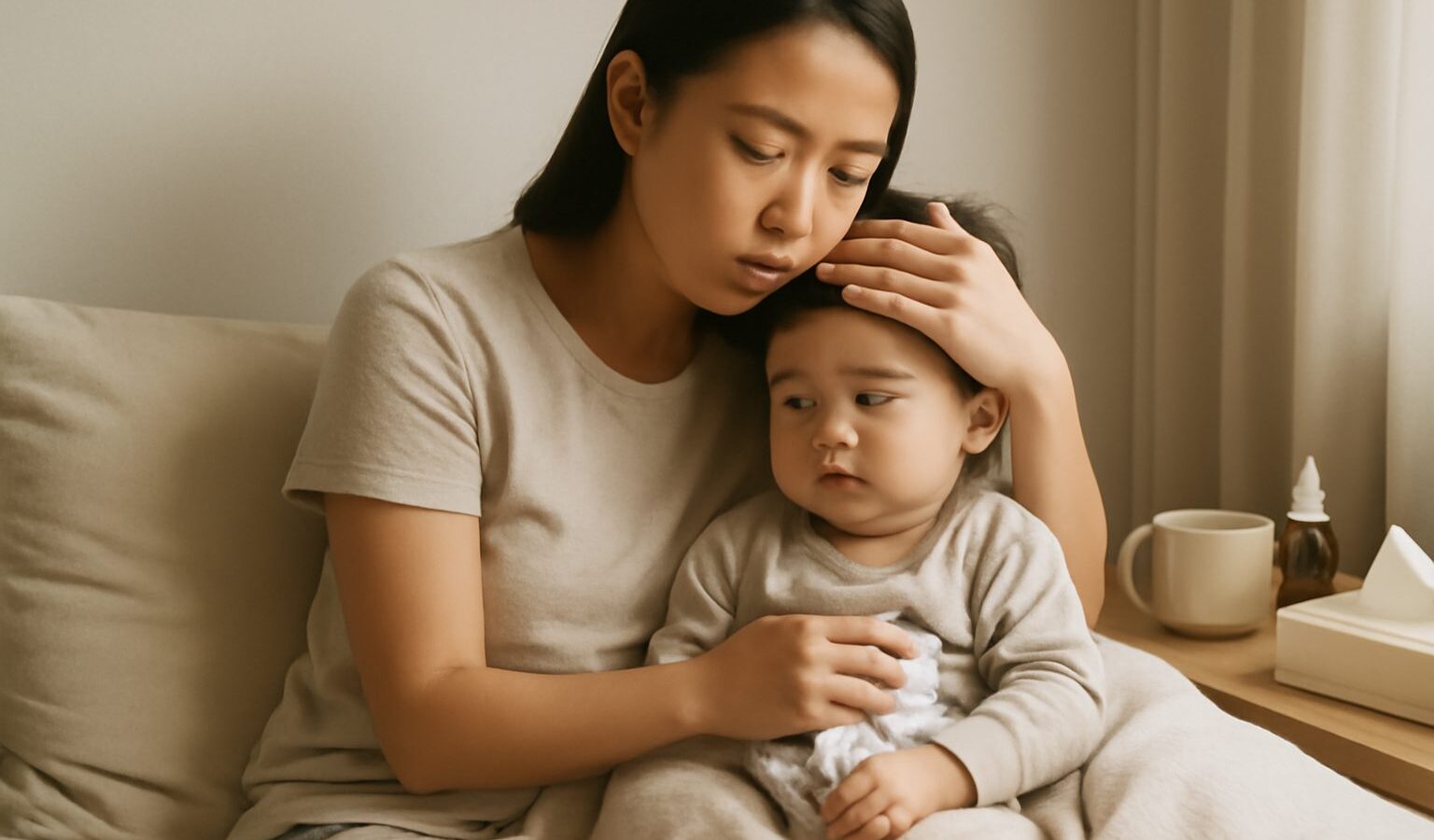
Few things worry a parent more than a fever that suddenly becomes a rash. In our warm, humid climate, viruses circulate all year, and roseola is one of the most common reasons a young child in Singapore develops a high temperature followed by a blotchy rash. This article is general information about roseola singapore parents often ask about, and other everyday viral rashes. It is not medical advice and it is not a way to diagnose your child yourself. Rashes can look very similar, and only a doctor can tell you what is actually going on and how to treat it.
What Roseola Usually Looks Like
Roseola tends to affect babies and toddlers, most often between six months and two years of age. The pattern many parents notice is a fairly high fever that lasts a few days, sometimes with a mild cough, a runny nose, or a slightly reduced appetite. The striking part comes later. As the fever settles, a pink or rose-coloured rash appears, usually starting on the trunk and then spreading to the neck and limbs. The spots are often flat or slightly raised and they typically do not itch or hurt.
Because the rash arrives just as the child starts to feel better, roseola can be reassuring in hindsight, but it is still upsetting in the moment. Some children are perfectly cheerful throughout, while others are clingy and tired. The illness is caused by a common virus and usually clears on its own. Even so, please do not assume a rash is roseola. Many childhood illnesses share these features, so a proper check by a doctor matters.
Other Common Viral Rashes
Singapore parents will come across several other viral rashes during the early years:
- Hand, foot and mouth disease, which can cause mouth ulcers and blisters on the hands and feet and spreads easily in preschools.
- Chickenpox, which brings itchy, fluid-filled spots in crops.
- Slapped cheek syndrome, which produces a bright red rash on the cheeks.
- General viral rashes that come and go with common coughs and colds.
Each of these has its own pattern and its own advice on school exclusion and care. That is one more reason self-diagnosis is risky. If you are unsure what you are looking at, a doctor can examine your child and guide you. Our guide to common baby illnesses and when to worry explains how these everyday infections tend to behave.
Caring for Your Child at Home
While your child recovers from a viral illness, the aim is comfort and hydration rather than rushing the rash away. Offer plenty of fluids in small, frequent sips, keep them in light and loose clothing given our heat, and let them rest as much as they want. A rash that does not itch usually needs nothing on the skin at all. Keep fingernails short if there is any itch, and avoid harsh soaps.
Fever can make young children miserable, so knowing how to respond calmly helps. Our article on children’s fever and when to see a doctor walks through sensible steps for nursing a little one through a bug. Do not give any medicine names or doses based on the internet. Ask your doctor or pharmacist what is appropriate for your child’s age and weight.
Warning Signs and When to See a Doctor
Most viral rashes are mild, but some signs mean your child needs to be seen promptly. Please arrange to see a doctor or paediatrician if your child:
- Has a fever that is very high, keeps climbing, or lasts longer than you would expect.
- Seems unusually drowsy, floppy, or difficult to wake.
- Is not drinking, is passing far less urine, or shows other signs of dehydration.
- Has a rash that looks like small bruises or does not fade when you press a glass against it.
- Has a stiff neck, dislikes bright light, or has a fit or seizure.
- Is a young baby, or has any symptom that simply worries you.
A rash that does not fade under gentle pressure, a fit, breathing difficulty, or a child who is very unwell needs emergency care. Go to A&E or call 995 without delay. When you are weighing up how urgent things are, our guide on when to take your child to A&E vs a GP can help you decide, though never let it stop you seeking help early if you are anxious.
Preventing the Spread
Viral rashes usually spread through coughs, sneezes, saliva, and unwashed hands. Regular handwashing, wiping down shared surfaces, and keeping a sick child home until they are well again all reduce the chance of passing an infection to siblings, classmates, and grandparents in multigenerational homes. Follow your childcare centre’s guidance on when it is safe to return, and let them know if there is an outbreak.
A Reassuring Wrap-Up
Roseola and most other viral rashes are common, self-limiting, and rarely serious. The best thing you can do is keep your child comfortable, watch for the warning signs above, and trust your instincts. If something feels wrong, or the rash is accompanied by symptoms that concern you, see a doctor for a proper diagnosis rather than guessing. For skin problems that look infected, crusted, or spreading rather than simply blotchy, read our guide to impetigo and childhood skin infections and speak to a doctor. Getting the right answer early takes the worry out of those long feverish nights.