
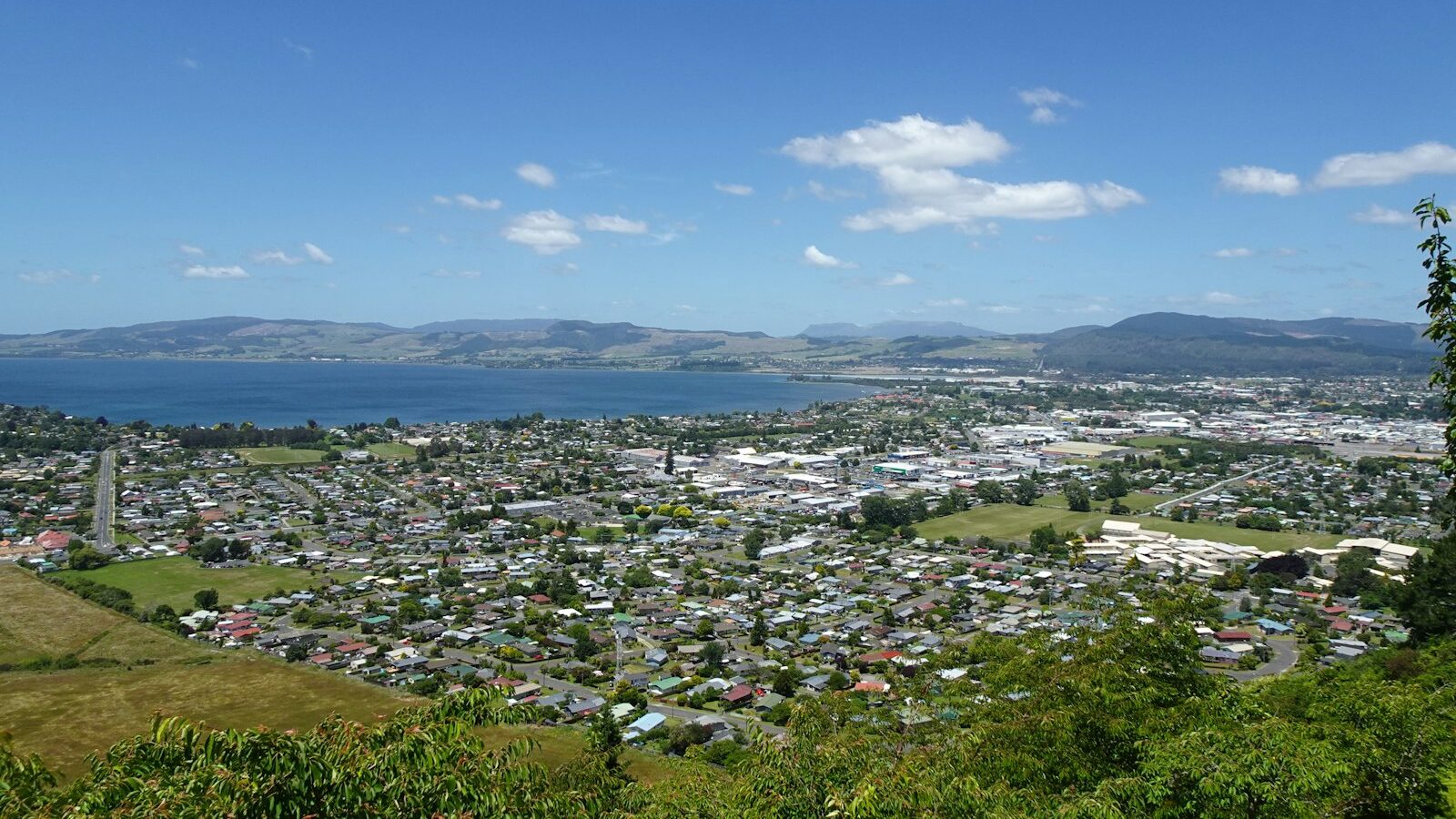
Bubbling mud pools, steaming vents, geysers and one of the best places in New Zealand to learn about Māori culture: Rotorua packs a lot into one small lakeside town. If you are planning Rotorua from Singapore, the good news is that it fits neatly into a North Island trip, and it works well for families, couples and older travellers alike.
This guide focuses on Rotorua specifically: how to get there via Auckland, how to choose between the geothermal parks, how to approach Māori cultural experiences respectfully, and how long to stay. For a wider country overview, plan the rest of your New Zealand trip separately.
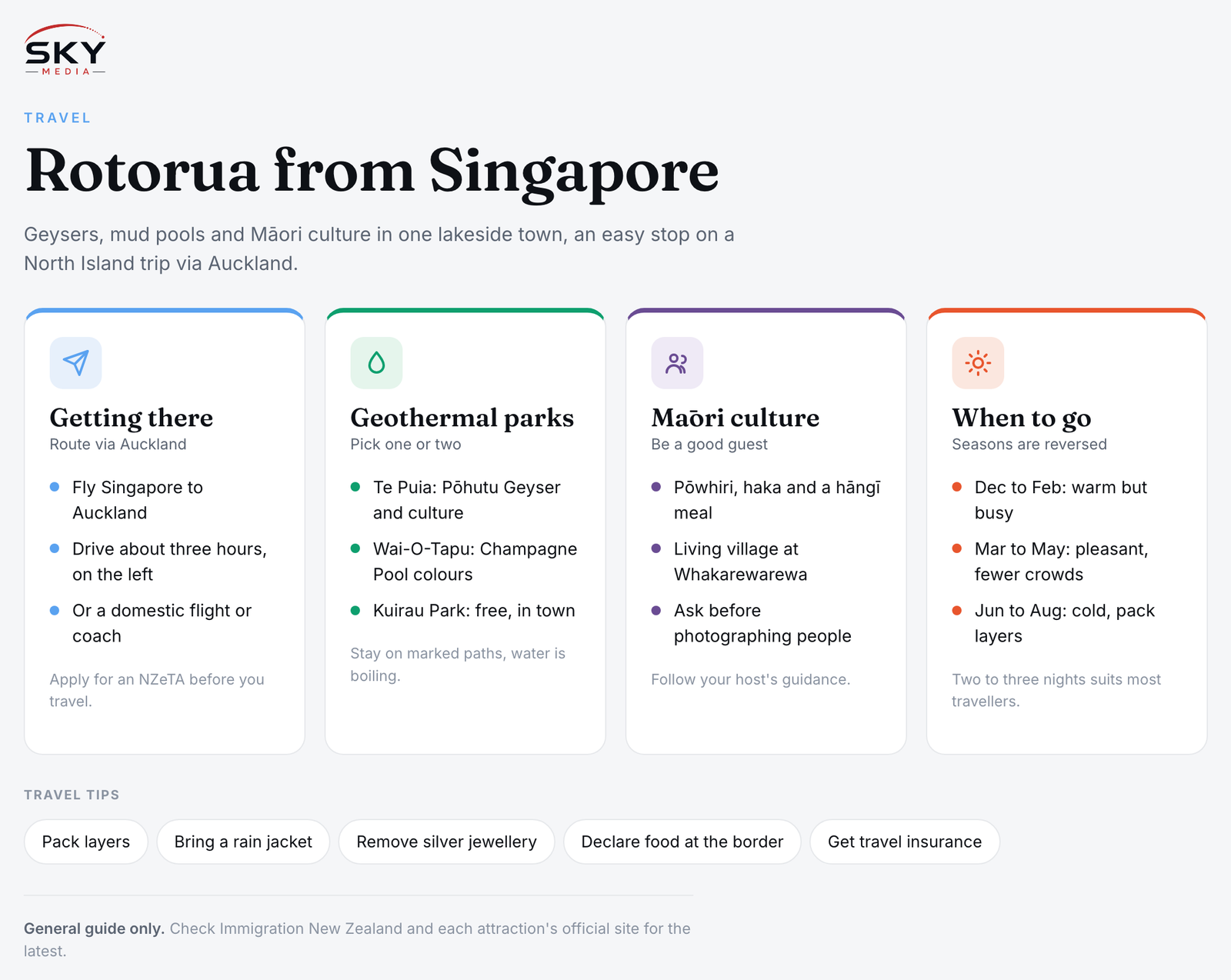
Getting There: Routing via Auckland
There is no direct flight from Singapore to Rotorua. The usual route is:
- Fly Singapore to Auckland. Direct flights run on this route, and it is an overnight flight from Singapore on many schedules, which helps you arrive with a full day ahead.
- Auckland to Rotorua. You then have three main options:
– Drive. The most popular choice. The road trip is roughly three hours each way without long stops, through farmland and small towns. You drive on the left in New Zealand, just like in Singapore, which makes it easy for Singapore drivers.
– Domestic flight. Rotorua has its own regional airport with flights from Auckland and other cities. This saves time but adds cost and luggage limits.
– Intercity coach. Coaches link Auckland and Rotorua. They are budget-friendly but less flexible.
Many travellers combine Rotorua with Hobbiton (near Matamata) and the Waitomo glowworm caves, which are both within driving distance, making a classic loop from Auckland.
Before you go: Singapore passport holders visiting New Zealand generally need to apply for an NZeTA (New Zealand Electronic Travel Authority) before travel. Requirements, levies and processing times can change, so check Immigration New Zealand’s official website well before your flight. If you hold a different passport, check your own entry requirements.
Choosing a Geothermal Park
Rotorua sits on an active geothermal field, and the town even smells faintly of sulphur (often compared to boiled eggs). Most visitors pick one or two of the major geothermal attractions rather than trying them all. Here is how the best-known options compare.
| Attraction | What it is known for | Good for |
|---|---|---|
| Te Puia | Pōhutu Geyser, mud pools, Māori arts and crafts institute | First-timers who want geysers and culture in one visit |
| Wai-O-Tapu | Brightly coloured pools such as the Champagne Pool, the Lady Knox Geyser | Photographers and travellers who want vivid colours |
| Waimangu Volcanic Valley | A long walking trail through a young volcanic valley, steaming lakes | Walkers who prefer a quieter, nature-focused visit |
| Hell’s Gate | Active mud pools and geothermal mud spa | Travellers wanting a mud bath experience |
| Kuirau Park | A free public park in town with steaming pools and foot baths | Budget travellers and a quick first taste |
A few practical notes:
- Stay on marked paths. The ground near vents and pools can be thin and the water is boiling. Barriers are there for good reasons, so keep children close at all times.
- Wear good walking shoes. Some trails involve slopes and uneven ground.
- Check timings. Some geyser displays happen at set times, and opening hours vary by season. Look at each attraction’s official website before you go and book ahead in peak periods.
Experiencing Māori Culture Respectfully
Rotorua is home to Te Arawa, the iwi (tribe) with deep roots in the area, and Māori culture is a living part of the town, not just a show. Common ways visitors experience it include:
- Evening cultural experiences. These usually include a pōwhiri (welcome ceremony), performances of waiata (song) and haka, and a hāngī meal, where food is traditionally cooked in an earth oven.
- Living villages. At places such as Whakarewarewa, Māori families have lived alongside the geothermal activity for generations, using the natural heat for cooking and bathing. Guided tours explain how.
- Arts and carving. You can watch carvers and weavers at work and learn about the meaning behind designs.
Being a good guest matters:
- Listen carefully during the welcome and follow your host’s guidance on what to do, as protocols can vary.
- Ask before photographing people, and respect any signs that say photography is not allowed.
- Do not sit on tables or put hats on food surfaces; your hosts may explain why these customs matter.
- Buy carvings and pounamu (greenstone) from reputable sellers who can explain where pieces come from.
Singaporeans often find parallels with how we treasure our own heritage communities, from the traditions explored in understanding Peranakan culture in Singapore to the stories behind Eurasian culture in Singapore. Approaching Māori culture with the same curiosity and respect makes the visit far more meaningful.
Beyond the Steam: Other Things to Do
Rotorua offers more than geothermal sights:
- Hot pools and spas. Several lakeside spas use geothermal water. Bathing rules differ from Singapore pools, so check each spa’s guidance.
- Redwoods forest. The Whakarewarewa Forest, with towering redwood trees, has walking and mountain-biking trails, and some areas have elevated treetop walks.
- Lakes. Lake Rotorua and the surrounding lakes are good for scenic drives, picnics and boat trips.
- Adventure activities. Gondola rides, luges, ziplines and rafting are popular with teens and active travellers. Check age, height and health requirements before booking.
- Food. Beyond hāngī, you will find cafes, bakeries and the occasional Asian restaurant if you miss familiar flavours.
When to Go and How Long to Stay
New Zealand’s seasons are the reverse of the northern hemisphere’s. Roughly:
- December to February (summer): warmest weather, longest days, but busiest and pricier, especially during New Zealand school holidays.
- March to May (autumn): pleasant temperatures and fewer crowds, a good choice around Singapore’s March school holidays.
- June to August (winter): cold for Singaporeans, but steaming pools and hot springs feel especially atmospheric. Pack proper layers.
- September to November (spring): mild with changeable weather.
Two to three nights in Rotorua is enough for most travellers to see one or two geothermal parks, enjoy a cultural evening and soak in a hot pool without rushing. Add more time if you want to do Hobbiton, Waitomo or Taupō as day trips.
Practical Tips for Singapore Travellers
- Pack layers. Even in summer, evenings can be cool by Singapore standards.
- Bring a rain jacket. Weather can change quickly.
- Remove silver jewellery before entering geothermal pools or mud baths, as minerals can tarnish it.
- Declare food at the border. New Zealand has strict biosecurity rules. Declare any food, plant or animal products on arrival rather than risk a fine; check the official Ministry for Primary Industries guidance before packing snacks.
- Get travel insurance that covers adventure activities if you plan to do them.
With sensible planning, Rotorua is one of the most rewarding stops on a North Island itinerary from Singapore.
Frequently Asked Questions
Is Rotorua suitable for older parents or travellers with limited mobility? Largely yes. Rotorua works for older travellers, and geothermal parks have marked paths, hot pools and spas offer gentle relaxation, and a self-drive loop keeps walking low. Some trails involve slopes and uneven ground, so check each attraction’s website for accessibility before booking.
Can I do Rotorua as a short trip from Singapore without driving? Yes. You can fly Singapore to Auckland and take a domestic flight or an intercity coach to Rotorua. A coach is budget-friendly but less flexible, while a flight saves time but adds cost and luggage limits. Day trips to nearby sights may then need a tour.
Is the sulphur smell in Rotorua harmful? The faint rotten-egg smell comes from geothermal activity and is part of the town’s character, and most visitors find it tolerable. If you have breathing difficulties, check with your doctor before visiting, and always stay on marked paths near vents and boiling pools.
Should I take silver jewellery to the geothermal pools? Leave it behind or remove it before entering geothermal pools or mud baths, because the minerals can tarnish silver. Check each spa’s guidance on bathing rules too, as they differ from Singapore pools, and keep valuables locked away safely.
What can I not bring into New Zealand when travelling from Singapore? New Zealand has strict biosecurity rules, so food, plant and animal products must be declared on arrival, and undeclared items can lead to a fine. Check the Ministry for Primary Industries guidance before packing snacks, and read Immigration New Zealand’s site for entry requirements.
Further reading: Auckland From Singapore: A City and Day Trip Guide