

A blocked nose and a rattly cough in a small baby can be frightening, especially when their breathing seems to change. Respiratory syncytial virus, or RSV, is one of the most common causes of coughs and colds in young children, and in Singapore it circulates all year round in our warm, humid climate rather than following a clear winter season. Understanding RSV in Singapore, how it can lead to bronchiolitis, and above all which warning signs mean you need urgent help, gives you the confidence to act quickly when it matters.
This article offers general information only. It is not medical advice and not a tool for self-diagnosis. Always see a doctor or paediatrician for diagnosis and treatment, and in an emergency go straight to A&E or call 995.
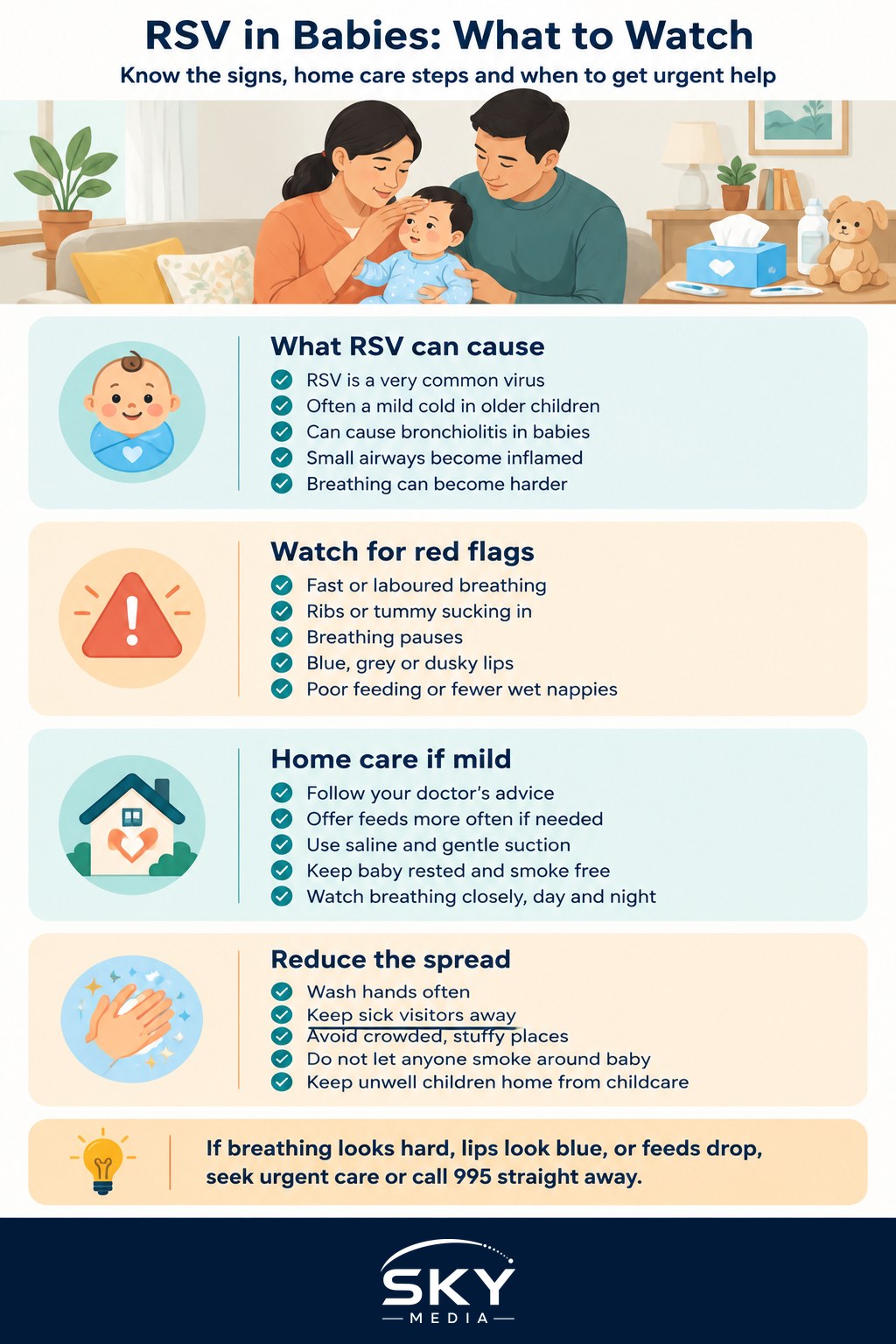
What RSV and Bronchiolitis Are
RSV is a very common respiratory virus. In older children and adults it usually causes nothing worse than a mild cold. In babies and young toddlers, however, the same virus can travel deeper into the small airways of the lungs and cause bronchiolitis, an inflammation and narrowing of those tiny airways that makes breathing harder.
Most cases start just like an ordinary cold, with a runny or blocked nose, a mild cough and sometimes a fever. Over the next few days the cough can worsen and breathing can become faster or more laboured, particularly in the youngest babies. Feeding may become harder because a congested, breathless baby struggles to suck and breathe at the same time.
The illness is very contagious and spreads through coughs, sneezes and touching contaminated surfaces. Premature babies, very young infants and children with heart or lung conditions can be more vulnerable to a severe case.
Red Flags: When to Get Urgent Care
This is the most important part of the article. Coughs and colds are usually mild, but bronchiolitis can worsen quickly in a small baby, so watch your child’s breathing closely. Seek urgent medical help or call 995 if your baby shows any of these signs:
- Fast or laboured breathing, or breathing that looks like hard work
- The ribs, the skin between them, or the tummy sucking in with each breath
- Pauses in breathing
- Blue, grey or dusky lips, tongue or face
- Poor feeding, or far fewer wet nappies than usual
- Grunting with each breath, floppiness, or being very hard to wake or rouse
- A baby who is getting worse quickly, or who is very young and seems unwell
Do not wait to see if things improve if any of these appear. Trust your instincts as a parent. You know your baby best, and it is always better to be checked and reassured than to delay. For a wider overview of warning signs, our guide on common baby illnesses and when to worry and on when to take your child to A&E vs GP can help you judge.
Caring for a Baby at Home
If your doctor has assessed your baby and is happy for you to care for a milder illness at home, the focus is on comfort, hydration and close monitoring. There is no cure that clears the virus faster, so care is about supporting your baby while it runs its course.
- Keep offering feeds. Smaller, more frequent feeds are often easier for a congested baby. Watch for signs of dehydration such as fewer wet nappies.
- Clear the nose gently. Saline drops and gentle suction, as advised by your doctor or pharmacist, can make feeding and sleeping easier.
- Keep your baby comfortable and rested, and keep the air smoke free.
- Watch the breathing carefully, especially at night and during feeds, so you catch any red flags early.
Do not give any medicines to a baby without a doctor’s guidance, and never use adult cough or cold remedies for young children. Our guide to caring for a sick child at home has more gentle, practical tips.
Reducing the Spread
Because RSV spreads so easily, simple hygiene protects the youngest and most vulnerable babies.
- Wash hands often, and ask visitors to do the same before holding your baby.
- Keep newborns and premature babies away from anyone with a cough or cold.
- Avoid crowded, poorly ventilated places when your baby is very young or unwell.
- Do not let anyone smoke around your child.
- Keep an unwell child home to protect other babies at childcare.
Speak to your paediatrician about which vaccinations and preventive options may be relevant for your family, and check current official health information rather than relying on general articles.
When to See a Doctor Even Without Emergency Signs
Beyond the red flags above, see a doctor if your baby has a fever you are worried about, is feeding poorly, is under a few months old, has a cough that is getting worse rather than better, or if you simply feel that something is not right. Early review is wise, and a healthcare professional can decide whether your baby needs closer monitoring.
A Calm, Practical Wrap-Up
Most babies with RSV and even mild bronchiolitis recover well with rest, fluids and time. The key is knowing the difference between an ordinary cough and cold and the warning signs of trouble breathing. Keep feeds up, keep the nose clear, watch the breathing, and never hesitate to seek urgent care or call 995 if you spot a red flag. When it comes to a small baby and their breathing, acting early is always the right call.
Frequently Asked Questions
How long does RSV last in babies? Many babies improve within a week or two, though the cough can linger longer. Symptoms often peak in the first few days. Because breathing can worsen, keep watching for red flags and see a doctor if your baby is not improving or if you are worried.
Is there a vaccine or preventive option for RSV? Options may exist for some babies and pregnant mothers, but availability and eligibility change. Ask your paediatrician or obstetrician what is currently relevant, and check official information from MOH rather than relying on older articles.
Can RSV be mistaken for a common cold or flu? Yes, it starts like a cold with a runny nose and cough, and only some babies develop bronchiolitis. Fast or laboured breathing, poor feeding or fewer wet nappies are what separate it from a mild cold. A doctor can assess your baby.
Can older children and adults pass RSV to my newborn? Yes. They may only have a mild cold but can still spread the virus to a baby. Ask sick visitors to stay away, wash hands before holding the baby and avoid sharing cups or kissing the baby’s face when anyone has symptoms.
Will my baby need to be admitted to hospital with RSV? Most babies recover at home, but some need hospital care if they struggle to breathe or feed. Younger infants and those with other health conditions are at higher risk. A doctor decides based on how your baby is breathing and feeding.
Official sources: HealthHub