
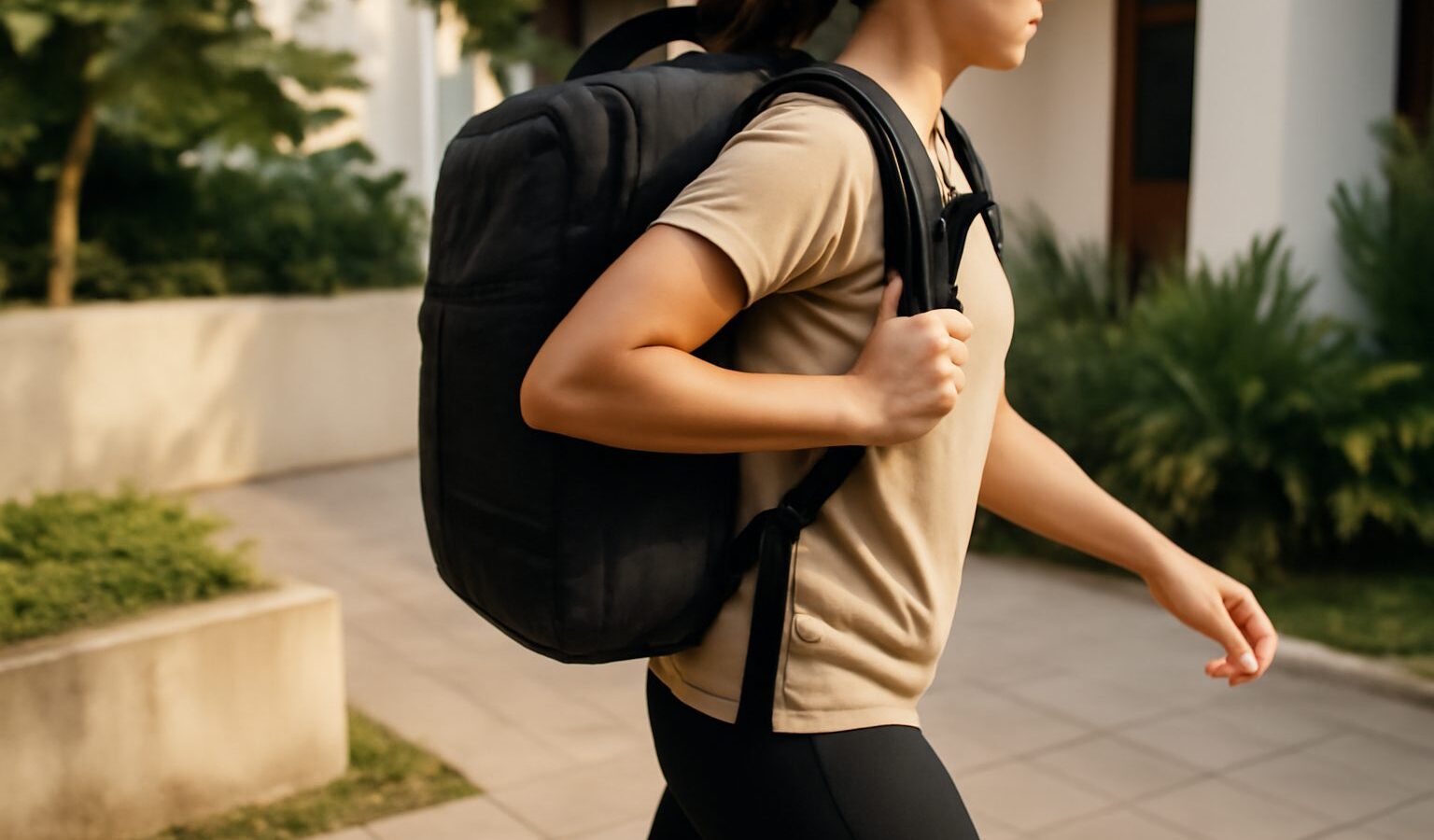
If you can walk, you can ruck. Rucking simply means walking with a weighted pack on your back, and it turns an ordinary stroll into a proper strength and cardio workout. The idea comes from military load carriage, but you do not need a parade square or a drill sergeant to try it. A sturdy backpack, some sensible weight and a stretch of pavement are enough to begin. For many Singaporeans who find running hard on the knees but want more than a gentle walk, rucking sits in a very useful middle ground.
This guide explains what rucking is, why it works, how to load your pack safely, and how to build the habit around our hot, humid climate and our excellent network of park connectors and reservoirs.
What Rucking Actually Is
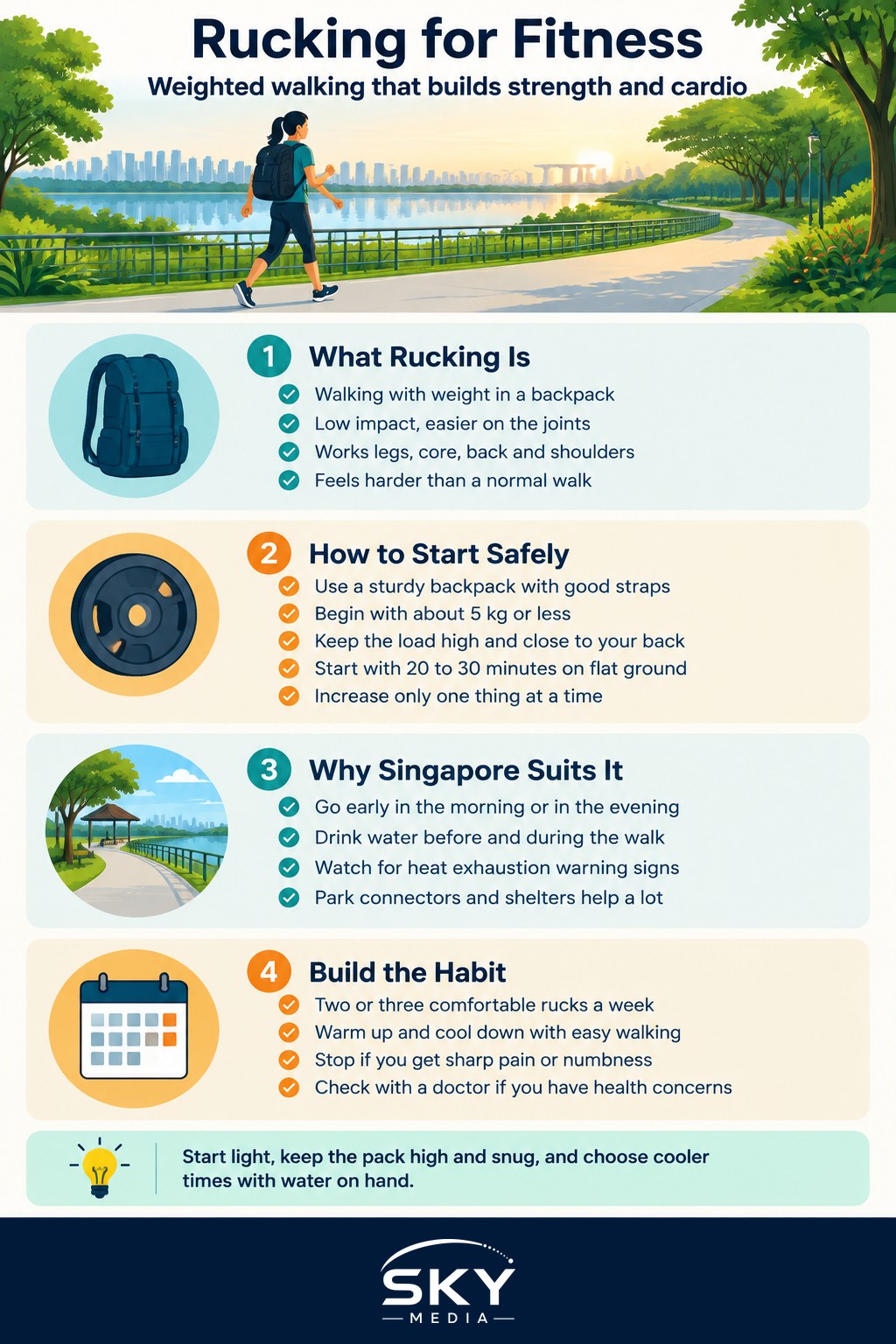
Rucking is weighted walking. You carry a load in a backpack, usually across your upper back close to your shoulder blades, and you walk at a brisk but comfortable pace. That is the whole of it. The added weight makes your heart, lungs and muscles work harder than they would on an unloaded walk, so you get more training benefit from the same distance and time.
Because your feet stay in contact with the ground, rucking is low impact compared with running. There is no repeated pounding through your joints, which is why some people who struggle with running knees or shin pain find rucking more forgiving. At the same time, the load recruits your legs, hips, core, back and shoulders, so you build useful, everyday strength. Carrying groceries up to an HDB flat or lugging a toddler around suddenly feels easier.
It also burns meaningful energy without feeling punishing. Walking with a moderate load can raise your effort well above a normal walk, closer to a light jog, while still letting you hold a conversation. That makes it a friendly option for beginners, returners and anyone rebuilding fitness after a break.
How to Start Rucking Safely
Start light and build up slowly. This is the single most important rule, because the temptation to pile on weight is exactly how people hurt their backs and shoulders.
- Pick a proper pack. Use a backpack with padded, adjustable shoulder straps and, ideally, a hip or chest strap to stop it swinging. A hiking daypack works well. Avoid a flimsy sling bag that drags on one shoulder.
- Choose a starting weight. A common sensible starting point is around five kilograms, or roughly ten per cent of your body weight, whichever feels lighter. You can use a dedicated weight plate, but water bottles, rice bags wrapped in a towel or a couple of books all work fine.
- Position the load high and snug. Pack the weight so it sits high on your back, near your shoulder blades, and cinch the straps so the pack hugs you rather than sagging near your bottom. Pad it with a towel so nothing digs in.
- Walk tall. Keep your chest up, shoulders back and core lightly braced. Take natural steps and let your arms swing. Do not lean far forward or arch your lower back.
- Begin short. Try twenty to thirty minutes on flat ground for your first outing. See how your shoulders, hips and knees feel the next day before going further.
Add either distance, time or weight, but not all three at once. A steady increase of around ten per cent a week is a reasonable guide. If a load feels genuinely heavy on your back or changes your posture, it is too much for now.
Rucking Versus Ordinary Walking and Running
It helps to see where weighted walking sits alongside the two activities most people already know. The table below is a rough comparison to guide your choice, not a set of medical measurements.
| Factor | Ordinary walking | Rucking | Running |
|---|---|---|---|
| Joint impact | Very low | Low | Higher, repeated pounding |
| Strength benefit | Minimal | Good for legs, back and core | Moderate |
| Effort per minute | Gentle | Moderate to high | High |
| Kit needed | Shoes only | Backpack plus weight | Shoes only |
| Beginner friendliness | Very high | High | Moderate |
| Easy to scale | Limited | Very easy, adjust the load | Adjust pace and distance |
If your knees dislike running but plain walking no longer challenges you, rucking is a natural next step. You keep the low impact of walking while adding a strength and cardio stimulus closer to a jog. To understand how hard you are actually working, pair rucking with the ideas in our guide to heart rate zone training, and keep most of your walks in an easy, sustainable effort as described in zone 2 cardio.
Rucking in Singapore’s Climate
Our weather is the biggest thing to plan around. Carrying a load in heat and humidity raises your body temperature and fluid loss faster than an unloaded walk, so treat hydration and timing seriously.
- Go early or late. The hours after sunrise or in the evening are far kinder than the midday sun. Covered walkways, sheltered void decks and tree lined park connectors give useful shade.
- Hydrate before and during. Drink water before you set off and carry some with you. On longer rucks, sip regularly rather than waiting until you feel parched.
- Know the warning signs. Stop, find shade and cool down if you feel dizzy, get a headache, stop sweating, feel nauseous or notice your heart racing. These can be signs of heat exhaustion, which can progress to heat stroke, a medical emergency.
- Dress light. Breathable, moisture wicking clothing and a well fitted pack that lets air move across your back all help.
Singapore is genuinely well suited to rucking. The Park Connector Network links neighbourhoods with flat, well paved routes; the reservoirs and their surrounds offer longer scenic loops; and even a lap of your estate or a few flights of HDB stairs with a light pack counts. ActiveSG parks and the many sheltered corridors mean you can often keep going through a passing shower.
Building the Habit and Avoiding Injury
Consistency beats intensity. Two or three rucks a week, kept comfortable, will do more for your fitness than one exhausting march that leaves you sore for days. Warm up with a few minutes of unloaded walking, and cool down the same way. If you are new to exercise, start with the pack empty or nearly empty and simply get used to walking briskly first.
Listen to your body. A little muscle soreness a day or two later is normal and is covered in our guide to muscle soreness and DOMS. Sharp pain, joint pain, numbness or tingling down your arms, or back pain that lingers are not normal. Lighten the load or stop, and give yourself proper rest days to recover.
This article is general information, not medical advice. If you are older, sedentary, pregnant, carrying an injury, or living with a heart condition, high blood pressure, diabetes or any chronic condition, check with your doctor before you start rucking or any new exercise programme. A physiotherapist can advise on pack weight and posture if you have a history of back or shoulder trouble. Rucking rewards patience: begin light, walk tall, respect the heat, and let the weight grow slowly as your body adapts.