
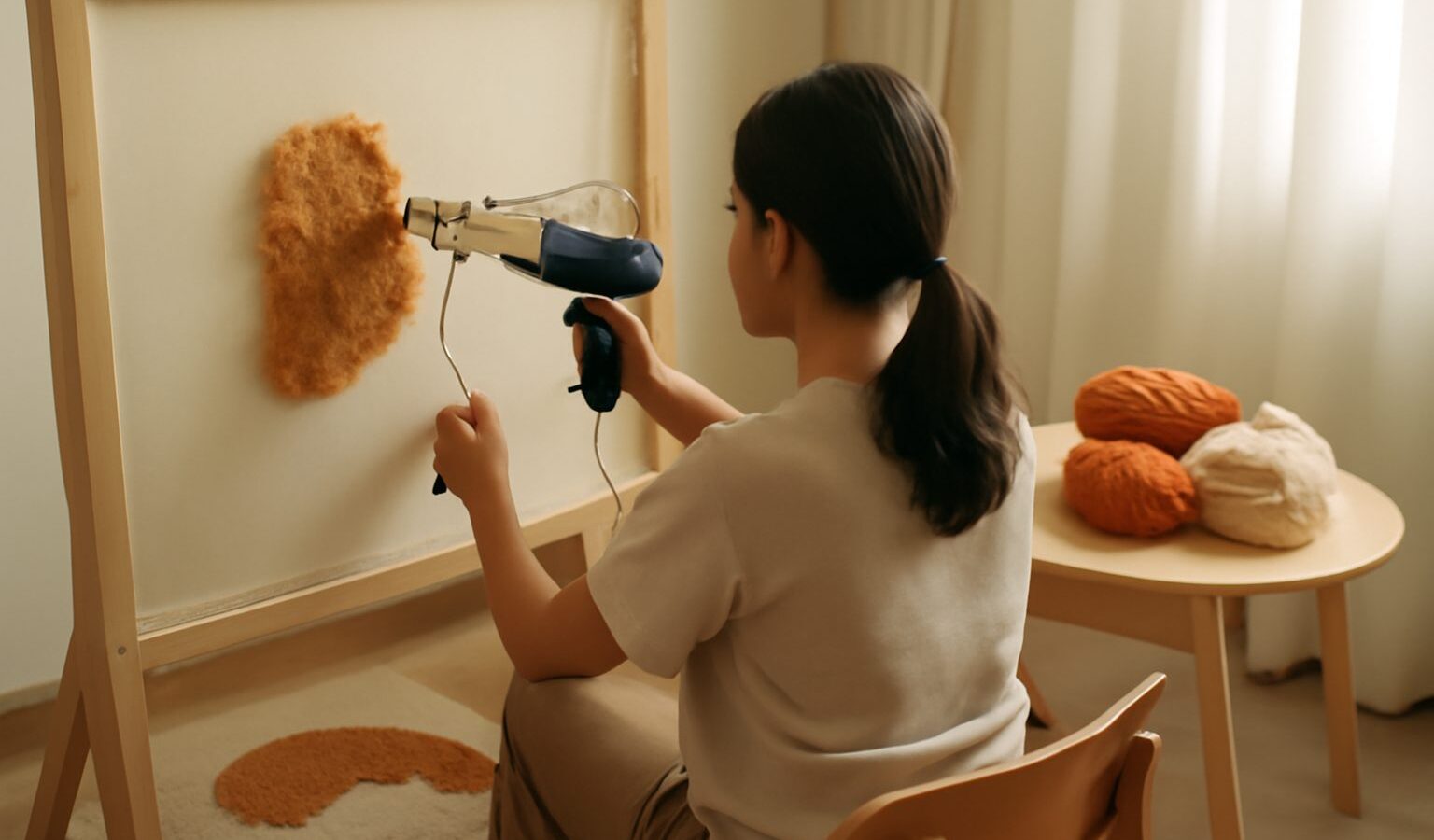
There is something deeply satisfying about watching a design appear beneath your hands one row at a time, and few crafts deliver that thrill as quickly as rug tufting. With a tufting gun punching loops of yarn through a stretched cloth, a plain frame turns into a soft, colourful rug in an afternoon rather than a month. Rug tufting has jumped from workshops onto social feeds because the results look impressive, the learning curve is gentle, and you can make something genuinely useful for your own home. If you have been admiring those bold custom rugs and wondering whether you could make one, the honest answer is yes, and this guide will show you how to begin sensibly and safely.
Why Rug Tufting Is a Great Beginner Craft
The biggest draw is speed. Many soft crafts reward patience over weeks, but a small tufted piece comes together fast, which keeps your motivation high while you are still learning. You also get a real object at the end, a mat, a wall hanging or a coaster set that you actually use, rather than another practice swatch tucked in a drawer.
Tufting is forgiving, too. Mistakes are easy to pull out and redo, and the fluffy pile hides small wobbles in your lines. Once the rug is carved and finished, minor unevenness simply reads as texture. For an enthusiastic beginner who wants visible progress without years of practice, that quick payoff makes rug tufting hard to beat.
It is worth being clear about the commitment, though. A tufting gun and frame cost more upfront than a ball of yarn and a hook, and the gun is a powered tool that needs respect. If you would rather test the waters gently first, a hand tool like a punch needle covers similar ground at a fraction of the cost, and you can always upgrade later.
What You Need to Start
You do not need a studio, but you do need a few core items. Here is the honest starter list.
- A tufting gun, either the cut-pile or loop-pile type, or a manual punch needle if you want the cheapest possible entry.
- A sturdy frame to stretch your cloth tight, which you can buy or build from timber and pegs from a hardware store.
- Primary tufting cloth, the woven backing with a printed grid that the gun punches through.
- Rug yarn in your chosen colours, ideally a wool or acrylic blend sold for rugs rather than fine knitting yarn.
- A backing fabric and a suitable rug glue to lock the loops in place from behind.
- Basic finishing tools, sharp scissors or clippers for carving, plus a marker to trace your design onto the cloth.
Buy from a craft shop, an art-supply store or an online marketplace, and start with a small frame. A cramped HDB flat has no room for a huge setup, and a compact frame you can lean against a wall or slide under the bed is far more practical than an ambitious one that dominates the living room.
Safety and Being a Good Neighbour
A tufting gun is powerful. The needles move fast and the motor drives them with real force, so treat it like any other power tool. Always keep your free hand well clear of the front of the gun, wear safety glasses to protect your eyes from stray fibres and the occasional flung staple or yarn end, and never point the running gun at yourself or anyone else. Read the manual that comes with your machine and follow its own instructions first.
Handle the gun with care around the stretched cloth, keep it switched off while threading or clearing a jam, and unplug it when you step away. Store it and all small parts out of reach of young children, and supervise closely if children want to watch.
Noise matters in close quarters. A tufting gun buzzes loudly and vibrates through the frame, so tuft during sociable daytime hours rather than late at night, and consider a rug mat or towel under the frame legs to dampen sound for the flat below. Singapore’s humidity is the other quiet factor: let rug glue cure fully in a ventilated spot, and store yarn and finished rugs somewhere dry so nothing turns musty.
Your First Project, Step by Step
Resist the urge to start with a giant floor rug. A small mug rug, a coaster or a palm-sized wall hanging teaches you everything with far less yarn and frustration.
Begin by stretching your primary cloth drum-tight on the frame, because a loose cloth is the single most common cause of skipped loops and uneven pile. Trace a simple bold design onto the cloth with a marker, keeping shapes large and lines thick, since fine detail is hard to read once the pile fluffs up. Thread the gun, set a comfortable speed, and practise on a spare corner until your loops sit evenly.
Work slowly and keep the gun flat against the cloth, moving in smooth passes to fill each area. When the front is done, trim any long ends, then apply rug glue across the back and press your backing fabric on. Once the glue has fully cured, cut the piece off the frame, tidy the edges, and carve the pile with scissors to sharpen your shapes. That first finished rug, however wobbly, teaches you more than any video.
Beginner Mistakes and How to Improve
Most early problems trace back to a handful of habits. This table sums up what tends to go wrong and the easy fix.
| Common mistake | Why it happens | Simple fix |
|---|---|---|
| Loops pull out easily | Cloth not tight, or glue skipped or too thin | Restretch drum-tight and glue the whole back generously |
| Skipped or uneven loops | Moving the gun too fast or lifting it off the cloth | Slow down and keep the gun flat and steady |
| Muddy, unclear design | Shapes and outlines drawn too small | Use bold shapes and thick lines, save detail for later |
| Wasted yarn and cloth | Starting with an oversized first rug | Begin with a coaster or mug rug to learn the basics |
As you gain confidence, push into colour blending, mixing loop and cut pile for texture, and carving deeper relief into your designs. Keep a small notebook of what worked, revisit the manual for maintenance so your gun keeps running smoothly, and let each project be slightly more ambitious than the last. Progress in rug tufting is quick and visible, which is exactly what makes it such a rewarding habit to keep.
Explore More
If rug tufting has you hooked on soft, tactile crafts, you might enjoy the gentler and cheaper cousin in our guide to punch needle for beginners. For more ways to play with yarn and texture, take a look at weaving on a frame loom and needle felting for beginners, both of which pair beautifully with a tufting habit.