

Sapa sits high in the mountains of far northern Vietnam, close to the Chinese border, and it is one of those places that rewards the effort of getting there. Terraced rice fields spill down the valleys around Fansipan, the highest peak in Indochina, and the market towns are home to Hmong, Dao and Tay communities whose textiles and traditions are woven into daily life. For a Singapore traveller used to short beach hops, Sapa feels like a genuine change of altitude and pace. This guide covers how to plan the trip sensibly, without any illusions about the journey involved.
Getting There From Singapore
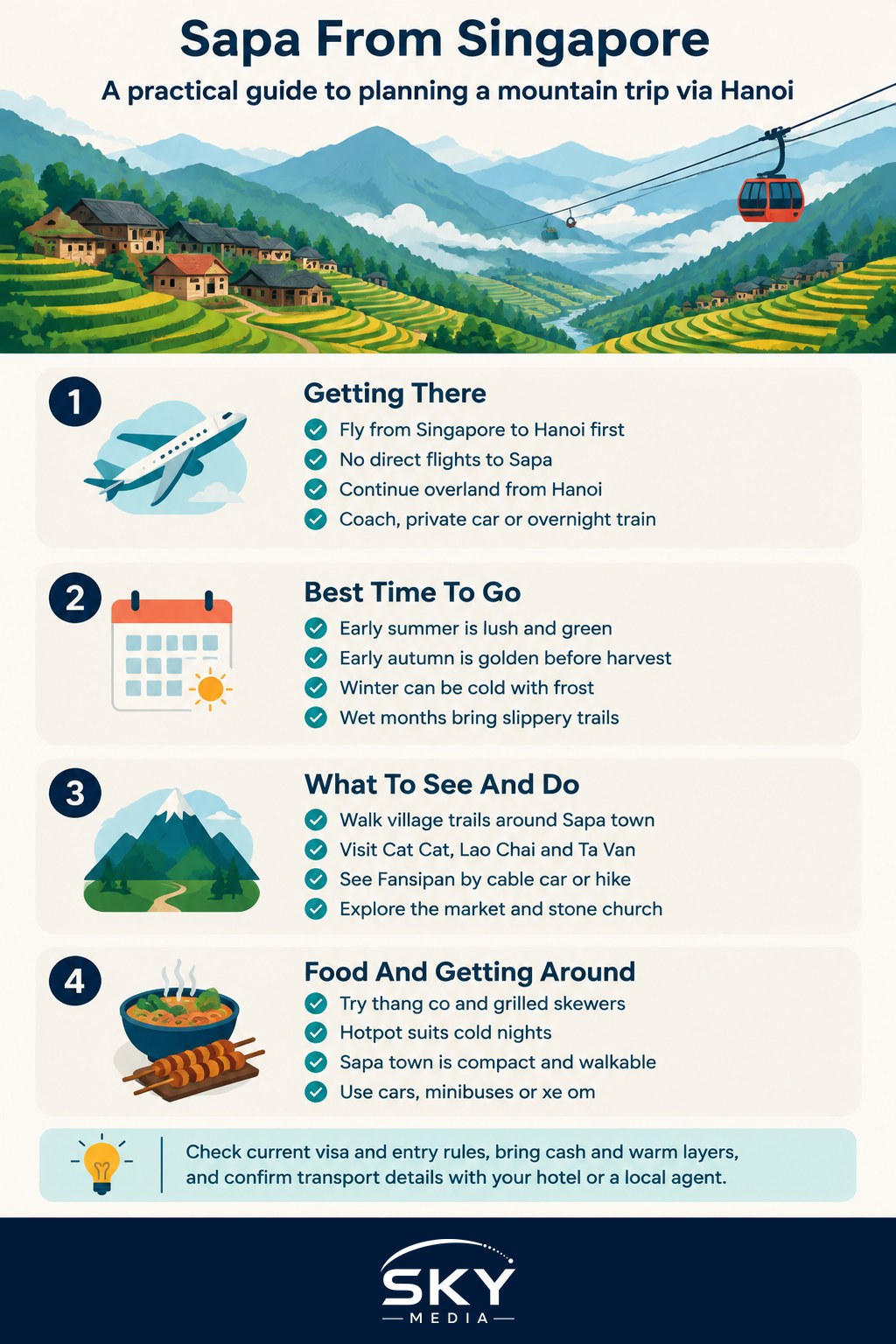
Be clear on one point from the start. There are no direct flights from Singapore to Sapa. Sapa has no commercial airport, so every route runs through Hanoi first. From Singapore you fly to Hanoi, and from Hanoi you travel overland to Sapa, a distance of roughly 300 to 320 kilometres to the northwest.
From Hanoi you have two main overland options. The first is the expressway coach or private car, which most travellers now use because a modern highway connects the capital to Lao Cai and Sapa. The second is the classic overnight train from Hanoi to Lao Cai, followed by a shorter road transfer up the winding mountain road into Sapa town itself. Both approaches are well established, and many visitors book a coach or minibus transfer as part of a trekking package. I would avoid committing to exact departure times or fares in advance, since schedules and operators change often. Confirm the current timetable and pickup arrangements with your accommodation or a reputable local agent once your Hanoi dates are set.
Because you route through the Vietnamese capital anyway, it makes sense to build in a night or two there. Our Hanoi from Singapore guide covers the old quarter, and if you want a second northern base, the karst scenery of Ninh Binh from Singapore pairs naturally with a Sapa trip.
Best Time To Visit
Sapa has real seasons, which is part of its appeal for anyone tired of a permanent equatorial climate. The rice terraces are greenest through the growing season in early summer, and they turn a famous golden colour just before the harvest in early autumn. These shoulder periods are the classic window for photography and comfortable trekking.
Winter is genuinely cold by Southeast Asian standards, and the higher slopes occasionally see frost or even a dusting of snow. Pack warm layers, a windproof shell and proper walking shoes whatever the month, because mountain weather shifts quickly and mornings can be misty. The wettest months bring heavy afternoon downpours that make trails slippery, so build flexibility into your plans. For a broader view of regional timing, see our overview of the best time to visit Southeast Asia.
Highlights
The main draw is walking. Trails thread out from Sapa town through villages such as Cat Cat, Lao Chai, Ta Van and Ta Phin, passing waterfalls, bamboo groves and the sculpted terraces themselves. Many visitors hire a local Hmong or Dao guide, which supports the community and turns a walk into a proper cultural exchange.
Fansipan looms over everything. Fit hikers can attempt a guided multi day ascent, while everyone else can reach the summit area by cable car for the views without the sweat. Sapa town has a lively market, a stone church and a growing cluster of cafes with valley views. If mountains and walking are your reason for travelling, our guide to nature and adventure travel from Singapore has more ideas in the same spirit.
Food
Mountain food in Sapa leans hearty and warming, which suits the climate. Look out for thang co, a traditional highland stew, grilled skewers sold at the evening market, and fresh spring rolls. Hotpot is popular on cold nights, often with local greens and mushrooms gathered nearby. Salmon and sturgeon are farmed in the cool streams around the region and appear on many menus. Vietnamese coffee, served strong and sweet, is the perfect antidote to a chilly morning, and street stalls sell corn and sticky rice to keep you going on the trail.
Getting Around
Sapa town is compact and walkable. Beyond it, most people get around on foot during treks, by hired car or minibus for longer transfers, and by the Fansipan cable car for the peak. Motorbike rental is available and popular for exploring outlying valleys, but mountain roads are steep, foggy and unforgiving, so only ride if you are genuinely experienced and properly licensed and insured. For shorter hops, local drivers and xe om motorbike taxis fill the gaps.
A Simple Itinerary Idea
A workable plan might run like this. Spend your first day travelling from Hanoi and settling into Sapa, then take an easy afternoon stroll to acclimatise. On the second day, do a full guided trek through the valley villages with a village lunch. Use the third day for Fansipan, whether by cable car or a longer hike, and browse the market in the evening. On the fourth day, visit a village such as Ta Phin for its textile traditions before your transfer back towards Hanoi. Add nights if you want a slower pace or a longer summit attempt.
Practical Tips
Sort your entry requirements early. Check the latest visa and entry rules for a Singapore passport with the Vietnamese embassy and with ICA before you book, since these can change. Carry Vietnamese dong in cash for villages and market stalls, as card acceptance is patchy once you leave the main town. Bring layers, a rain shell and sturdy footwear, and pace yourself at altitude on the first day. Travel insurance that covers trekking and mountain activity is well worth arranging, and our travel insurance explained for Singapore piece walks through what to look for. Finally, speak to a travel clinic about routine vaccinations and any health advice for rural northern Vietnam before you go. Treat local guides with respect, ask before photographing people, and buy directly from the artisans whose work makes Sapa so distinctive.
Frequently Asked Questions
Is the overnight train or the expressway coach better for reaching Sapa? Most travellers now use the expressway coach or a private car because a modern highway links Hanoi to Lao Cai and Sapa. The overnight train to Lao Cai, plus a road transfer up the mountain, is the classic alternative. Confirm current timetables with your accommodation or a reputable agent.
Can a first-time trekker manage the Sapa village trails? Generally yes, since many trails through villages like Cat Cat or Ta Van are walks rather than technical climbs. Hire a local Hmong or Dao guide, wear sturdy shoes, and pace yourself on the first day at altitude. Wet weather makes paths slippery.
Do I need to hike to reach the top of Fansipan? No. Fit hikers can try a guided multi-day ascent, but everyone else can reach the summit area by cable car. That gives you the views without the long climb, though mountain weather can still be cold and misty, so bring a warm layer.
How cold does Sapa get, and what should I pack from Singapore? Sapa can feel genuinely cold, with winter frost and an occasional dusting of snow on higher slopes. Pack warm layers, a windproof shell, a rain jacket and proper walking shoes in any month, as mountain weather changes quickly and mornings are often misty.
Is it better to stay a night in Hanoi before heading to Sapa? It is a sensible idea, since every route runs through Hanoi anyway. A night or two lets you recover from the flight, confirm your coach or train pickup, and see the old quarter. It also gives you buffer time if your connection runs late.
Further reading: Ha Giang From Singapore