
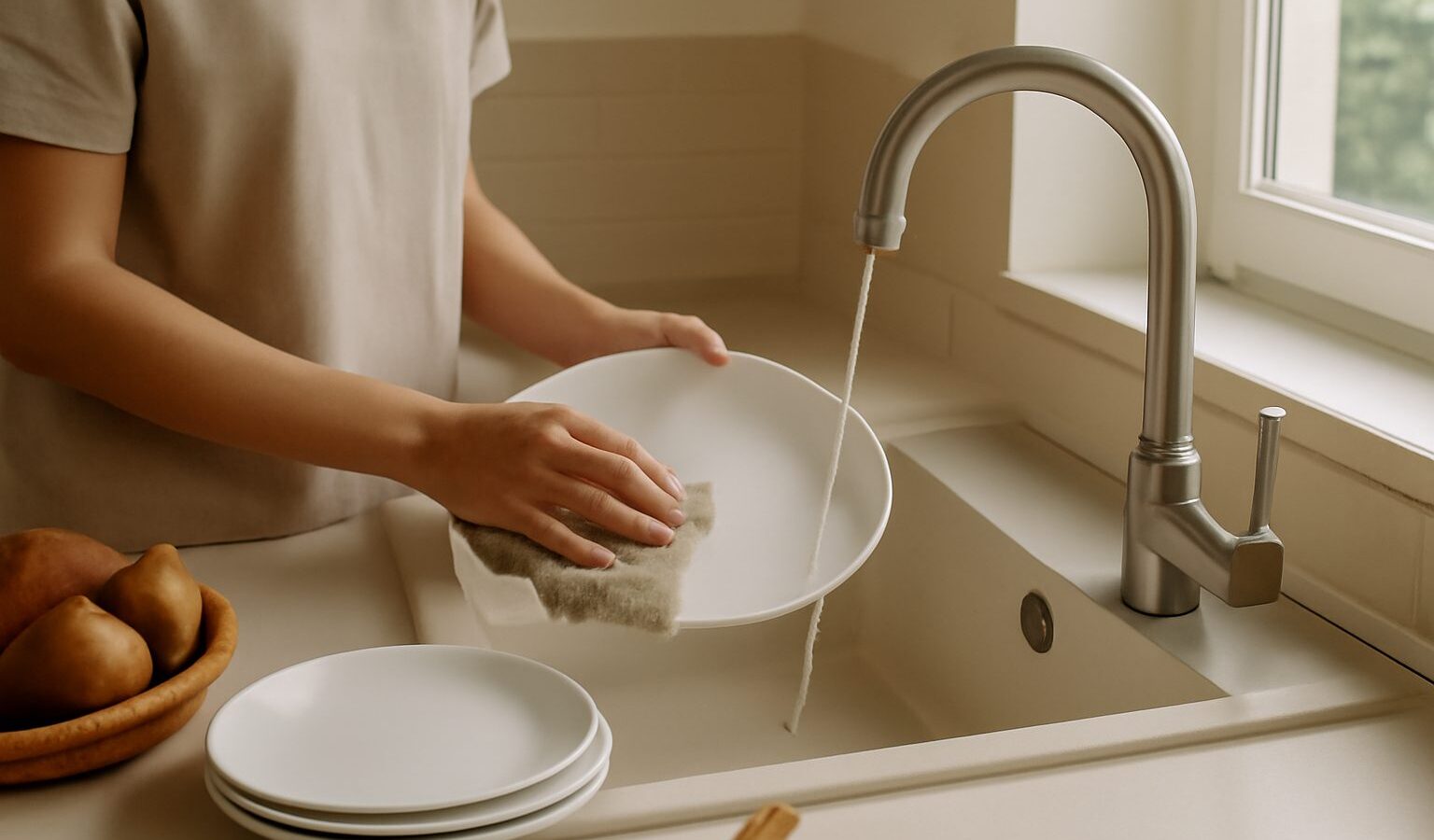
Washing up is one of those chores that quietly uses a lot of water. A tap left running while you scrub a wok or rinse a stack of plates can send far more down the drain than the job needs. The good news is that it is also one of the easiest places at home to cut back. If you want to save water washing dishes, a few changes to how you scrape, soak, wash and rinse make a real difference, whether you live in an HDB flat with a single sink or a condo with a dishwasher.
This guide focuses only on the dishwashing routine. For the bigger picture across showers, laundry and toilets, see our guide to cutting your water use at home in Singapore.

Why the Kitchen Sink Matters in Singapore
Singapore has limited natural water resources and relies on a mix of local catchment, imported water, NEWater and desalination. PUB, the national water agency, encourages every household to use water wisely, and the kitchen is a daily opportunity. Washing dishes happens once or more a day in most homes, so small habits compound across a year.
There is a money angle too. Your water bill from SP Services includes water charges and related fees that rise with usage, and if you wash with hot water, you also pay for the energy to heat it. Cutting waste at the sink trims both. Tariffs can change, so check PUB’s website for the current rates rather than relying on old figures.
Prep Before You Turn On the Tap
Most wasted water comes from rinsing off food that could have been removed dry. Getting this stage right means less scrubbing and less rinsing later.
- Scrape, do not rinse. Use a spatula or a used paper towel to push leftover rice, curry and sauce into the food waste bin before plates reach the sink.
- Wipe oily pans. Wipe excess oil from woks and frying pans with kitchen paper once they cool. This also keeps grease out of your pipes.
- Soak stubborn items together. Instead of running the tap over a burnt pot, fill it with a little warm water and a drop of detergent and leave it while you wash everything else. Group several crusty items in one soak.
- Stack in order. Wash the cleanest items first (glasses, cups) and the greasiest last (pots, pans), so your wash water stays usable for longer.
The Basin Method for Hand Washing
The biggest single change for hand washers is to stop washing under a running tap. Use a basin or the plugged sink instead.
- Fill one basin or one side of a double sink with warm, soapy water.
- Wash items in order from cleanest to dirtiest.
- Rinse in a second basin of clean water, or under a gentle, low tap in quick batches rather than one by one.
- Change the wash water only when it becomes too greasy or cool to do its job.
If you only have a single sink, a plastic basin placed inside it works well. Turn the tap off between batches. A short rinse of a rack full of dishes together uses far less water than rinsing each plate separately.
The table below sums up how different habits compare.
| Habit | What usually happens | Better approach |
|---|---|---|
| Rinsing food off plates | Tap runs while you rinse each plate | Scrape scraps into the bin first |
| Washing under a running tap | Water flows the entire time | Wash in a filled basin, tap off |
| Rinsing items one by one | Repeated bursts of water | Rinse a full rack in one short pass |
| Pre-rinsing for the dishwasher | Double washing every item | Scrape only, then load |
| Half-full dishwasher runs | Full cycle for a few items | Wait until the machine is full |
Getting the Most From a Dishwasher
A modern dishwasher used well can be an efficient way to wash dishes, often using less water than a hand wash done under a running tap. The key words are “used well”.
- Run full loads only. A cycle uses much the same water whether it is half empty or packed, so wait until it is full.
- Skip the pre-rinse. Most current machines and detergents are designed to handle scraped plates. Rinsing everything first defeats the purpose.
- Choose the right programme. Eco programmes typically use less water and energy, though they may take longer. Check your machine’s manual.
- Load properly. Face dirty surfaces towards the spray arms and do not block them, so you do not need to rewash items.
- Clean the filter. A clogged filter leads to poor results and repeat washes.
When buying a dishwasher, look at its rating under the Water Efficiency Labelling Scheme (WELS), run by PUB. More ticks indicate better water efficiency. Check the label in the store and PUB’s listing for the latest details on which appliances are covered.
Small Fixes at the Sink
Your hardware matters as much as your habits. A few low-cost upgrades help every time you wash up.
- Fix drips quickly. A dripping kitchen tap wastes water around the clock. Replacing a worn washer or cartridge is often a simple job, or you can call a licensed plumber.
- Use a water-efficient tap or aerator. Taps with WELS ratings or flow-restricting aerators reduce how much water comes out without making washing harder.
- Install a pull-out spray head. It lets you rinse a full rack in a short burst rather than lifting each item under the tap.
- Keep the plug handy. If the sink plug is lost, you will default to a running tap. A spare plug costs little.
Reusing Dish Water Sensibly
Lightly used rinse water can sometimes have a second life. Water from rinsing fruit and vegetables, or the final clean rinse, can be used to water hardy potted plants or to flush a toilet. Avoid using greasy or heavily soapy water on edible plants or delicate houseplants, and do not leave water standing in open containers, since stagnant water can become a mosquito breeding spot. NEA, the National Environment Agency, reminds residents to prevent stagnant water at home as part of dengue control, so tip out and dry any container you use.
Building Habits the Whole Household Follows
Saving water only works if everyone washes up the same way. A few tips for families and flatmates:
- Put a basin in the sink so it becomes the default
- Agree on a dishwasher rule, such as “scrape, load, run when full”
- Show children how to wash in a basin, turning it into a simple routine
- If you have a domestic helper, explain the method kindly and provide the right tools
Over time these small steps become automatic. You will use less water, spend less on hot water, and keep your pipes clearer. For related energy savings, see our guide to cutting your water heater energy use.
Official sources: PUB
Further reading: Understanding Your Water Footprint