
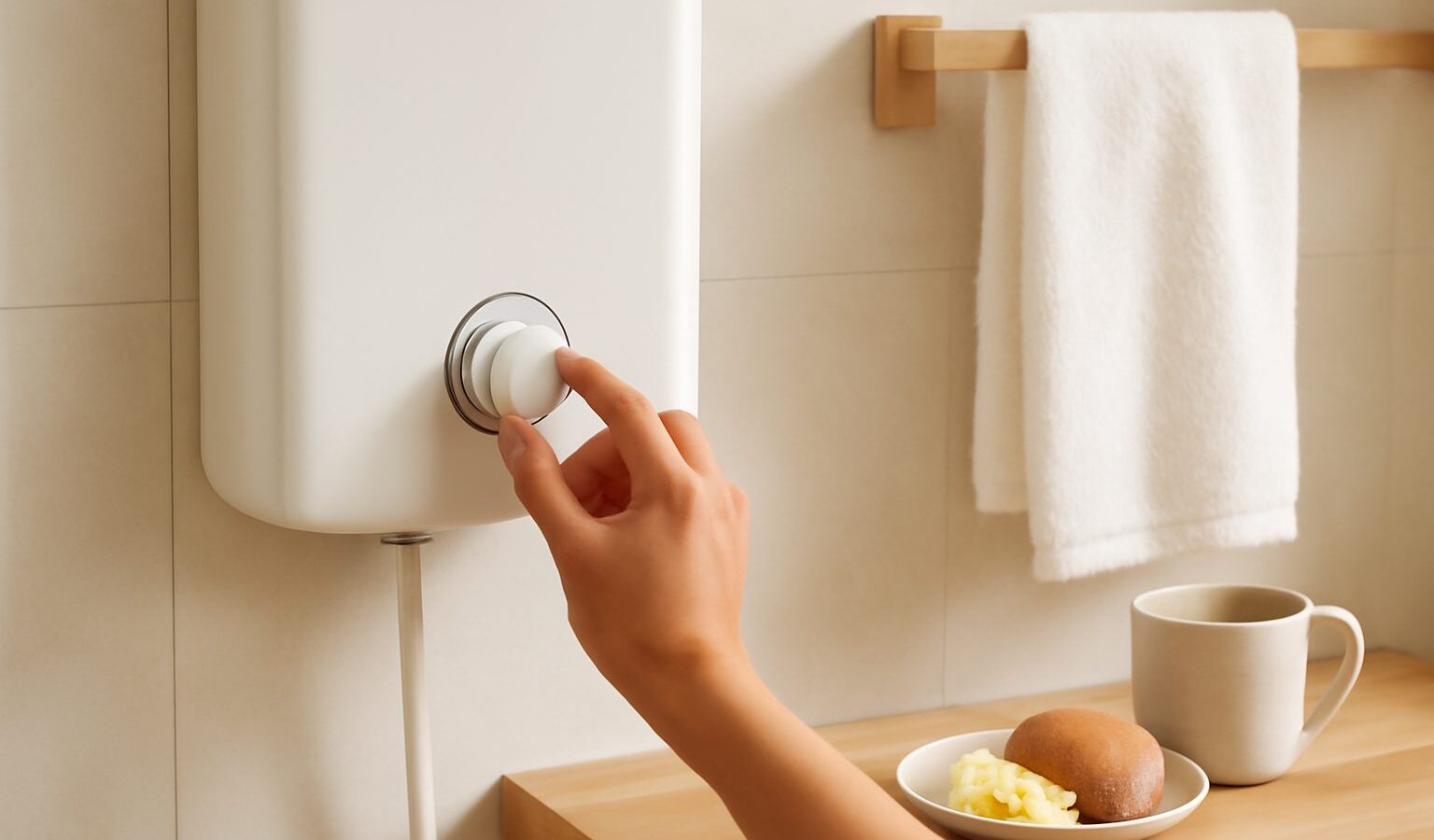
Heating water is one of the quiet heavyweights on a Singapore electricity bill. We may not think about it much, since a warm shower feels like a small thing, but the water heater energy Singapore homes use adds up day after day, especially where a storage tank sits switched on around the clock. The good news is that this is one of the easier places to trim waste without giving up your comfortable shower. This guide walks through timers, insulation, temperature, and habits, so you can use less power while still enjoying the hot water you like.
One important note first. This guide covers habits and simple, no-tools changes such as timers, insulation covers, and temperature settings. Anything involving the electrical wiring, the heating element, or a gas supply should be left to a licensed professional. Never open up a unit or attempt gas or wiring work yourself.
How Your Water Heater Uses Energy
Most homes here use one of two types, and knowing which you have shapes what will help. A storage water heater keeps a tank of water hot and ready, reheating it whenever the temperature drops, even overnight when nobody is showering. An instant or tankless heater warms water only as it flows, so it uses energy just while you are using hot water.
The reason storage heaters can be costly is that keeping a tank warm all day means paying to reheat water you may never use. That standing loss is the main thing we want to reduce. Instant heaters avoid that particular waste, but they draw a lot of power in short bursts, so long or frequent hot showers still add up.
In our tropical climate, we are lucky that incoming water is not icy, so heaters do not have to work as hard as they might in cold countries. That also means many of us can happily shower at a lower temperature than we assume, which is one of the simplest savings available.
Simple Habits That Cut the Cost
Before spending anything, look at how the heater is used day to day. Small changes to routine often deliver the biggest, easiest savings.
- Switch a storage heater on only when needed. If you shower at fairly set times, turn it on shortly before and off after, rather than leaving it on all day. A timer, covered below, automates this.
- Keep showers a touch shorter. Every extra minute of hot water is extra energy, so trimming a couple of minutes adds up over a month for the whole household.
- Turn the heater off before you travel. There is no reason to keep a tank hot while nobody is home for days.
- Fix dripping hot taps promptly. A slow hot leak wastes both water and the energy used to heat it.
- Use cold for hand washing and quick rinses, where warm water is a habit rather than a need.
None of this asks you to endure a freezing shower. It simply removes the hours of heating that serve no one. Get the household on board, since a timer means little if someone flicks the heater back on out of habit.
Timers, Insulation, and Temperature
Once your habits are sorted, a few low-cost measures make the savings automatic. These are the practical levers for water heater energy Singapore households can pull without major work.
A timer switch is the standout for storage heaters. Set it to warm the tank for your usual shower windows and stay off the rest of the day, so you are never reheating water at 2pm that nobody will use. If installing a timer means touching the wiring or the isolator, get a licensed electrician to fit it rather than doing it yourself.
Insulation helps storage systems hold their heat, so the element switches on less often. An insulating jacket on an older tank, and lagging on exposed hot water pipes, reduces standing loss. Make sure any cover is suitable for your unit and does not block vents, controls, or safety features, and if in doubt, ask the installer.
Temperature is the quiet win. Many heaters are set hotter than anyone actually showers at, which wastes energy and means constantly mixing in cold water at the tap. Setting a sensible, comfortable temperature rather than the maximum reduces both the reheating and the scald risk. Adjust only the controls the manufacturer intends you to use, and leave internal thermostats or elements to a professional.
The table below sums up the main levers, roughly how much effort each takes, and the safety line to respect.
| Measure | Effort and cost | Watch out for |
|---|---|---|
| Off when not needed, shorter showers | None, free | Household forgetting and leaving it on |
| Timer switch on a storage heater | Low, small spend | Wiring work needs a licensed electrician |
| Tank jacket and pipe insulation | Low, small spend | Do not cover vents, controls, or safety parts |
| Lower the temperature setting | None, free | Use only manufacturer-intended controls |
| Replace a very old, inefficient unit | Higher, planned | Choose by the energy label, professional install |
Choosing and Maintaining a Heater Wisely
If your unit is old, faulty, or oversized for your needs, replacing it eventually can help, though it is a planned decision rather than a quick fix. When you do shop, look for the mandatory energy label so you can compare efficiency, and pick a size that matches your household rather than a bigger tank than you will use. Confirm current models and details with the retailer or a licensed installer.
Basic upkeep also keeps a heater running efficiently and safely. Look out for signs that something is wrong, such as water that will not heat, unusual noises, tripping, leaks, or rust, and call a professional if you notice them. Do not attempt repairs on the element, thermostat, wiring, or any gas connection yourself. For gas water heaters, ventilation and servicing by an approved technician are safety matters, not just efficiency ones.
Regular, sensible care means your heater lasts longer and wastes less, which is better for your bill and for the environment.
Small Changes, Steady Savings
You do not have to overhaul anything to make a real difference here. Turning the heater off when it is not needed, nudging the temperature down, adding a timer, and insulating an older tank are modest steps that quietly lower your energy use month after month. None of them cost you a comfortable shower.
Like most green habits, this is about progress rather than perfection. Start with the free changes this week, plan the small spends for later, and leave anything electrical or gas related to the pros. Over time, those steady savings support both your household budget and Singapore’s wider push under the Green Plan for more efficient homes.
Explore more
Water heating is just one line on the bill, so pair this with our guides on how to do a simple home energy audit and how to read and cut your electricity bill. To keep cutting waste around the home, see tackling standby power and energy vampires and fixing leaks and saving water at home.
Related across Sky Media: Water Heaters and Plumbing in Singapore Homes