
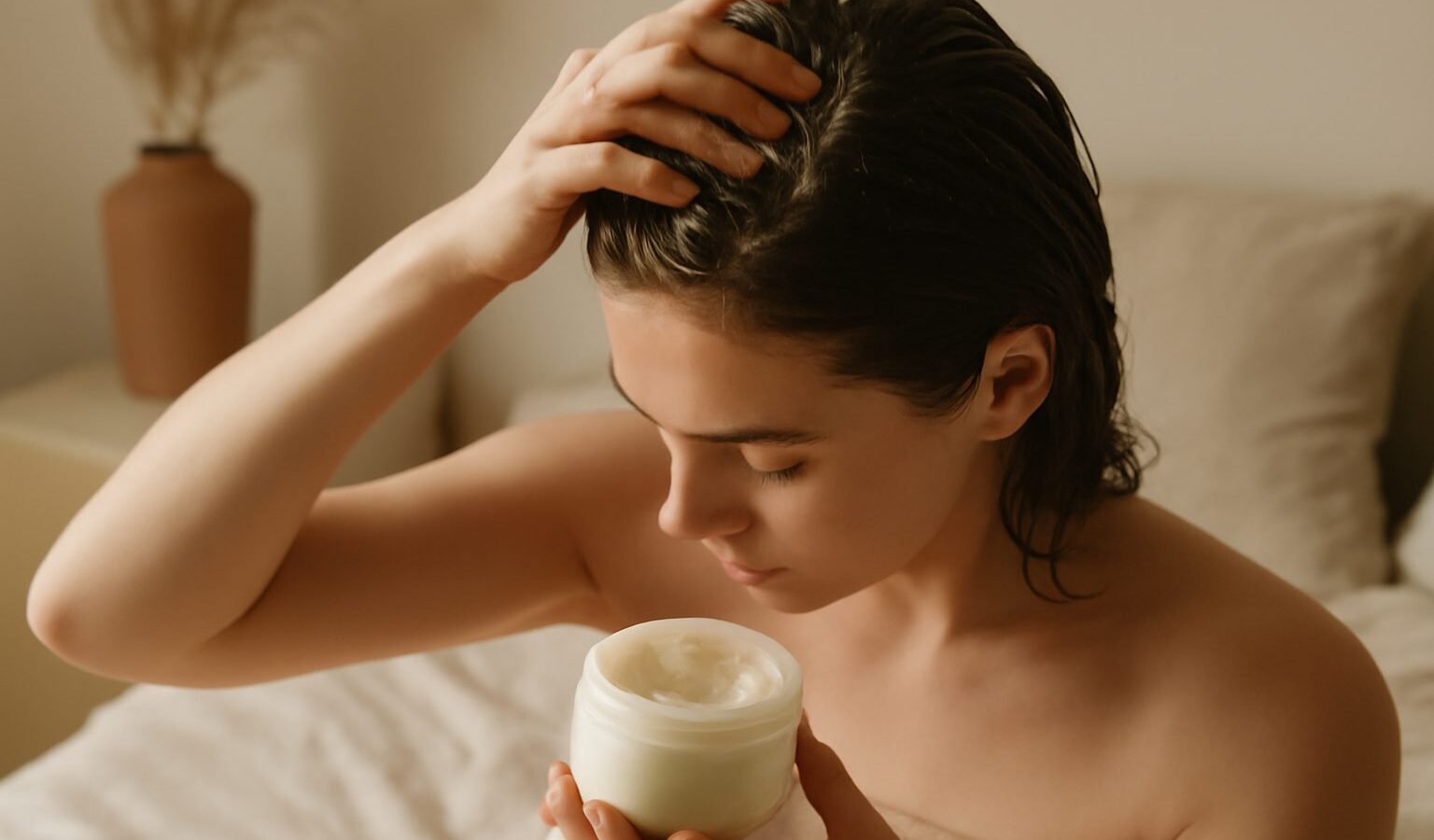
We happily exfoliate our faces and bodies, yet the scalp, which sweats and sheds and collects product all day, often gets ignored. Scalp exfoliation in Singapore has quietly become part of many hair-care routines, and for good reason: our humidity means more sweat, more oil and more buildup sitting at the roots. Done gently and not too often, a scalp scrub can leave your hair feeling fresher and your roots less weighed down. This is general information rather than medical advice, so read it as a guide to sensible habits rather than a treatment plan.
Your scalp is skin, and like the skin on your face it accumulates dead cells, natural oil, sweat and the residue of the products you use. In a cool, dry climate that buildup happens slowly. In Singapore’s heat it can gather faster, leaving some people with roots that feel oily by midday, an itchy or flaky surface, or hair that looks flat and lifeless no matter how well they wash. Exfoliation is one way to reset that surface so your scalp feels clean and your other products can do their job.
What Scalp Exfoliation Actually Does
Scalp exfoliation means gently clearing away the layer of dead skin, excess oil, sweat and product residue that collects at the roots. There are two broad approaches. Physical scrubs use fine granules, sugar, salt or small beads suspended in a wash to lift debris as you massage. Chemical exfoliants use mild acids to loosen dead cells without scrubbing, and tend to be gentler on the hair itself since there is no rubbing. Both aim for the same result: a cleaner, less congested scalp.
The payoff is not just about cleanliness. When buildup is removed, the scalp often feels less itchy and tight, hair can look fuller at the root because it is not weighed down, and the products you apply afterwards, from conditioner to scalp serums, tend to spread and absorb more evenly. Many people also find the massage itself relaxing, and gentle massage encourages you to slow down and treat your scalp with a little care.
It helps to be clear about what exfoliation is not. It is not a cure for dandruff, and it will not fix an underlying skin condition. Occasional flaking from buildup is different from persistent dandruff, which has its own causes and often needs a targeted anti-dandruff wash. If your main issue is dandruff, exfoliation may be a helpful extra rather than the main solution.
There is also a difference between the two exfoliant styles worth weighing up before you choose. Physical scrubs give an immediate, satisfying clean feeling and are easy to control, but the grit can be too rough for fine or fragile hair and for anyone with a tender scalp. Chemical exfoliants work more quietly, dissolving debris without any rubbing, which suits sensitive scalps and longer hair, though they ask a little more patience and careful reading of instructions. Neither is better in the abstract, and the right one for you depends on your hair, your scalp and how your skin tends to react. If you are unsure, starting with a gentle formula and a light hand is always the safer bet.
How Often, How Gently, and Who Should Take Care
Frequency is where most people go wrong. The scalp does not need daily scrubbing, and over-exfoliating can strip its natural oils, leaving it dry, tight, irritated or even oilier as it overcompensates. For most people, once a week is plenty, and once every couple of weeks suits those with drier or more sensitive scalps. If you have a very oily scalp and an active, sweaty lifestyle in our climate, you might lean towards the more frequent end, but let how your scalp feels be your guide rather than a fixed schedule.
Technique should always be gentle. With a physical scrub, apply it to a wet scalp and use the pads of your fingers, not your nails, to massage in slow circles. Focus on the scalp itself rather than dragging grit through the lengths of your hair, which can rough up the strands. Let the product do the work and keep the pressure light. Rinse thoroughly, then follow with conditioner on the mid-lengths and ends to keep the hair soft. With a chemical exfoliant, follow the directions on the product and do not leave it on longer than suggested.
Here is a rough guide to how often different scalp types might exfoliate. Treat these as starting points, not rules.
| Scalp type | Suggested frequency | Notes |
|---|---|---|
| Oily, sweaty, active | Weekly | Watch for dryness and ease off if it appears |
| Normal | Every one to two weeks | Adjust to how the scalp feels |
| Dry | Every two to three weeks | Choose gentle formulas, avoid harsh grit |
| Sensitive or reactive | Sparingly | Patch test first, stop if irritated |
| Very flaky or itchy | Check with a doctor first | May need treatment, not scrubbing |
Some people should be especially careful. If your scalp is dry, sensitive, sunburnt, or has any cuts, scratches or active irritation, scrubbing will only make things worse, so wait until it has settled. Those prone to eczema or psoriasis on the scalp should be gentle and would do well to seek advice before adding an exfoliant, since the wrong approach can trigger a flare.
A few practical tips make the habit safer. Patch test any new product on a small area of scalp first, especially if you have reactive skin. Avoid exfoliating right before or after chemical treatments like colouring, when the scalp is already stressed. And do not scrub to try to solve a problem that is getting worse, since that is a sign to stop and reassess rather than push harder.
Finally, know when this is out of the reach of a scrub. Persistent itching, ongoing flaking that does not improve, redness, sores, or noticeable hair loss are all reasons to see a doctor rather than reaching for a stronger exfoliant. These can point to conditions that need proper diagnosis and treatment, and no amount of scrubbing will fix them. Used sensibly, though, scalp exfoliation is a simple, satisfying way to keep your roots feeling fresh in a climate that keeps them working hard.
Explore more
Scalp Care and Dandruff in Singapore
Hair Care in Singapore’s Climate
Choosing Shampoo and Conditioner for Your Hair Type
Managing Sweat and Body Odour in Singapore