

The familiar horn, bell or loud call echoing through an HDB estate usually means one thing: the karang guni is in the neighbourhood. These door-to-door collectors buy old newspapers, cardboard, metal, unwanted appliances and other items, then sort and sell them on to recyclers and second-hand traders. Karang guni Singapore culture has been part of local life for generations, and it is still one of the easiest ways to clear clutter, keep useful materials out of the incinerator and get a little cash back.
This guide focuses on inviting a karang guni to your home, what they typically buy, how weight and pricing work, and how to agree a fair rate. If you would rather bring items to a collection point yourself, that is a different process, and we cover the broader background in understanding karung guni and selling unwanted items.
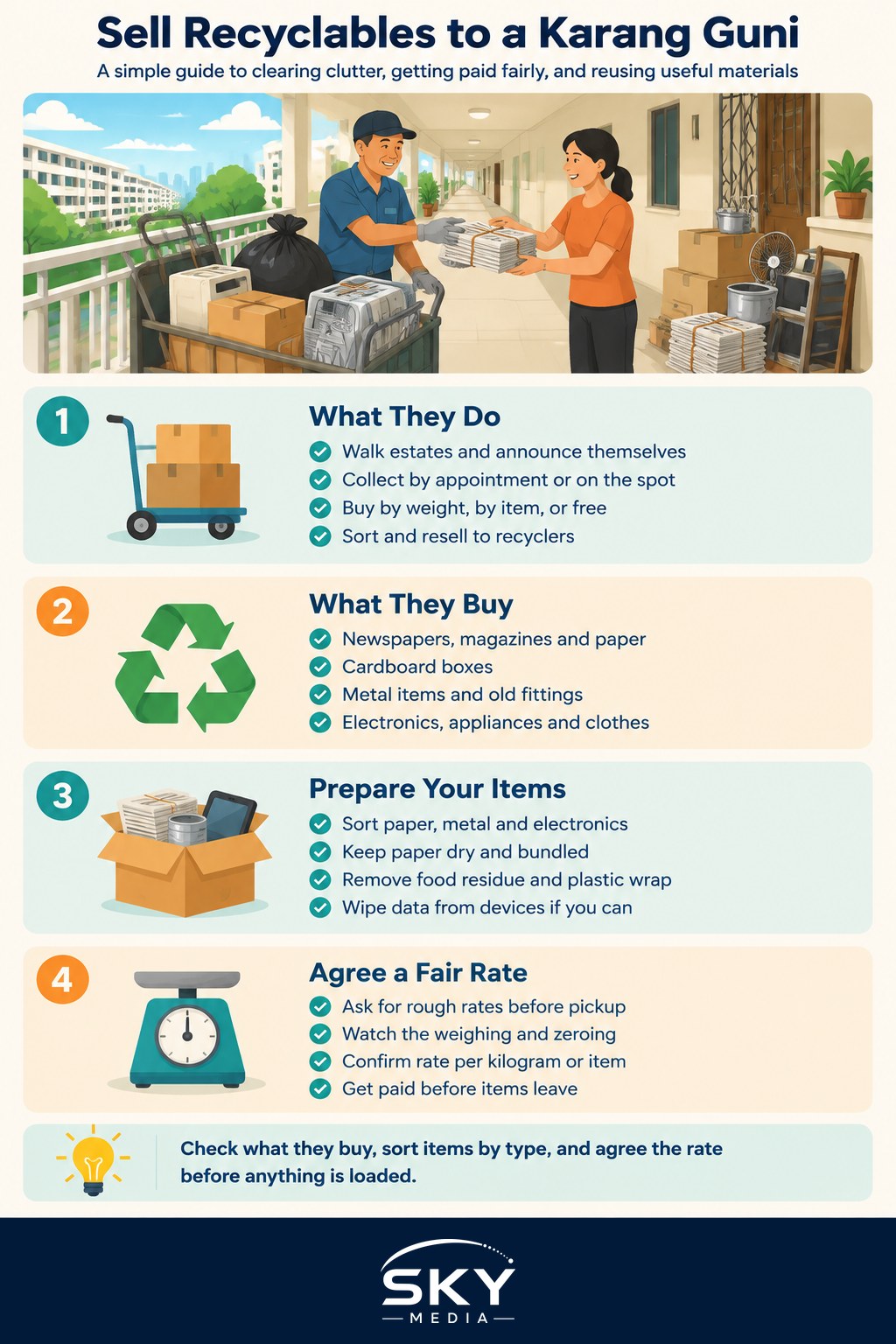
What a Karang Guni Does
The name comes from Malay and is often linked to the gunny sacks the collectors once carried. You will also see it spelt “karung guni”. Most are independent operators or small family businesses. They:
- Walk or drive through estates announcing their presence
- Collect from homes by appointment or on the spot
- Buy items by weight, by item, or sometimes take them free
- Sort, resell and pass materials on to scrap dealers and recyclers
Because they earn from resale value, what they are willing to pay depends on demand for each material at that time. Scrap prices rise and fall, so the rate you get one month may differ from the next.
How to Get a Karang Guni to Your Home
There are three common ways:
- Catch one passing by. If you hear the call, go downstairs or wave from the corridor and ask them to come up. This works if you are home at the right time.
- Ask a neighbour or estate contact. Many residents keep the number of a regular karang guni who serves their block. Community noticeboards and residents’ groups are good places to ask.
- Search online. Some collectors advertise on classifieds or social media and offer pickup by appointment, which helps if you have a big clear-out or are moving house.
When you contact one, tell them roughly what you have, how much, which floor you live on and whether there is lift access. Larger appliances or furniture may need two people, and some collectors charge or offer less for heavy, awkward items.
What They Usually Buy and How It Is Priced
Prices vary by collector and by market conditions, so we do not list rates here. The table below shows the general patterns many residents encounter.
| Item type | How it is usually priced | What helps you get a better offer |
|---|---|---|
| Newspapers, magazines and paper | By weight | Keep it dry, stacked and tied in bundles |
| Cardboard boxes | By weight | Flatten boxes and remove plastic tape where possible |
| Metal items (aluminium cans, pots, old fittings) | By weight, often higher than paper | Separate metals from mixed rubbish |
| Old electronics and small appliances | Per item, sometimes by weight | Working condition, complete with cables |
| Large appliances (washers, fridges, air-con units) | Per item, or free removal | Working order, easy access to your unit |
| Clothes, bags and textiles | By weight or as a bundle | Clean, dry and sorted from damaged items |
Some items may be collected for free rather than paid for, especially if they have low resale value, are broken, or are bulky. For clothes in better condition, our guide on where to donate or sell old clothes covers other options.
How to Prepare Your Items
A little preparation makes the transaction faster and fairer:
- Sort by type. Paper with paper, metal with metal, electronics together. Mixed bundles are harder to weigh and price.
- Keep paper dry. Wet paper weighs more but collectors know this and may refuse it or offer less.
- Remove contaminants. Empty cans, take food residue off containers, and strip plastic wrapping from paper bundles.
- Wipe your data. For phones, laptops, tablets and hard disks, back up what you need, sign out of accounts and do a factory reset. If you cannot, remove the storage drive yourself.
- Test appliances. If an appliance works, say so and be prepared to show it. Working items generally fetch more.
How to Agree a Fair Rate
Most karang guni are honest and have long-standing relationships with residents. Still, it pays to know how to negotiate, and to watch for the small number of bad actors. Our article on how to spot shark karung guni scams goes into those tactics in detail.
Before they arrive
- Ask about rough rates over the phone so you know what to expect.
- Weigh bundles yourself with a luggage scale or bathroom scale. This gives you a reference figure.
- Decide your minimum. If an offer is too low, you can decline and try another collector.
During the transaction
- Watch the weighing. Ask them to weigh on the spot where you can see the scale, and check that it reads zero before items are placed on it.
- Agree the price per unit first. Confirm whether the rate is per kilogram or per item before weighing.
- Do the maths together. Multiply weight by rate and agree the total before they load anything.
- Get paid before items leave. Payment is usually in cash or by PayNow. Confirm you have received it.
- Be polite but firm. If they insist on a different weight than your own check, ask them to reweigh. If you are not comfortable, it is fine to say no.
Red flags
- Refusing to weigh in front of you
- Changing the agreed rate after loading items
- Pressuring you to sell everything at once, including valuables
- Taking items that you did not agree to sell
Why It Is Worth Doing
Selling to a karang guni is not just about the money, which is usually modest. It is a way to make sure useful materials are reused or recycled. Paper, cardboard and metals are among the materials with the clearest recycling value, and collectors help channel them back into use.
It also supports a traditional trade that keeps neighbourhoods tidy and gives people a convenient outlet for items that would otherwise go to the bin. If you have a regular collector, treating them fairly and keeping your items sorted helps build a relationship that benefits both sides.
A Simple Routine for Regular Sellers
- Keep a corner or box for paper and another for metal.
- Flatten cardboard as soon as deliveries arrive.
- Store items somewhere dry and away from pests.
- Call your regular collector once the pile is big enough, rather than for small amounts.
Done this way, selling to a karang guni becomes an easy part of running a greener home.
Frequently Asked Questions
Is it worth calling a karang guni for just a few items? Usually not. Collectors earn from volume and have to travel to you, so small amounts of paper or a single box rarely justify a visit. Keep a corner for recyclables and call your regular collector once the pile has built up, or hand over small amounts when one passes by.
Is it safe to sell old phones and laptops to a karang guni? It can be, provided you wipe the device first. Back up what you need, sign out of your accounts, turn off any find-my-device or activation lock, remove SIM and memory cards, then factory reset. If a hard disk cannot be reset, take the drive out and keep it.
Should I use the blue recycling bin or sell to a karang guni? Both work, and they suit different situations. The recycling bin is free and always nearby, but pays nothing. A karang guni pays for paper, metal and working items, and will also take bulky things the bin cannot. Whatever you choose, keep items clean and dry.
Will a karang guni clear out a whole house for free? Sometimes, but do not count on it. Working appliances and metal have resale value, so some collectors take them free or pay a little. Broken, bulky or low-value furniture often costs you a removal fee or is refused. Ask each collector what they will take before the day.
What can I do with bulky items a karang guni refuses? Ask your town council how bulky items are handled in your estate, as arrangements differ by town. You can also hire a licensed waste collector, donate furniture in usable condition, or list it on a second-hand marketplace. Avoid leaving it at void decks, which is illegal dumping.
Official sources: National Environment Agency (NEA)