
Upgrading to a new body, switching systems or simply clearing out lenses you never use? If you want to sell used camera Singapore gear, you have more options than ever, from walking into a camera shop for a quick trade-in to listing on Carousell and dealing with buyers yourself. Each route trades money against time, effort and risk.
This guide is written from the seller’s side. It covers where to sell, how to price fairly, how to check and present your gear, and how to avoid the scams that target secondhand sellers. If you are on the other side of the deal, see our guide on how to buy a used camera.
Your Main Selling Options Compared
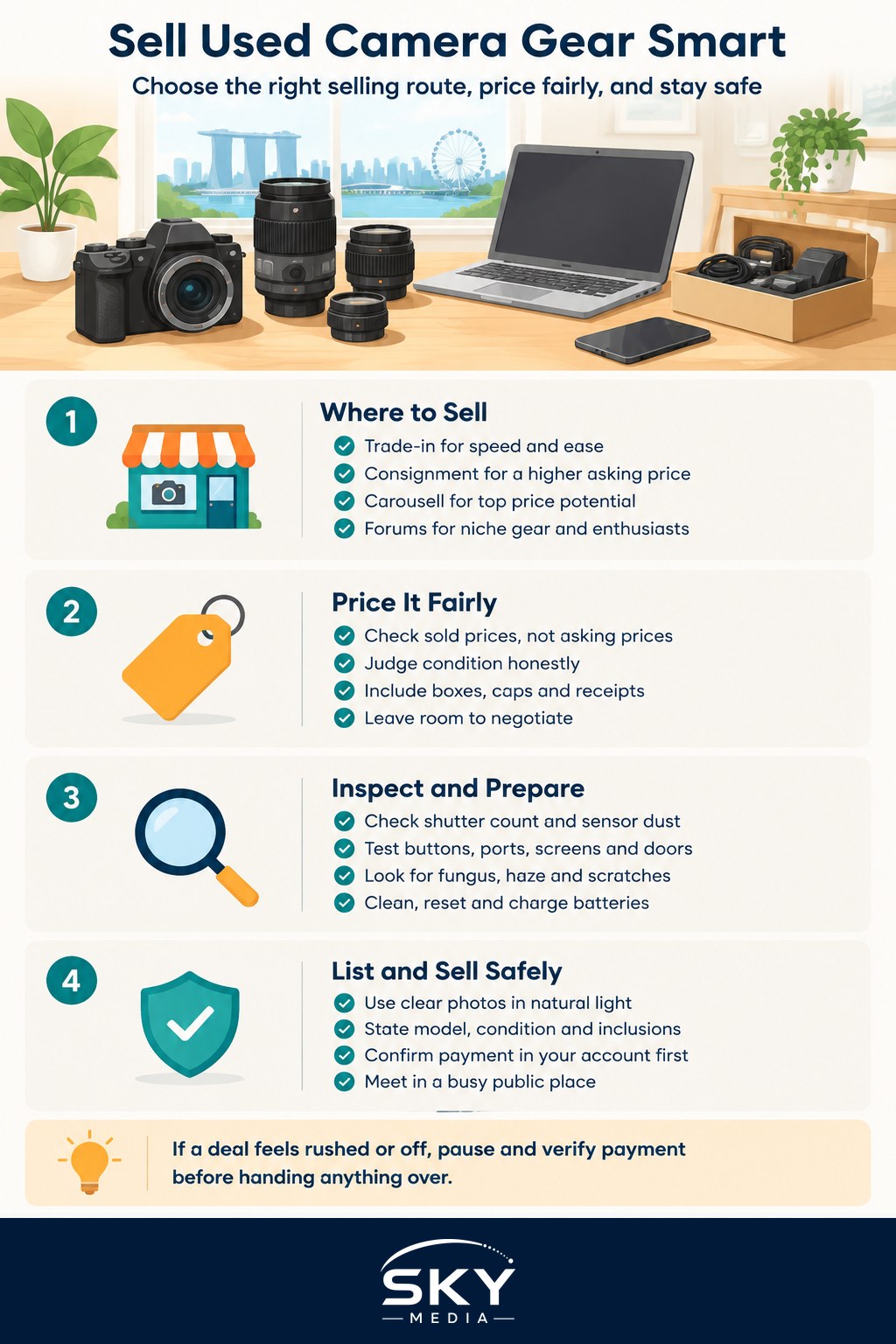
There are four common ways to sell camera gear in Singapore. Which one suits you depends on how much you value speed versus price.
| Option | Typical price you get | Speed | Effort and risk | Best for |
|---|---|---|---|---|
| Trade-in at a camera shop | Lower, as the shop needs margin to resell | Fast, often same visit | Low effort, low risk | Upgraders who want a quick, hassle-free deal |
| Consignment with a shop | Higher than trade-in, minus a commission | Slow, until a buyer appears | Low effort, moderate wait | Pricier items you are not in a rush to sell |
| Carousell or online marketplaces | Highest potential price | Varies, from days to weeks | High effort, higher scam exposure | Sellers comfortable handling buyers directly |
| Photography groups and forums | Similar to marketplace prices | Varies | Moderate effort, smaller but keener audience | Niche lenses, vintage and enthusiast gear |
Trade-ins are the simplest. Many camera retailers will assess your gear and give you either cash or credit towards a new purchase. Trade-in value is often a little better if you take store credit, so ask about both. Expect less than a private sale, because the shop has to inspect, clean, warranty and resell your item.
Consignment means a shop displays and sells your item on your behalf and takes a cut. Terms vary widely, so read the agreement for the commission, how long they hold the item, and who bears the risk of damage.
Carousell and similar platforms usually get you the best price, but you handle the listing, questions, haggling, meet-ups and payments yourself.
How to Price Your Camera Gear Fairly
Pricing is where many sellers go wrong, either asking too much and getting no replies, or underpricing out of impatience.
- Research sold prices, not asking prices. Look at what similar items in similar condition have actually sold for, not just what others are asking. Listings that have sat for months are overpriced.
- Factor in condition honestly. Mint, lightly used and well-used gear can differ significantly in price.
- Consider what is included. Original box, caps, hoods, chargers, spare batteries, straps and receipts all add value and buyer confidence.
- Check warranty status. Remaining local warranty is a strong selling point. Note whether it was a local set or parallel import, as buyers in Singapore often ask.
- Watch new prices and launches. A new model or a big sale on the current one can push secondhand prices down quickly. If you know an upgrade is coming, selling earlier often gets you more.
- Leave a little room to negotiate. Haggling is expected on Carousell, so price slightly above your minimum.
Prices change constantly, so treat any figure you see as a snapshot and re-check before you list.
Checking and Preparing Your Gear Before Listing
Serious buyers will inspect carefully, so do the checks yourself first. You will price more accurately and avoid disputes later.
For camera bodies:
- Shutter count. This is the number of photos the shutter has fired, a key wear indicator. Depending on the brand, you can find it through the camera menu, the manufacturer’s software or by reading data from a recent image file.
- Sensor condition. Take a photo of a plain bright surface at a small aperture to reveal dust spots. Light dust can be cleaned; scratches are a bigger issue.
- Buttons, dials, ports and screens. Test every one, along with the card slots and battery door.
- Body wear. Note scuffs, worn grips and any rubber peeling.
For lenses:
- Fungus and haze. Singapore’s humidity is hard on lenses. Shine a torch through the lens in a dim room and look for thread-like growth or cloudiness. Be upfront if you find any, since buyers will check.
- Scratches and dust. A little internal dust is common and usually harmless, but mention it.
- Autofocus and stabilisation. Test that focus is quick and accurate and that zoom and focus rings turn smoothly.
If you have stored gear in a dry cabinet, mention it. Buyers here often see that as a sign of careful ownership. For protecting gear between uses, our guide on choosing a camera bag has tips that also help preserve resale value.
Before listing:
- Clean the exterior and glass gently with appropriate tools.
- Factory reset the camera, remove memory cards and log out of any connected apps.
- Charge the batteries so buyers can test on the spot.
- Gather boxes, receipts and warranty cards.
Writing a Listing That Sells
A clear, honest listing attracts serious buyers and filters out time-wasters.
- Use natural light and plain backgrounds for photos. Show all sides, the mount, the front and rear lens elements and any flaws.
- Put key details up front: model, shutter count, condition, warranty status and what is included.
- Disclose flaws clearly. It builds trust and protects you if a buyer later claims you hid something.
- State your terms: preferred meet-up area, payment method and whether the price is negotiable.
- Keep sample images handy that buyers can view, taken with the lens or body.
Avoiding Scams When Selling Online
Sellers are targeted by scammers as often as buyers. The Singapore Police Force and the National Crime Prevention Council regularly highlight e-commerce scams, and the ScamShield app and website have up-to-date advice. Common red flags include:
- Fake payment screenshots. Always confirm the money has actually arrived in your bank account before handing over the item. A screenshot is not proof.
- Links to “receive payment” or “verify your account”. Legitimate buyers do not need you to click a link or enter banking details. Never share one-time passwords (OTPs) or login details with anyone.
- Courier-only requests from strangers who insist on a delivery service they choose and send you links to arrange it.
- Overpayment tricks, where the buyer “accidentally” sends too much and asks for a refund of the difference.
- Pressure tactics that push you to act fast or move the chat off the platform.
Safer habits:
- Meet in a busy public place, such as near an MRT station, a mall or a community centre, ideally in the daytime.
- Let the buyer test the gear in person, but keep an eye on it and do not hand over the item until payment is confirmed.
- Use the platform’s built-in protections where available, and keep all communication on the platform so there is a record.
- Trust your instincts. If a deal feels off, walk away.
If you think you have been scammed, report it to the police and contact your bank immediately.
Quick Checklist Before You Sell
- Decide whether you value speed (trade-in) or price (private sale).
- Research recent sold prices for your exact model and condition.
- Check shutter count, sensor, lens glass and functions.
- Clean, reset and gather all accessories and paperwork.
- Write an honest listing with clear photos.
- Confirm payment in your account before handing over anything.
Explore more: How to Sell or Trade In Old Games and Consoles in Singapore and Renting Camera Gear in Singapore Before You Buy.
Frequently Asked Questions
Is store credit worth taking over cash for a trade-in? It can be, since trade-in value is often a little better if you take store credit, so ask about both. It makes most sense when you already plan to buy new gear from the same shop. Expect less than a private sale either way.
What should I read in a consignment agreement? Check the commission, how long the shop will hold your item, and who bears the risk of damage. Terms vary widely between shops. Consignment pays more than a trade-in but takes longer, so it suits pricier items you are not in a rush to sell.
How do I check a lens for fungus before selling? Shine a torch through the lens in a dim room and look for thread-like growth or cloudiness. Singapore’s humidity is hard on lenses. Be upfront if you find any, since buyers will check, and mention if you stored the lens in a dry cabinet.
What should I wipe from the camera before handing it over? Factory reset the camera, remove memory cards and log out of any connected apps. Charge the batteries so buyers can test on the spot, and gather boxes, receipts and warranty cards, which add value and buyer confidence.
What should I do if I think a buyer has scammed me? Report it to the police and contact your bank immediately. Never share OTPs or login details, and do not hand over the item until the money has actually arrived in your account, since a payment screenshot is not proof. ScamShield has up-to-date advice.
Further reading: Insuring Your Camera and Lenses Against Loss in Singapore · Where to Sell Used Clothes in Singapore for Cash · How China Newcomers Can Buy Camera Gear in Singapore