
Cameras and lenses are expensive, and reviews can only tell you so much. A body that feels perfect in a video review can turn out awkward in your hands, and a lens that looks sharp online might be too heavy for a day out in Singapore’s heat. Camera rental in Singapore lets you test real gear on your own shoots before committing your money. This guide explains how rental works here, what deposits and checks to expect, how to inspect what you collect, and how to plan a rental as a deliberate try-before-you-buy test rather than a casual weekend hire.
Why Renting First Makes Sense
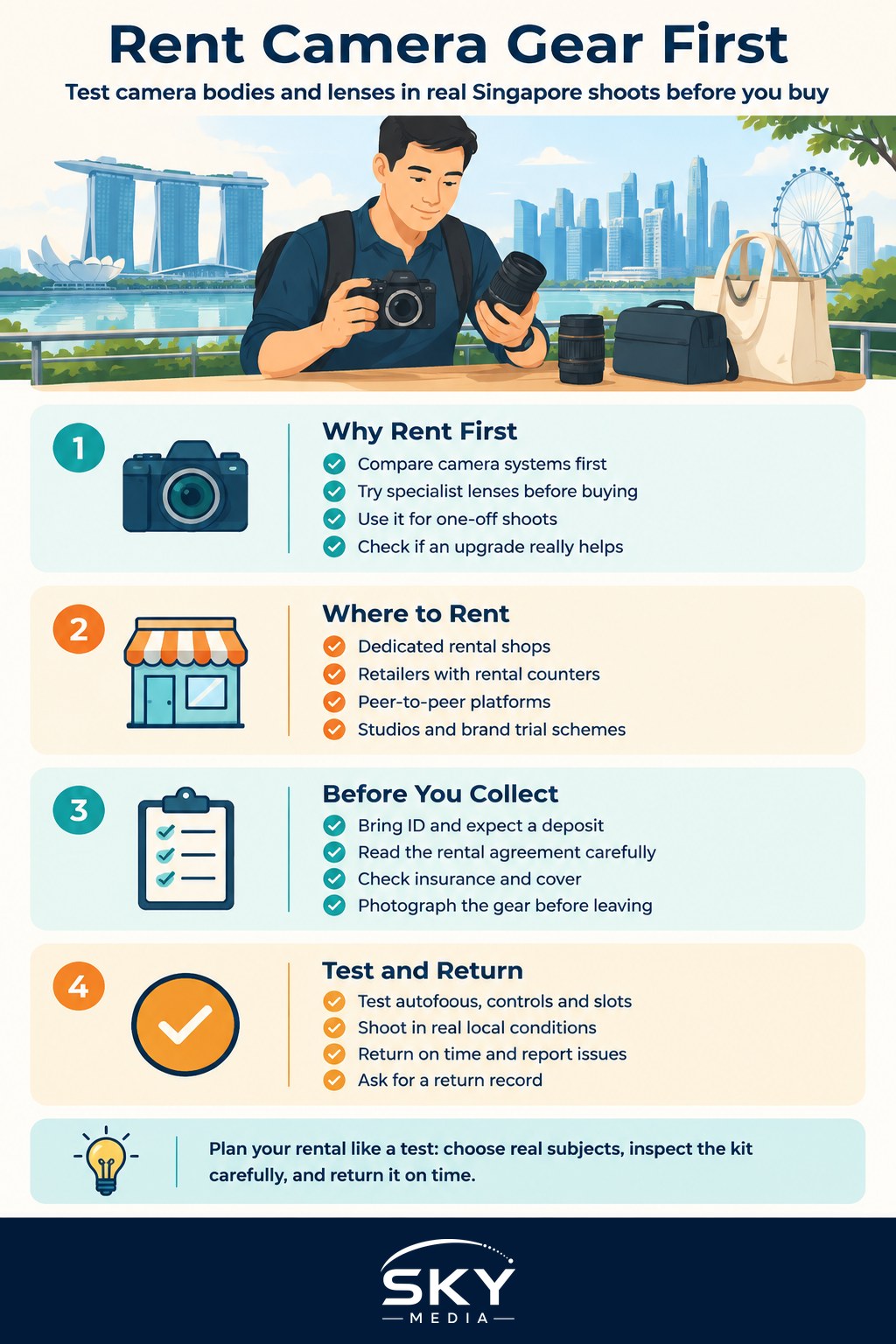
Buying the wrong gear is a costly lesson. Even if you resell it, you usually lose some value, and selling takes time. Renting helps in a few specific situations:
- You are choosing between camera systems. Lenses tie you to a mount, so switching later is expensive. A rental lets you live with a system for a few days first.
- You want a specialist lens. Ultra-wide, macro, fast portrait primes and long telephotos are pricey and you may only need them occasionally.
- You have a one-off job. A wedding, a holiday, a school concert or a product shoot may need gear you will not use again soon.
- You are upgrading. Renting the newer body lets you see whether the improvement matters for the way you actually shoot.
If you have already narrowed down a model and want to buy, our guide on how China newcomers can buy camera gear in Singapore covers the purchase side, and is useful for anyone comparing where to buy.
Where to Rent Camera Gear in Singapore
There are several kinds of rental options, each with its own trade-offs:
- Dedicated rental shops. Specialist businesses that hire out cameras, lenses, lighting, audio and accessories. Stock is usually well maintained and staff can advise on what you need. Many let you book online and collect in person.
- Camera retailers with rental counters. Some camera shops also rent popular models, which can be handy if you might buy from the same place afterwards. Ask whether any rental fee can count towards a purchase, but do not assume it will.
- Peer-to-peer rental platforms. Individuals list their own gear on rental marketplaces. Choice can be wide and flexible, but quality, insurance and dispute handling vary a lot, so read the platform’s terms closely.
- Studios and production houses. Photography studios sometimes bundle lighting and backdrops with studio time, and some rent equipment separately.
- Brand programmes. Camera makers sometimes run trial or loan schemes at their service centres or events. Availability changes, so check the brand’s local website or ask at the service centre.
Comparing Your Rental Options
| Option | Best for | Typical strengths | What to check |
|---|---|---|---|
| Dedicated rental shop | Planned shoots, comparing systems | Wide range, maintained gear, advice | Deposit, ID requirements, late return policy, damage terms |
| Retailer rental counter | Testing before buying there | Convenient, easy to compare with new stock | Range of models, whether any fee offsets a purchase |
| Peer-to-peer platform | Unusual or niche gear | Flexible pickup, varied listings | Owner reviews, platform insurance, how disputes are resolved |
| Brand trial or loan | Trying a specific new model | Latest gear, direct from the maker | Eligibility, how long you can keep it, availability |
Deposits, ID and the Rental Agreement
Rental businesses need to protect expensive gear, so expect some paperwork. Common requirements include:
- Identification. Many shops ask for an NRIC, passport or work pass, and may keep a copy. Ask how they store and protect your personal data, which is covered by Singapore’s Personal Data Protection Act.
- A deposit or credit card hold. This may be refundable on return, sometimes after the gear is checked. Ask how much, how it is collected and how long a refund takes.
- A signed agreement. Read it before signing. Look for the rental period, late fees, what counts as damage, who pays for repairs or loss, and whether accidental damage cover is offered.
- Insurance. Some rentals include basic cover; others offer it as an add-on. Check whether your own home or travel insurance covers rented equipment, because many policies exclude it. Confirm with your insurer rather than guessing.
Fees and deposits vary by item and by provider and can change, so compare a few quotes for the same kit before booking.
Inspecting Gear When You Collect It
Spend ten minutes checking everything before you leave the counter. It protects you from being blamed for earlier wear and tear.
- Photograph or film the gear from all sides, including existing scratches, with the shop’s acknowledgement where possible.
- Check the sensor and glass. Take a test shot of a plain wall at a small aperture to spot dust, and look through the lens for haze, fungus or scratches.
- Test the controls. Try autofocus, every dial and button, the card slots and the screen.
- Count accessories. Batteries, charger, caps, hood, strap and cables. Missing items are a common source of charges.
- Bring your own memory card if allowed, and format it in the camera. Wipe any card you return so your photos stay private.
Pack rented gear properly. A suitable bag makes a real difference on the MRT and in the rain, and our guide to choosing a camera bag explains what to look for.
Turning a Rental Into a Proper Buying Test
A rental is only useful if you test the things that matter to you. Plan it like a small experiment:
- Write down your deciding questions first. Is the autofocus good enough for kids or sports? Is the body comfortable for a whole day? Does the video overheat in Singapore weather?
- Shoot what you normally shoot. Take it to the hawker centre, the playground, the night street or wherever you usually photograph, not just around the house.
- Test in real local conditions. Try it outdoors in strong midday sun and humidity, then indoors under mixed lighting. Watch for fogging when moving from air-conditioning into the heat.
- Compare side by side. If you are choosing between two lenses or bodies, rent both for the same period and shoot the same scenes.
- Review the files at home. Check the images on a proper screen, try editing them, and see how the files fit your computer and workflow.
- Note the small annoyances. Menu layout, grip size and battery life often decide whether you will enjoy a camera for years.
If lighting is part of your setup, renting a light or two alongside the camera helps you test the whole kit. Our guide to essential lighting gear for beginners explains what is worth trying.
Returning Gear Without Surprises
- Return on time. Late returns often attract fees, and someone else may be waiting for the kit.
- Clean gently. Wipe off dust and sweat, but do not attempt internal cleaning or repairs yourself.
- Report problems honestly. If something broke or stopped working, tell the shop when you return it rather than hoping it goes unnoticed.
- Ask for a return record. A receipt or message confirming the gear came back in good order helps if questions come up later.
- Check your deposit refund within the period the shop told you.
Handled carefully, a short rental can save you from an expensive mistake, or confirm that the gear you have been eyeing is worth every dollar.
Frequently Asked Questions
Is renting a lens cheaper than buying for just a few shoots? Usually, yes. If you will use a specialist lens a handful of times, renting avoids a large purchase and the loss on resale. If you would use it often, adding up several rentals can approach the purchase price. Get quotes, compare, and consider how much you will shoot.
Can foreigners or students rent camera gear in Singapore? Often yes, but requirements vary by provider. Shops typically ask for identification such as a passport or work pass, and a deposit or card hold. Students and newcomers may be asked for extra proof, so check the shop’s terms before you book.
What should I do if the rented camera is damaged or stops working? Stop using it, take photos of the damage and tell the shop straight away rather than waiting until return. Do not attempt a repair. Your agreement states who pays for damage or loss, so read it and ask whether any insurance or damage cover applies.
Can I take rented camera gear overseas? Only if the rental business agrees in advance. Many restrict overseas use or ask for extra insurance and a larger deposit, and you may need to carry paperwork showing the gear is rented. Check the rental agreement, your insurance cover and customs rules for the countries you are visiting.
How do I avoid scams when renting from individuals on peer-to-peer platforms? Use the platform’s own payment and messaging so there is a record, and check the owner’s reviews and ratings. Meet in a public place, inspect and photograph the gear, and never pay by sending money outside the platform. Read the platform’s insurance and dispute terms before you confirm.
Further reading: Choosing an Instant Camera for Fun Prints · Insuring Your Camera and Lenses Against Loss in Singapore · How to Choose a Camera for Video