
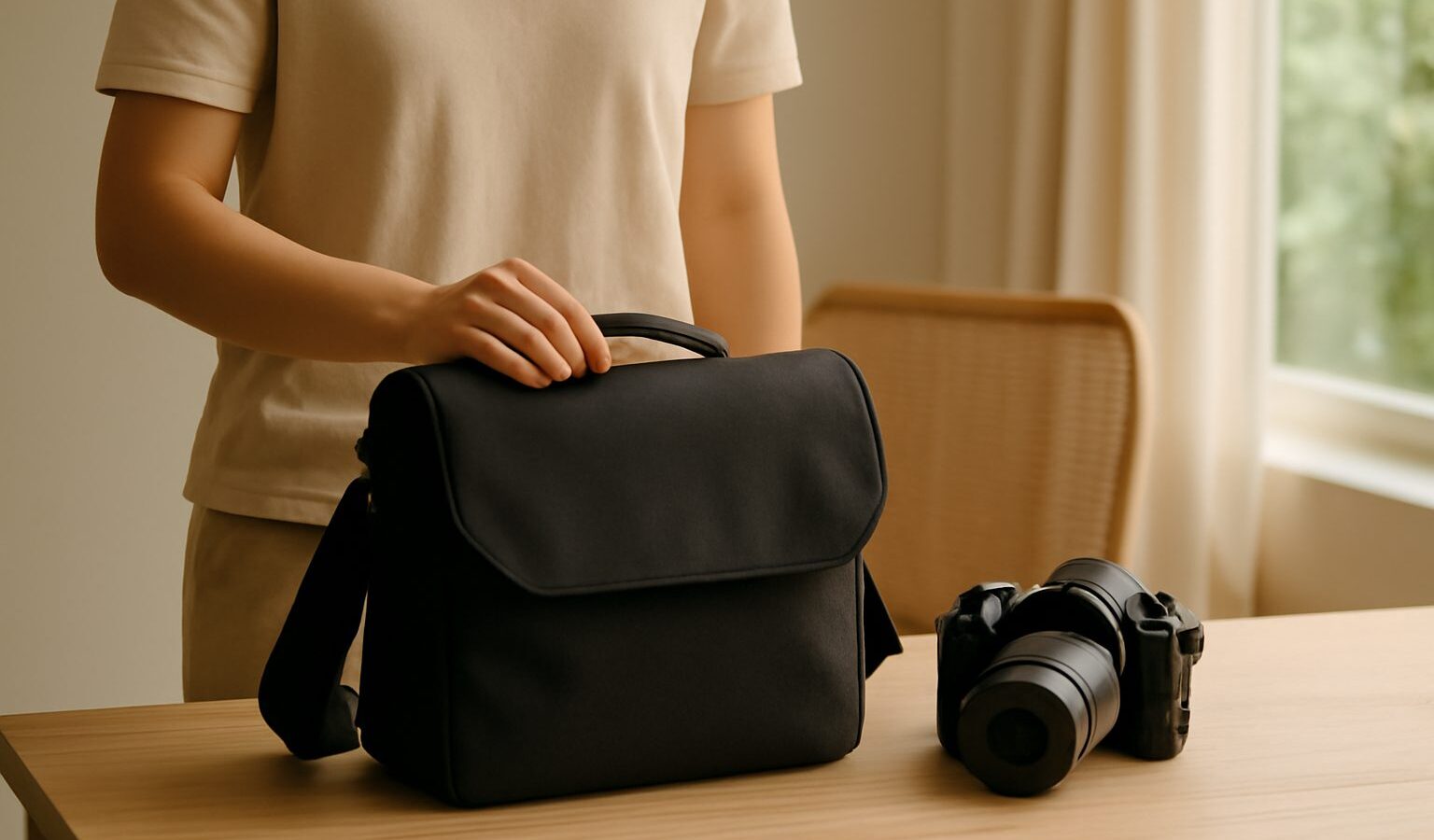
A good camera bag is easy to overlook, yet it does one of the most important jobs in photography: keeping your expensive gear safe while letting you reach it quickly. The wrong bag leaves your camera bruised, buried or unprotected in a sudden shower. This guide walks you through the main types and features so you can choose a camera bag that suits how, where and what you shoot.
Why the bag matters more than you think
Cameras and lenses are delicate and valuable, and they spend far more time being carried than being used. A bag that cushions knocks, keeps out moisture and organises your kit means you shoot more and worry less. It also affects whether you take your camera out at all, because an uncomfortable or awkward bag quietly convinces you to leave the gear at home.
Beyond protection, a bag shapes your workflow. Some designs let you grab a camera in seconds, while others prioritise capacity and comfort for long days. Matching the bag to your habits is what turns it from a simple container into a genuine tool.
The main types of camera bag
Each style suits a different way of working. Here is how the common types compare.
| Bag type | Best for | Trade-off |
|---|---|---|
| Sling | Quick access, light kit, city outings | Less comfortable when heavy |
| Backpack | Larger kit, long days, travel, hikes | Slower to reach gear |
| Messenger / shoulder | Everyday carry, casual and discreet look | Strains one shoulder when loaded |
| Holster / pouch | A single camera and lens, minimal kit | Holds very little |
| Roller case | Heavy studio or travel kit | Bulky, hard on rough ground |
Sling bags sit across your back and swing round to your front, so you can grab your camera without taking the bag off. They are great for a light, agile setup around town.
Backpacks carry the most weight comfortably by spreading it across both shoulders, making them the go-to for travel, hikes and larger kits. The trade-off is that you usually have to stop and take the bag off to reach your gear, though some open from the back or side for faster access.
Messenger and shoulder bags look casual and unbranded, which helps in busy places, and they give quick side access. They are comfortable for a modest kit but strain one shoulder once loaded.
Protection: padding, structure and weather
Protection is the heart of a camera bag, and it comes in layers.
- Padding cushions your gear from knocks and drops. Look for thick, firm padding around the base and sides, since the bottom takes the impact if you set the bag down hard.
- Adjustable dividers are padded, movable walls, usually held by hook-and-loop fasteners, that let you shape compartments around your exact kit so nothing slides about.
- Structure describes how rigid the bag is. A structured bag holds its shape and shields gear better, while a soft bag is lighter and more packable but offers less crush protection.
- Weather protection keeps out rain and dust. Many bags include a pull-over rain cover or use water-resistant materials, which is invaluable in Singapore’s sudden downpours.
No bag is fully waterproof, so a rain cover and quick drying afterwards still matter, especially given the humidity here.
Capacity: enough room, but not too much
Capacity is a balancing act. Too small and your gear will not fit, too large and you carry a heavy, half-empty bag that tempts thieves and tires you out.
Think about your typical kit, not your maximum. Most outings involve a camera, a lens or two and a few accessories, so size the bag for that and leave a little growing room. If you occasionally carry much more, consider a second, larger bag rather than lugging an oversized one every day. Also check for space for the non-camera items you always bring, such as a water bottle, a rain jacket, keys and a phone, since a bag that cannot hold daily essentials gets left behind.
Remember to allow room for the small extras that protect and power your shooting. Our guide to essential camera accessories for beginners covers the spare batteries, cards and cleaning kit that a good bag should organise.
Comfort, carry and security
A bag you carry all day must fit your body. Look for padded, adjustable straps, and on backpacks a waist or chest strap that transfers weight off your shoulders. Try the bag loaded if you can, since balance changes completely once gear is inside.
For security, discreet bags that do not shout “expensive camera” attract less attention on the street. Lockable zips, hidden pockets and sturdy fastenings all help in crowded places. A comfortable, secure bag is one you will actually take out, which is the whole point.
Climate: choosing for Singapore
Singapore’s heat, humidity and rain deserve special thought. Look for water-resistant fabrics and a rain cover to handle sudden storms. Breathable back padding and straps make a real difference in the heat, as a sweaty back quickly turns a nice walk unpleasant.
Humidity is also the enemy of camera gear, encouraging fungus on lenses. A bag is not a storage solution, so at home keep your gear in a dry cabinet rather than leaving it sealed in a damp bag. Our guide on caring for your camera in Singapore’s humidity explains how to keep everything in good condition.
Practical buying tips
To bring it together:
- Choose the type by your access needs, with slings for speed, backpacks for capacity and comfort, and messengers for casual daily carry.
- Prioritise base and side padding, the areas that face the hardest knocks.
- Size for your usual kit plus daily essentials, not your absolute maximum.
- Insist on weather protection given the local climate.
- Budget in tiers, as entry bags cover basic protection, mid-tier bags add comfort and organisation, and premium bags offer the toughest build and best access.
- Try before you buy where possible, loaded, to judge comfort.
The bag that gets you shooting
The best camera bag is the one that protects your gear, fits your body and suits how you like to work, so you carry your camera more often. Match the type to your access needs, insist on solid padding and weather protection, and size it sensibly for your everyday kit and Singapore’s climate. Do that and your bag becomes a quiet, dependable partner that keeps your gear safe and your best shots always within reach.
Explore more: Essential camera accessories for beginners · Caring for your camera in Singapore’s humidity · Choosing your first camera in Singapore