
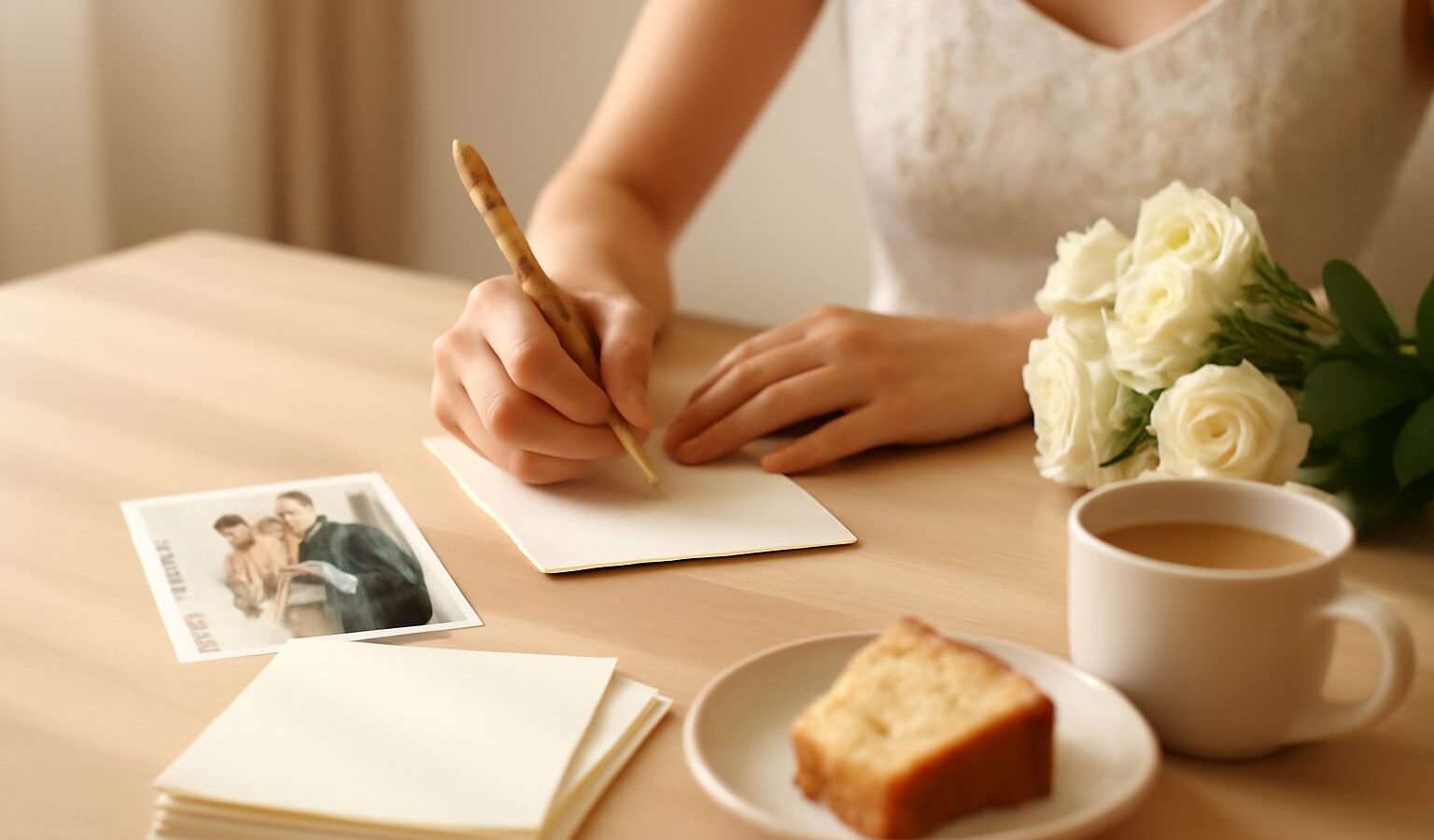
The celebration is over, the flat is full of gifts, and one lovely task remains: saying thank you. Well-written wedding thank-you notes turn a quick red packet or a thoughtful present into a lasting warm feeling, and they close your wedding on a gracious note. In Singapore, where guests may have travelled across the island for an evening banquet or sent an ang bao from overseas, a personal message shows you noticed and you cared. This guide covers who to thank, what to write, when to send and how to keep track without losing your mind.
Why the Note Still Matters
In a world of instant messages, a considered thank-you stands out precisely because it takes effort. It tells each guest that their presence and generosity registered as more than a line on a spreadsheet.
- It honours the real cost your guests carried, from the ang bao to the outfit to a day given up.
- It strengthens relationships you will lean on for years as a married couple.
- It closes the loop politely with vendors and helpers who made the day run.
- It simply feels good to end the wedding season on gratitude rather than admin dread.
You do not need thick calligraphy or expensive stationery. Warmth and specificity beat polish every time.
Building Your Thank-You List
Before writing a word, gather your information so nobody is missed. This is far easier if you kept records during the celebration, but you can reconstruct it afterwards too.
- Collect the sources. Pull together the ang bao envelopes with names, the gift registry records, any bank transfer notes and the guest list from your wedding guest list.
- Match names to gifts. Note what each person gave, whether cash, a present or their help, so you can mention it specifically.
- Add the helpers. Include the bridal party, family who cooked or hosted, the emcee, and friends who ran errands or managed your stream.
- Note the absent well-wishers. People who could not attend but sent a gift or watched online deserve a note too.
- Flag the vendors. A short message to a photographer or coordinator you loved is kind and helps them with future referrals.
Keep this as a simple shared list between the two of you, and tick names off as you go. Splitting the writing is one of the fairest ways to keep planning your wedding as a team going into married life.
Timing and Format
There is no single rule, but the sooner you write, the more sincere it reads and the less it becomes a chore hanging over you. A common, gentle target is to send notes within a few weeks to a couple of months of the wedding. Guests who gave especially generously or helped a great deal deserve to hear from you sooner.
The format below suits different relationships. Matching the effort to the closeness of the person keeps the whole task realistic.
| Recipient | Suggested format | Timing |
|---|---|---|
| Close family and bridal party | Handwritten card or a personal call | Within two to three weeks |
| Friends and colleagues | Handwritten card or a warm personal message | Within one to two months |
| Overseas or online guests | A heartfelt message with a photo from the day | Within one to two months |
| Vendors you loved | A short written note or a public review | Within a month |
A handwritten card carries the most weight, but a genuine, personalised message beats a rushed card with nothing but a signature. What matters is that the words are clearly meant for that one person.
Writing Notes That Feel Personal
A good note is short, specific and warm. Aim for three or four sentences that could only have been written to that person. A simple structure keeps you moving through a long list.
- Thank them directly for the specific gift or gesture.
- Say something about their presence or your relationship.
- Hint at how the gift will be used or what it meant.
- Close with warmth and a look forward.
Here are two grounded examples you can adapt rather than copy:
For a cash gift: “Dear Aunty Mei, thank you so much for your generous ang bao and for making the trip down to celebrate with us. Your kindness is helping us set up our new flat, and it meant the world to have you at our table. We look forward to hosting you soon.”
For a helper: “Wei Jie, we honestly could not have got through the morning without you wrangling the gatecrashing games and keeping everyone calm. Thank you for being such a steady friend. Dinner is on us next month.”
Avoid one identical message copied to everyone. Guests talk, and a template with the name swapped in is easy to spot. If you mention a photo, actually attach it.
Keeping Track Without Stress
A long list can feel heavy on top of post-wedding tiredness, so make the process forgiving. Break it into small batches of five or ten a sitting rather than one marathon. Write together over a weekend coffee so it becomes a shared wind-down rather than a duty. If you fall behind, a slightly late note is far better than none, so send it anyway with a light apology.
Watch a few common slip-ups. Do not forget the people who gave their time rather than money, as helpers are easy to overlook. Double-check names and spellings, especially for elders and in-laws. And keep your master list somewhere safe, because it doubles as a lovely record of who stood with you at the start of your marriage.
Sending wedding thank-you notes is the last, quiet act of your wedding, and one of the most human. It costs a little time and no real money, yet it leaves every guest feeling appreciated and sends you into married life with your relationships warmer than ever. Write them honestly, write them soon, and let gratitude be the last word of your celebration.