
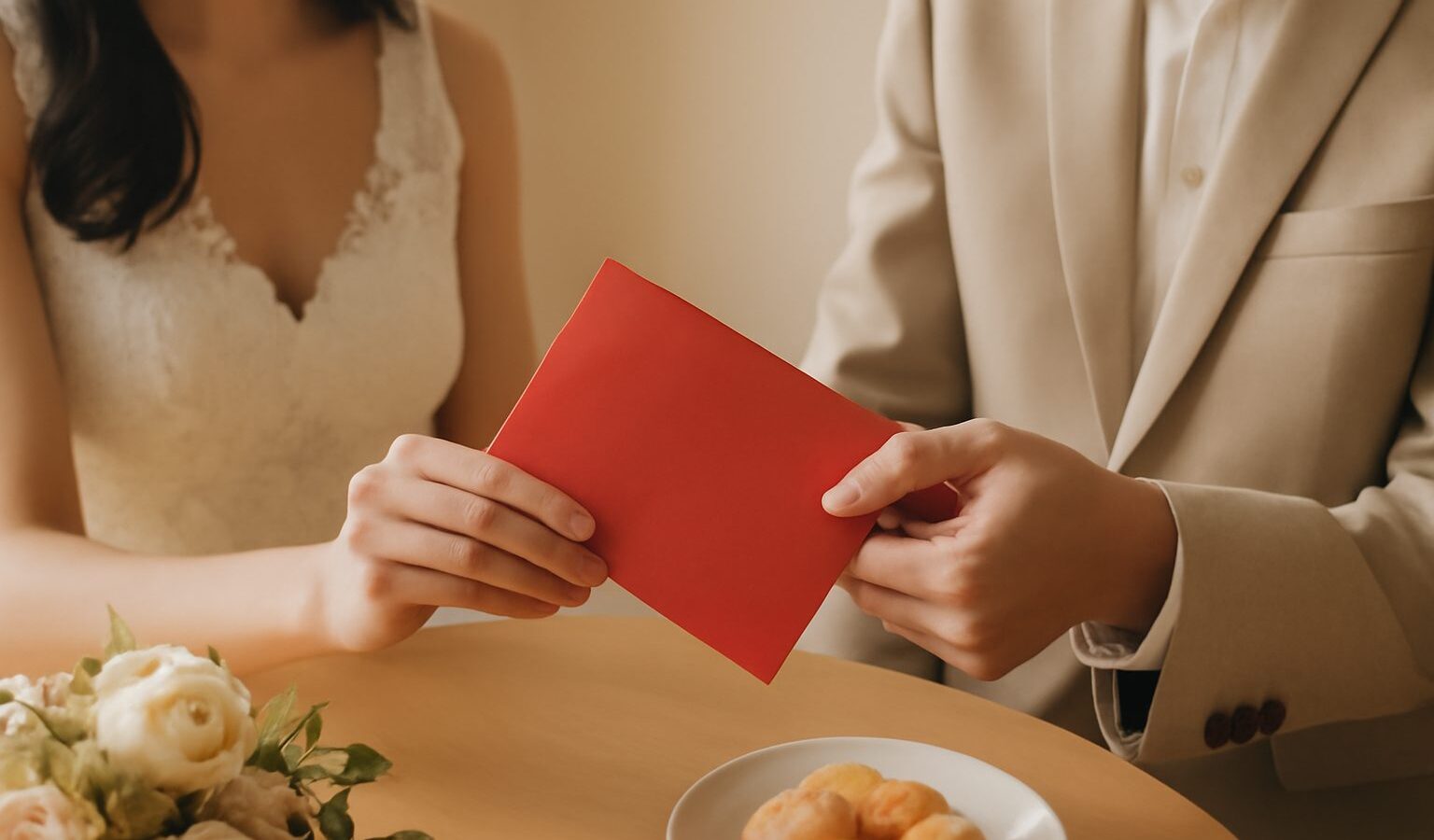
Few social questions cause quite as much quiet anxiety as the ang bao wedding Singapore guests are expected to give. You have the invitation, you know the venue, and now comes the awkward maths: how much is right, how much is too little, and will anyone actually judge you? The short answer is that there are no fixed rules, only customs and considerations, and once you understand the thinking behind the red packet the number sorts itself out. This guide walks through how ang bao works at Singapore weddings, both as a guest deciding what to give and as a couple receiving and tracking it.
What the Ang Bao Actually Represents
The ang bao, a red packet of cash, is a gift and a blessing rolled into one. The red colour signals luck and good fortune, and the money inside is a practical, warm-hearted way to help a couple start married life. At a wedding banquet, there is also a widely understood second layer to the custom: your gift is loosely meant to cover the cost of your seat, in other words your share of the meal the couple is hosting. That is why people talk about “covering your seat” or not wanting the couple to “lose money” on their guests.
It helps to hold both ideas at once. The ang bao is genuinely a gift, given with affection, and no couple who values your presence is tallying your table against your packet. At the same time, the seat-covering convention gives guests a sensible anchor for deciding an amount, which is why it endures. Treat it as a guide to landing in the right range, not a bill to be settled to the dollar.
What Shifts the Amount
Because the meal itself is the informal benchmark, the single biggest driver of a customary ang bao is the venue and the type of meal. A dinner at a prestigious hotel ballroom sits at the top; a restaurant dinner sits lower; a lunch banquet lower again; and a casual buffet, a void-deck celebration, or a simple family gathering lower still. On top of the venue, a few personal factors nudge the figure up or down:
- Your closeness to the couple. Close friends and family typically give more generously than a work colleague or a plus-one who barely knows the couple.
- Whether you actually attend. If you are invited but cannot come, it is gracious to send a smaller ang bao as a blessing, without any expectation of covering a seat you did not take.
- Weekday versus weekend, and lunch versus dinner. These track the venue’s own pricing, and guests tend to follow suit.
- Your own means and life stage. A student or someone early in their career is not expected to match an established professional, and no reasonable couple would want them to stretch.
The Rate Guides That Circulate Each Year
Every wedding season in Singapore, “ang bao rate” guides make the rounds online, often organised by hotel or venue and updated to reflect current banquet prices. They can be a useful sanity check when you have no idea where to start, especially for a specific hotel you have never dined at. Use them for orientation, not as gospel. These guides are informal estimates compiled by third parties, they vary from year to year and from list to list, and they are not published or endorsed by the couple or the venues. Prices and norms drift over time, so treat any figure you find as a rough, illustrative starting point rather than a fixed rate, and always adjust for your own relationship to the couple and what you can comfortably give. If in doubt, quietly ask a mutual friend attending the same wedding what feels appropriate for the group.
Numbers to Favour and Numbers to Avoid
Chinese wedding custom carries some light superstition around numbers, and observing it is an easy courtesy. As a general pattern, guests favour even numbers and, in particular, amounts built around the digit eight, which sounds like prosperity in several dialects. The digit four is traditionally avoided because it sounds like the word for death, so amounts ending in four are considered unlucky for a joyous occasion. Odd numbers are more associated with white-packet condolence gifts, so guests usually round to an even, auspicious figure. None of this is a hard rule, and many families are relaxed about it, but nudging your amount to a “nicer” number costs nothing and is warmly received. When you write the sum on the packet or send it digitally, a clean auspicious figure is a small, thoughtful touch.
Giving as a Couple, Family, or Group
If you and your partner attend together, you give a single, larger ang bao between the two of you rather than two separate packets, since you are taking two seats at one table. Families attending together follow the same logic, one packet that reflects the number of people in the party and the closeness of the relationship. Colleagues sometimes prefer to pool a group ang bao from the office, which is perfectly acceptable and often appreciated. The guiding principle is simple: think about how many seats your party occupies and how close you are, then give one considered amount rather than agonising over each individual.
| Ang bao factor | What to consider |
|---|---|
| Venue and meal type | Hotel dinner sits highest, restaurant lower, lunch or casual lower again; the meal is the informal benchmark |
| Closeness to the couple | Close family and friends give more generously than acquaintances or plus-ones |
| Attending or not | Attending covers your seat; sending regrets means a smaller blessing amount is gracious |
| Party size | Couples, families and groups give one combined packet reflecting the seats taken |
| Your own means | Give what you can comfortably afford; no couple worth celebrating wants you to overstretch |
| Numbers and superstition | Favour even, eight-based amounts; avoid the digit four and odd condolence-style sums |
Digital Ang Bao and PayNow
The red packet is increasingly going digital. Many couples now share a PayNow QR code or a mobile number, sometimes printed on a card at the reception or included with the invitation, so guests can transfer their ang bao instead of carrying cash. E-ang-bao services and bank apps also let you send a virtual red packet with a festive design. Digital giving is convenient, hygienic and easy to track, and it is entirely acceptable at modern Singapore weddings. A few courtesies keep it smooth: transfer the amount discreetly rather than making a show of it, add a short congratulatory note or the couple’s names in the reference field so they can match your gift to you, and if you prefer a physical packet at a traditional celebration, a cash ang bao is always welcome too. Some guests do both, transferring the bulk and handing over a token packet for the ceremony.
For the Couple: Collecting and Tracking
On the day itself, appoint one or two trusted people, often family members or close friends, to manage the ang bao table, receive packets, and keep everything secure. It is wise to record who gave what, either by writing on the packets, keeping a simple list, or checking transfer references for digital gifts. This is not about scoring guests; it is practical. You will want an accurate guest count reconciled against your table bookings, and the record becomes invaluable later when you attend your guests’ own weddings and want to reciprocate thoughtfully. After the celebration, count and bank everything promptly, and take a moment to send thanks. A short message of appreciation, whether a card or a heartfelt text, closes the loop warmly and is remembered long after the day.
Explore More
To see how ang bao fits into the bigger picture of hosting a celebration, read our guide to the wedding banquet explained in Singapore. And if you are the one planning the numbers, our guide to setting a wedding budget in Singapore shows how the ang bao offset fits sensibly into your overall plan.
Related across Sky Media: Attending a Singapore Wedding: Ang Bao and Etiquette · How to Plan Your Ang Bao Giving in Singapore