
Many seniors in Singapore travel regularly to visit family, take holidays or attend events overseas. If you live with a heart condition, lung disease, diabetes or another long-term illness, or if you have recently been in hospital, you may wonder whether you need a fit to fly letter Singapore airlines will accept before boarding. The answer depends on your condition, how stable it is, the airline’s own policy and the length of the flight.
This guide explains when airlines tend to ask for medical clearance, the difference between a doctor’s letter and an airline medical form, and how to prepare early so your trip goes smoothly. It is general information, not medical advice. Your doctor is the right person to decide whether you are well enough to fly.
Why Airlines Care About Your Health
An aircraft cabin is a different environment from the ground. The air pressure is lower, which means there is less oxygen available to your body. Air is dry, seats are cramped, and long periods of sitting can raise the risk of blood clots in some people. Most healthy travellers barely notice, but for people with certain conditions these changes can matter.
There is also the practical side: on a long flight, medical help is limited and the nearest hospital may be hours away. Airlines therefore want to know in advance if a passenger may need special help or equipment, so they can plan rather than face an emergency mid-flight.
Fit-to-Fly Letter vs Airline Medical Form (MEDIF)
These two documents are often confused.
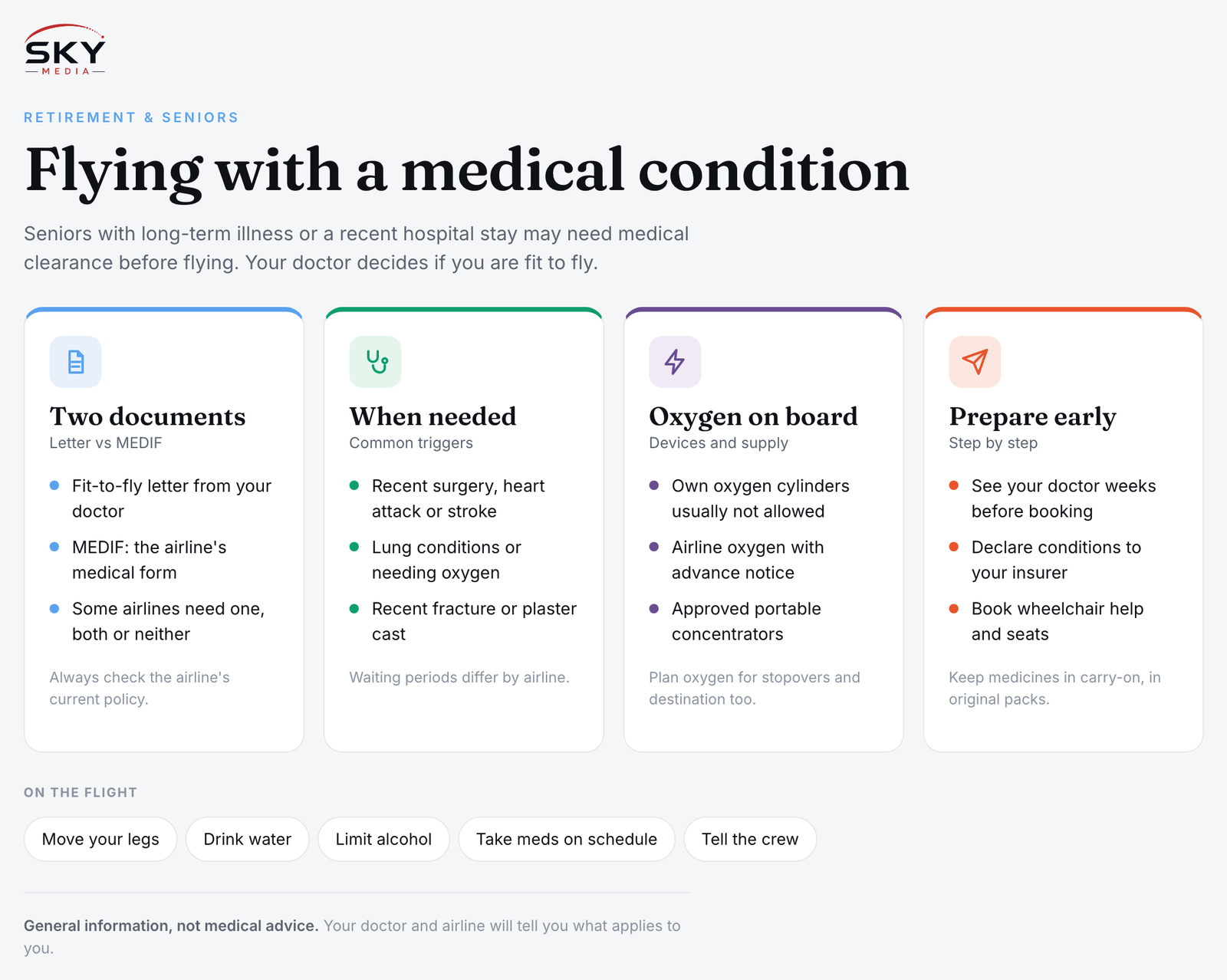
A fit-to-fly letter is a letter from your doctor stating that you are medically fit to travel by air, sometimes with details of your condition, medication and any precautions. It is written on clinic or hospital letterhead and signed by the doctor. Travel insurers, airlines and sometimes immigration or cruise operators may ask for it.
A MEDIF (Medical Information Form) is the airline’s own form, which you fill in partly and your doctor completes. It is reviewed by the airline’s medical team, who then decide whether to accept you and what support you need, such as oxygen or a stretcher. Many airlines publish their MEDIF on their website, often under special assistance or medical travel.
Some airlines ask only for one, some for both, and many for neither if your condition is stable and you need no special help. Always check the airline’s current policy.
When You Are Likely to Need Medical Clearance
Airline policies differ, but medical clearance is commonly requested in situations like these:
- Recent surgery, especially chest, abdominal, eye or brain surgery. Airlines often have minimum waiting periods after operations.
- A recent heart attack, stroke or other serious cardiac event.
- Lung conditions such as chronic obstructive pulmonary disease (COPD) or severe asthma, especially if you are short of breath at rest.
- Needing oxygen at home, or a doctor’s view that you might need it during the flight.
- Recent hospital admission or an unstable condition still being treated.
- Travelling with medical equipment, such as a portable oxygen concentrator, CPAP machine or nebuliser that you plan to use on board.
- Needing a stretcher or significant help to get on and off the aircraft.
- A recent fracture or plaster cast, which can swell at altitude.
Waiting periods and specific rules differ by airline and change over time, so do not rely on rules you have heard from friends. Your doctor and airline will tell you what applies.
Comparing the Documents You Might Need
| Document | Who prepares it | When it is typically used |
|---|---|---|
| Fit-to-fly letter | Your doctor, on clinic or hospital letterhead | Recent illness or surgery, travel insurance claims, airline request |
| Airline MEDIF | You and your doctor, on the airline’s form | Oxygen, stretcher, unstable condition, equipment used on board |
| Medication letter or prescription list | Your doctor or pharmacist | Carrying medicines, injectables or controlled drugs through customs |
| Device approval for equipment | You, using airline and manufacturer details | Portable oxygen concentrator or CPAP use in the cabin |
Oxygen and Medical Devices on Board
If you use oxygen at home, you generally cannot bring your own oxygen cylinders onto a plane. Options usually include:
- Airline-supplied oxygen, which some airlines provide on request with advance notice, often with a MEDIF.
- A portable oxygen concentrator (POC), a battery-powered device that some airlines allow on board if the model is approved. You will usually need enough battery power for the whole journey plus a margin, and batteries must be packed according to safety rules. See our guide on airline power bank rules when flying from Changi for how lithium batteries are handled.
Also plan for oxygen at your destination and during stopovers. Requests usually need to be made well before departure, so contact the airline early.
How to Prepare, Step by Step
1. Talk to your doctor early. Ideally several weeks before you book. Bring your itinerary, including flight lengths and stopovers. Ask directly whether you are well enough to fly and what precautions to take. If you see a polyclinic or specialist regularly, they will know your history best.
2. Check the airline’s medical policy. Look on the airline website for “special assistance” or “medical clearance”, or call the airline. Note deadlines for submitting forms. Budget airlines may have different policies from full-service carriers; our guide to budget airlines from Singapore covers the basics of booking with them.
3. Get the paperwork done. Ask the clinic how long they need to complete a letter or MEDIF and whether there is a fee. Make copies.
4. Sort out your travel insurance. Declare pre-existing conditions honestly. Many policies limit or exclude cover for undeclared conditions, or for travelling against medical advice. Read the policy wording and ask the insurer if anything is unclear.
5. Request assistance. Wheelchair help at Changi Airport and at your destination, priority boarding, or an aisle seat near the toilet can all make a big difference. Book these when you buy your ticket or soon after.
6. Pack medication sensibly. Keep all medicines in your carry-on bag in original packaging, with more than enough for the trip plus delays. Carry a list of your medications and conditions. Some medicines are controlled in other countries, so check the destination’s rules before you travel.
Staying Well During the Flight
- Move your legs and walk the aisle when it is safe to do so.
- Drink water and limit alcohol.
- Take medication on your usual schedule, adjusting for time zones as your doctor advises.
- Tell the cabin crew if you feel unwell, short of breath or have chest pain.
- If you have a long-term condition, keep an up-to-date summary handy. Our article on managing chronic conditions in older age has tips on keeping track of your health records.
If You Are Travelling With an Elderly Parent
Adult children often handle bookings for older parents. Go to the doctor’s appointment together if possible, keep copies of all medical documents on your phone and in hand luggage, and make sure someone travelling with your parent knows their medications and doctor’s contact details. A medical information grab bag is just as useful on the road as at home.
With good preparation and your doctor’s guidance, many seniors with medical conditions can travel safely and comfortably.
Frequently Asked Questions
How far ahead should I ask my doctor for a fit-to-fly letter? Ideally several weeks before you book, so there is time to discuss your itinerary and any tests. Clinics also need time to write the letter or complete an airline form, and some charge for it. Leaving it to the last week risks delays that could affect your flight.
Can a senior with stable diabetes or high blood pressure fly without medical clearance? Often airlines ask for nothing if the condition is stable and you need no special help, but policies differ. Your doctor can advise whether you are well enough to fly, and the airline’s website will say if it requires a form. Carry your medicines and a list of conditions in your hand luggage.
Will travel insurance cover me if I fly against my doctor’s advice? Not necessarily. Many policies limit or exclude cover for undeclared pre-existing conditions, or for travelling against medical advice. Declare your conditions honestly, read the policy wording, and ask the insurer to clarify anything unclear before you pay.
Can I ask for wheelchair help at Changi Airport as a senior? Yes, assistance can be requested through your airline, ideally when you buy the ticket or soon after. Wheelchair help, priority boarding and an aisle seat near the toilet make a big difference for many older travellers. Arrange the same help at your destination and any stopover.
Can I carry my own CPAP machine or nebuliser onto the plane? Many airlines allow these devices in the cabin, but you should tell the airline in advance, since use on board may need approval. Pack the device in your carry-on and ask about battery rules. Bringing a doctor’s letter describing the equipment can also help at security.