
If you are visiting Singapore, relocating for work, or thinking of earning extra income from a spare room, you have probably asked: is Airbnb legal in Singapore? The short answer is that renting out residential homes for very short stays is generally not allowed, whatever platform is used. The rules differ for private homes and HDB flats, and the penalties can be serious.
This guide explains the minimum rental periods, who enforces them, what can happen if you break them, and what legal options exist for short stays. It is general information, not legal advice. Rules can change, so always confirm the current position with the Urban Redevelopment Authority (URA) or the Housing & Development Board (HDB) before you rent or let out a home.
Why Short-Term Letting Is Restricted in Singapore
Most Singaporeans live in high-density housing: HDB flats and private condominiums with shared lifts, corridors and facilities. The government’s position is that a steady stream of short-term guests can affect neighbours’ security, privacy and peace, and that residential homes are meant for living in, not as informal hotels.
Platforms such as Airbnb are not banned from operating, and you may still see listings. However, the platform being available does not make a listing legal. What matters is the type of property and the length of the stay.
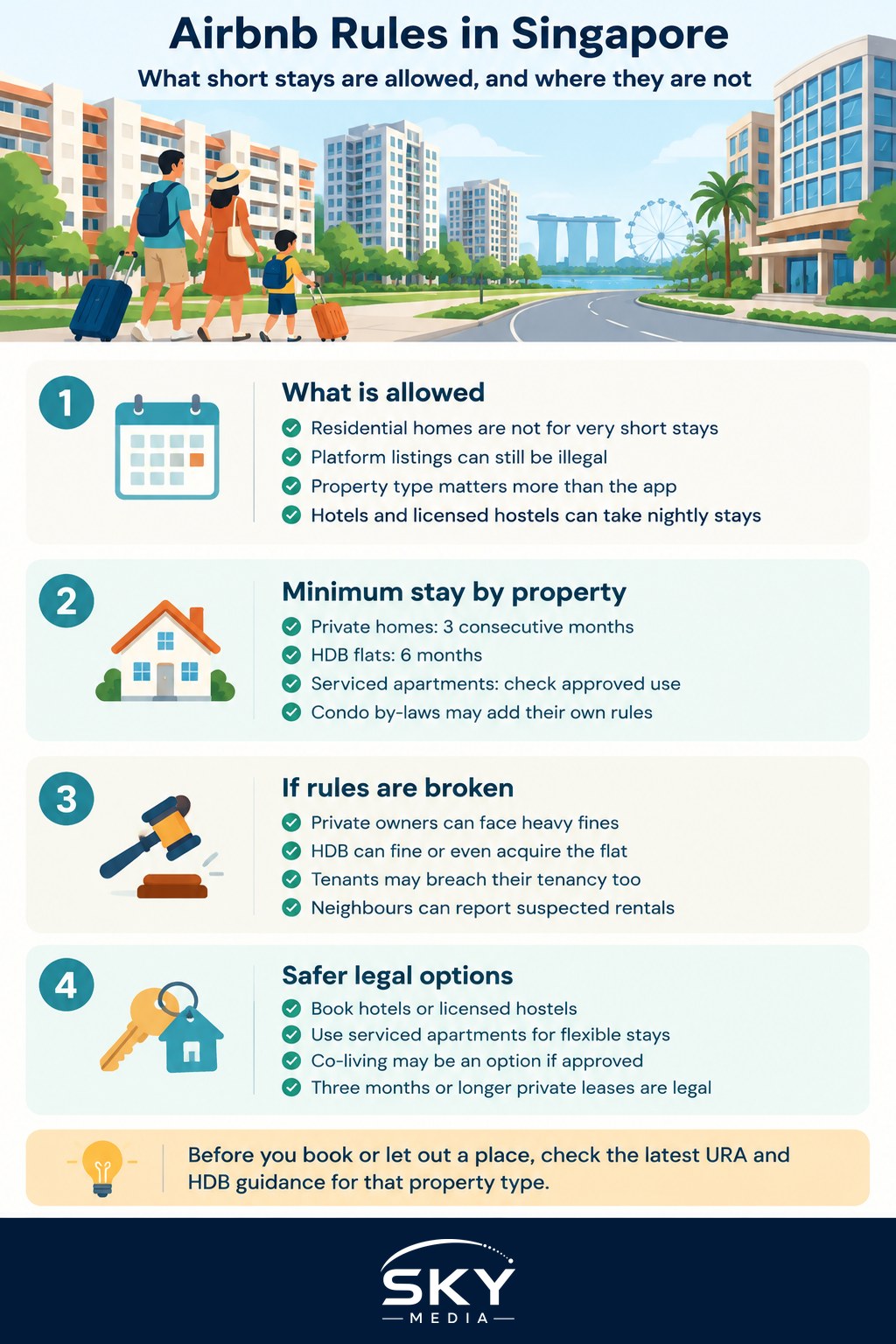
Minimum Rental Periods by Property Type
The minimum stay is the key number. Anything shorter counts as short-term accommodation and needs permission or a licence that ordinary homes do not have.
| Property type | Minimum rental period | Who sets and enforces the rules |
|---|---|---|
| Private residential (condos, apartments, landed homes) | 3 consecutive months | URA, under the Planning Act |
| HDB flats (whole flat or rooms) | 6 months | HDB |
| Hotels and licensed hostels or boarding houses | No minimum, nightly stays allowed | Licensed by the Hotels Licensing Board |
| Serviced apartments | Depends on the property’s approved use and terms | Check with the operator and URA |
A few points worth noting:
- Private homes. URA’s guidelines say private residential properties should not be rented out for less than three consecutive months without planning permission. In practice, ordinary homes do not get permission for short-term use.
- HDB flats. HDB sets a minimum rental period of six months for both whole flats and rooms, along with other conditions such as eligibility and approval or registration requirements. Short-term letting of HDB flats, including through home-sharing sites, is not allowed.
- Condominium by-laws. Even where a stay meets the legal minimum, the condominium’s management corporation (MCST, the body that manages a strata-titled development) may have its own by-laws on registering tenants and visitors.
Penalties for Illegal Short-Term Rentals
Enforcement is real, and the consequences can be significant:
- Private property. Unauthorised short-term letting is an offence under the Planning Act. Owners and people who run these rentals can face heavy fines, and there have been prosecutions. URA publishes the current penalties on its website.
- HDB flats. HDB can take action against owners who break its rental rules, ranging from fines to compulsory acquisition of the flat in serious cases.
- Tenants who sublet. If you are renting a home and let it out short term without permission, you are likely breaching your tenancy agreement as well as the law. Your landlord could end the lease and you could still be held responsible.
Neighbours and management bodies can report suspected short-term rentals to URA or HDB, which is often how cases come to light. Fines, legal costs and the loss of a home far outweigh any short-term income.
What This Means for Guests and Visitors
Guests are not usually the focus of enforcement, but booking an illegal short stay still carries real risks:
- You may be asked to leave. Condo security or management may turn you away if your stay is not registered properly, leaving you to find a hotel at short notice.
- Limited protection. If something goes wrong, such as a dispute, an injury or a theft, you may have little recourse against an unlicensed host.
- Insurance gaps. Travel and home insurance policies may not cover incidents in an unlicensed rental. Check your policy wording.
- Fire and safety standards. Licensed accommodation has to meet safety requirements that a private flat let out informally may not.
If you see a short-term listing in Singapore, look carefully at what it is. Some listings on home-sharing platforms are legitimate hotels, hostels or serviced apartments. The safer route is to book licensed accommodation directly or confirm the property’s status before paying.
Legal Options for Stays Shorter Than Three Months
If you need somewhere to stay for a few nights or a few weeks, there are lawful choices:
- Hotels and hostels. Licensed for nightly stays, with options from budget to luxury across the island.
- Serviced apartments. Popular with relocating professionals because they offer a kitchen and more space. Minimum stays vary by property, so ask the operator directly.
- Co-living spaces. Some operators run properties under arrangements that allow flexible stays. Check whether they meet the minimum period for residential use or hold the relevant approval.
- Rentals of three months or longer. If you are relocating and will be here for a while, a three-month or longer private lease is legal and often better value. Our guide on how to choose a rental lease term in Singapore explains the trade-offs between shorter and longer leases.
Newcomers on a short initial lease can also keep upfront costs down by renting rather than buying household items. See how to rent furniture in Singapore for short stays.
If You Are a Homeowner Thinking About Renting Out
If you want rental income from your property, stay within the rules:
- Check your property type and its rules. HDB owners must follow HDB’s eligibility, minimum period and approval or registration requirements. Private owners should check URA’s guidelines and their condo by-laws.
- Use a proper tenancy agreement. Set out the lease length, deposit, maintenance responsibilities and house rules in writing.
- Verify your tenants. Check identification and, for foreign tenants, that they hold a valid pass. Landlords have responsibilities under immigration and housing rules.
- Declare rental income. Rental income is generally taxable. Check IRAS for how to declare it.
- Get advice if unsure. A property lawyer or a licensed property agent can help you set things up correctly. If you need help finding legal support, see getting legal help and legal aid in Singapore.
Keeping Up With Rule Changes
URA has studied and consulted the public on whether to allow some form of regulated short-term rental for private homes, but any change would come with conditions and would be announced officially. Until then, the safest assumption is that the current minimum periods apply. Before renting or letting out a home, check the latest guidance on the URA and HDB websites rather than relying on a listing, an agent’s verbal assurance or old forum posts.
Frequently Asked Questions
How can I tell whether a short-stay listing in Singapore is legal? Start by asking what kind of property it is. A licensed hotel, hostel or serviced apartment can host nightly stays, but an ordinary condo unit or HDB flat generally cannot. Ask the host for details of the approval and, if in doubt, confirm with URA or HDB before paying.
Can friends or relatives stay in my flat for a few nights? Hosting friends or family as unpaid guests is a different matter from renting out your home. Once money changes hands for short stays, though, it can start to look like short-term letting. If you are unsure where the line falls, ask HDB or URA.
Can I report a neighbour who runs a short-term rental? Yes. Neighbours and management bodies can report suspected short-term rentals to URA for private homes or to HDB for flats. Note down dates and what you have seen, and use the official feedback channels instead of confronting the host yourself.
Is it worth buying a condo to rent out on Airbnb? Not for short stays, since private homes cannot be let for less than three consecutive months without permission. If you want rental income, plan around longer leases, and check your numbers with a licensed property agent or adviser. Rules may change, so look at URA’s current guidance first.
Official sources: URA