

In many Singapore homes, having siblings share a bedroom is simply a matter of space. A three-room or four-room HDB flat may not have a spare room for each child, and even larger homes sometimes use a bedroom as a study, helper’s room or space for a grandparent. Sharing can build closeness, but it can also mean arguments over lights, noise, mess and who touched whose things.
This guide focuses on the practical side of a shared room: how to divide space, set routines, protect privacy and stop small irritations from becoming daily battles. It is not a guide to sibling rivalry in general. If your children’s conflict goes well beyond the bedroom, our article on how to manage sibling rivalry is a better starting point.
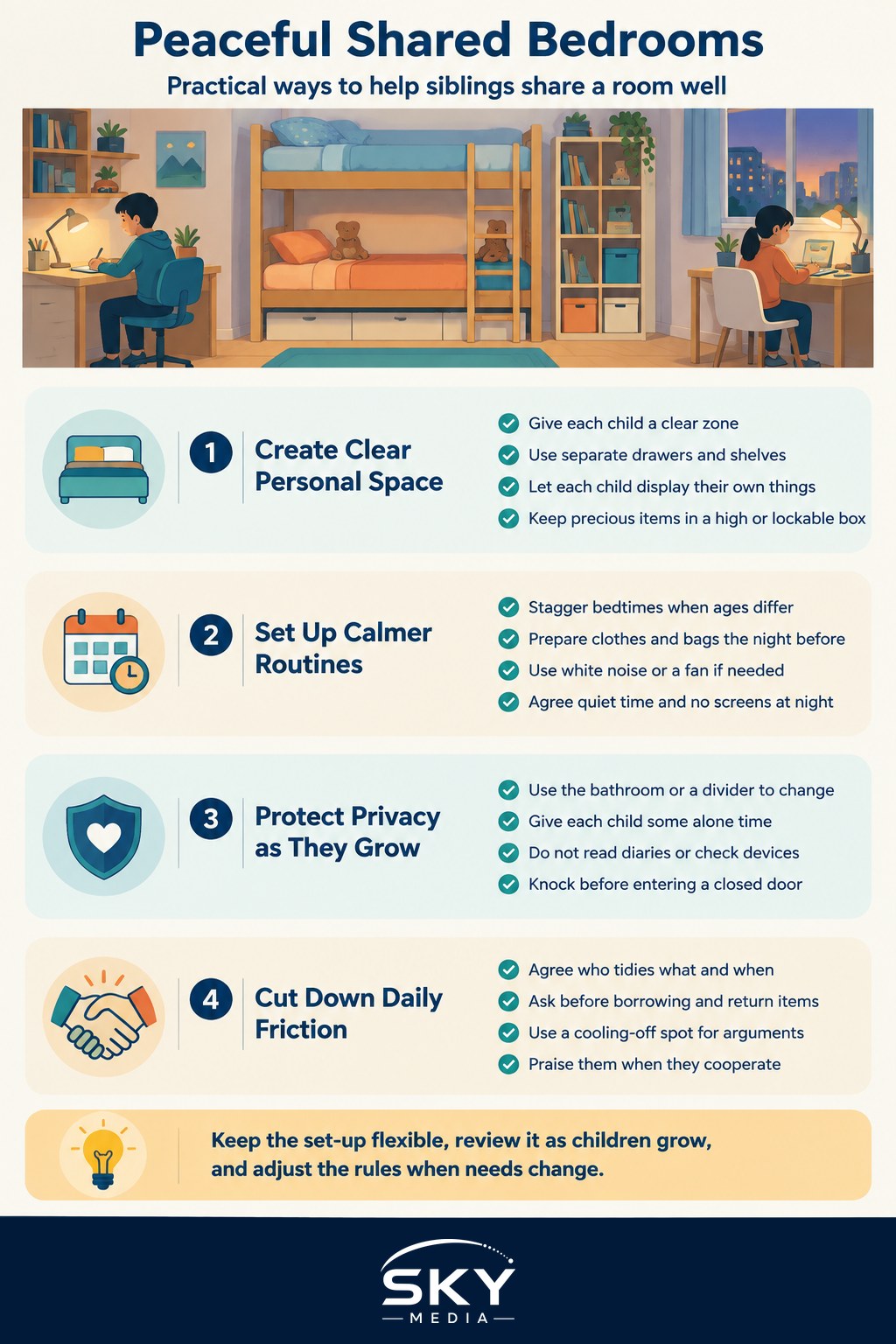
Set Up the Room So Each Child Has Their Own Space
Most bedroom fights are really about territory. Children cope much better with sharing when each of them can point to something that is clearly theirs.
Create personal zones
- One bed, one zone. Treat each bed and the area around it as that child’s space. Siblings ask before entering or touching things there.
- Separate storage. Give each child their own drawers, shelves or labelled boxes. Shared toys can live in a common bin, but special items need a home only one child controls.
- A personal display spot. A section of wall, a pinboard or a shelf where each child can show their own drawings, photos or trophies helps them feel ownership.
- A lockable or high box for precious things. Older children, especially, appreciate somewhere a younger sibling cannot reach.
Make the most of a small room
In compact bedrooms, think vertically. Bunk beds, loft beds, wall shelves and under-bed drawers free up floor space for play or study. If you use a bunk bed, follow the manufacturer’s age guidance for the top bunk, keep guard rails in place and place it away from windows. Our guide to bedroom design and setup in Singapore has more ideas for small layouts.
Routines That Reduce Night-Time Conflict
Bedtime is the flashpoint in most shared rooms, especially when children are different ages. A clear, predictable routine removes a lot of the negotiation.
| Situation | What often goes wrong | What tends to help |
|---|---|---|
| Different bedtimes | Older child’s light or noise wakes the younger one | Younger child sleeps first; older child gets ready elsewhere and enters quietly with a small reading light |
| Different wake-up times | Early riser disturbs the other | Clothes and school bags laid out the night before, outside the room if possible |
| One child is a light sleeper | Every rustle becomes an argument | Consistent white noise or a fan, and bed placement away from the door |
| Homework in the bedroom | Study and sleep clash | A separate study spot in the living or dining area during exam periods |
| Screens at night | Glow and sound keep the other child awake | Agreed rule that devices charge outside the room |
Agree “quiet time” rules together
Sit down with your children and agree on a few simple rules, such as when lights go off, whether talking is allowed after that, and what counts as too loud. Children are more likely to keep rules they helped to make. Write them on a small card and stick it on the door if that helps younger children remember.
For more on making the room calmer for sleep, see how to create a restful bedroom for better sleep.
Protecting Privacy as Children Grow
Needs change as children get older. What worked for two preschoolers may not work for a tween and a seven-year-old, or for a brother and a sister approaching puberty.
- Give changing privacy. Agree that each child can change in the bathroom, or use a simple room divider or curtain.
- Offer time alone in the room. A schedule where each child sometimes has the bedroom to themselves, for example while the other is at an activity, can ease tension.
- Respect diaries and personal items. Make it a firm family rule that siblings do not read each other’s things or look through each other’s devices.
- Knock before entering when the door is closed. This teaches respect for each other’s space, even in a shared room.
- Review the arrangement regularly. If an older child seems withdrawn, unhappy or anxious about the room, talk it through calmly. Families sometimes rearrange rooms, move the study area or adjust who shares with whom as children grow.
Families make different choices about when, or whether, siblings of different genders should stop sharing. There is no single right answer. Focus on what your children say they need and what is practical in your home. If your child is distressed in ways you cannot resolve at home, a school counsellor or family professional can help.
Preventing the Everyday Fights
Small, repeated irritations cause most of the trouble. A few habits can stop them building up.
- Clear tidy-up expectations. Agree who tidies what, and when. “Your zone is your responsibility; shared areas we do together” is easy for children to understand.
- A borrowing rule. Ask first, return it in the same condition. If something breaks, talk about how to make it right.
- A cooling-off spot. When an argument starts, one child can go to a pre-agreed spot elsewhere in the home to calm down, rather than staying in the room.
- Avoid making one child the “boss.” Older siblings should not be put in charge of the younger one’s bedtime or tidiness. That role belongs to parents.
- Notice and praise cooperation. When they settle a disagreement themselves or help each other, say so. Positive attention encourages more of it.
Helping a New Sibling Move In
Moving a baby or toddler into an older child’s room is a big change for the older child. Prepare them well before the move, let them help choose bedding or decorations for the new sibling, and make sure their own space and belongings stay protected. Keep their routine as steady as possible during the transition. Our guide on preparing your child for a new sibling covers this stage in more detail.
Making Shared Rooms Work Long Term
Sharing a room is rarely perfect, and that is fine. Children who share often develop patience, negotiation skills and a close bond that lasts well beyond childhood. Keep the set-up flexible, listen when either child raises a concern, and adjust the rules as their ages and needs change. With clear zones, predictable routines and respect for privacy, a shared bedroom can be a source of comfort rather than conflict.