
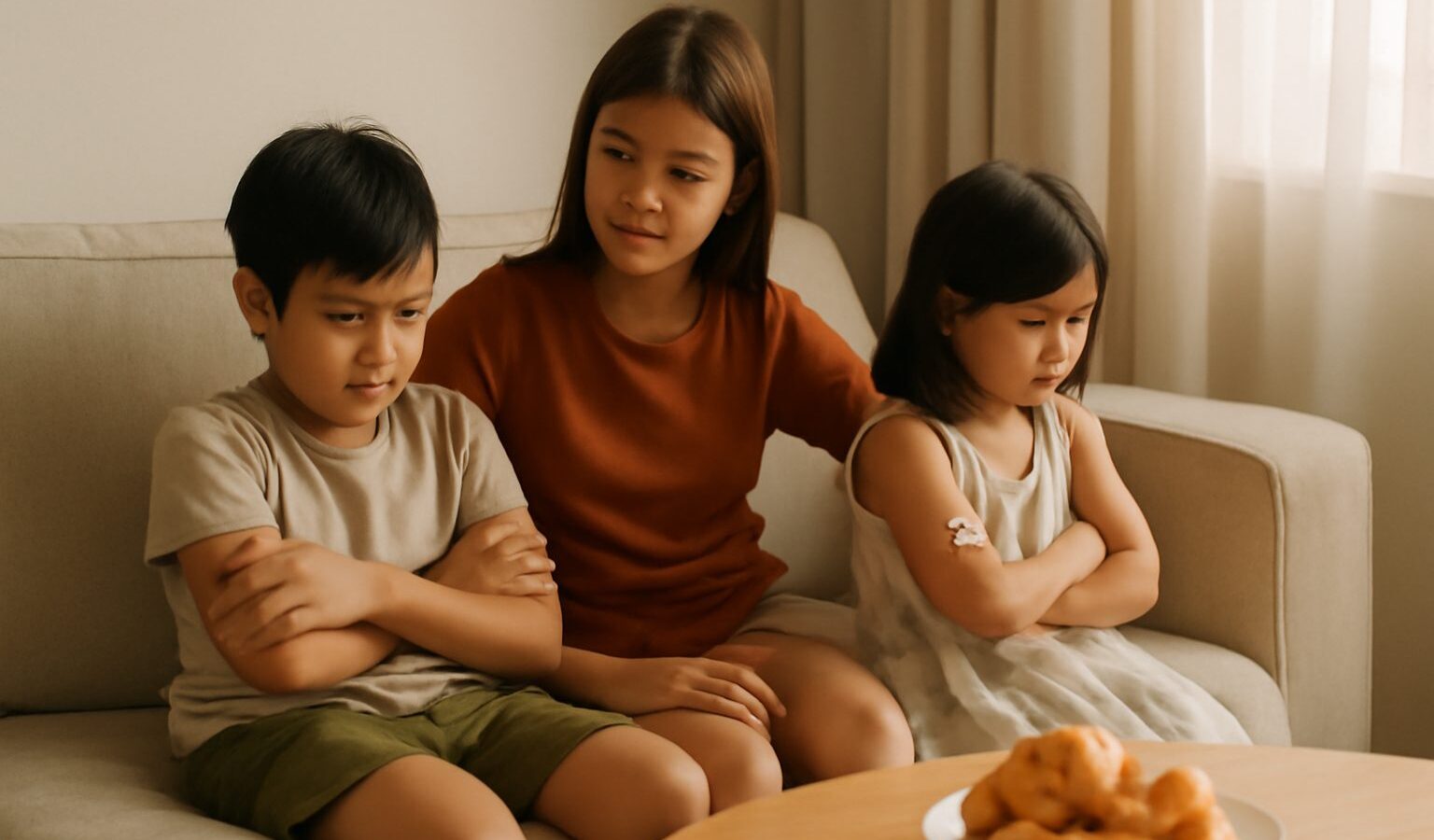
If your children bicker over the same toy they ignored an hour ago, take heart: you are witnessing something completely ordinary. Sibling rivalry in Singapore homes, where space is often shared and grandparents may have their own favourites, is one of the most common worries parents raise. It can be draining, and it can leave you wondering whether you have done something wrong. You almost certainly have not.
Some conflict between siblings is not only normal, it is useful. It is how children practise negotiating, sharing, and repairing relationships, skills they will carry into friendships and, one day, the workplace. Your job is not to stop every squabble, but to keep the tone kind and teach your children how to work things out. This guide offers calm, practical steps, not verdicts, because every family is different.
Why Siblings Fight in the First Place
Rivalry usually grows from a simple root: children competing for something that feels limited. That might be your attention, a favourite spot on the sofa, or the sense of being treated fairly. When a child feels they are getting less, the alarm bells ring, even if the reality looks even to you.
Common triggers include:
- A new baby arriving and shifting the family’s attention.
- Age gaps that make sharing genuinely hard, such as a toddler and a tween.
- Tiredness, hunger, or an overstimulating, humid afternoon indoors.
- Personality differences, where one child is loud and one is sensitive.
- Feeling compared, especially around grades, behaviour, or tidiness.
Understanding the why helps you respond to the need underneath the fight rather than only the noise on the surface. A child who keeps starting quarrels may really be asking for one-to-one time with you.
Welcoming a New Baby Without the Jealousy
Bringing home a new baby is a classic flashpoint. An older child who was the centre of the world suddenly shares you, and that grief can show up as clinginess, tantrums, or even hitting the baby. This is not naughtiness, it is a big feeling with small words.
You can soften the landing. Before the birth, talk simply and honestly about what a baby does, which is mostly sleep, cry, and feed. After the birth, protect small pockets of special time with your older child, even ten unhurried minutes reading together. Let them help in age-appropriate ways, such as passing a nappy, and thank them for it. Grandparents and helpers can be a gift here, giving the older child focused attention while you tend to the newborn.
Never leave a young child alone with a baby, even for a moment, as a loving hug can quickly become too rough without meaning to.
Fair Does Not Mean Identical
One of the most freeing ideas for tired parents is this: fair does not mean the same. Children have different ages, needs, and temperaments, so treating them identically often backfires. A seven-year-old and a two-year-old simply need different bedtimes, and pretending otherwise pleases no one.
Instead of splitting everything down the middle, aim to meet each child’s needs. When one protests that the other got more, you can calmly say, “In our family, everyone gets what they need, and your turn comes too.” Avoid labels such as the clever one or the difficult one, because children tend to grow into the roles we hand them. Praise the effort and the specific action rather than ranking one child against the other.
Calm Ways to Respond to Fighting
How you step in matters as much as whether you step in. The goal is to coach, not to judge who started it, which is usually impossible to know anyway. Staying neutral keeps you from accidentally casting one child as the villain.
The table below contrasts responses that tend to fuel rivalry with ones that tend to cool it down.
| Situation | What often makes it worse | What often helps calm things |
|---|---|---|
| Minor squabble over a toy | Rushing in to decide the winner | Pausing, then coaching them to find a fair turn |
| Name-calling or teasing | Shouting or shaming the “mean” one | Naming the hurt calmly and setting a clear limit |
| Physical fight | Physical punishment or harsh threats | Separating gently, keeping everyone safe first |
| One child tattling | Punishing on the spot without facts | Listening, then guiding both to talk it out |
When you do step in, try describing what you see rather than accusing: “Two children, one tablet, and both of you are upset.” Then invite solutions: “How can we make this fair?” Older children can often solve it themselves with a little scaffolding, which builds the very skills that reduce future fights.
For the emotional side of these moments, our guide on helping kids manage big emotions pairs well with these steps, and a positive tone throughout is easier when you use positive discipline that works.
Building the Bond, Not Just Stopping Fights
Reducing conflict is only half the picture. The warmer the bond between your children, the less rivalry tends to flare, so it helps to actively grow their friendship. Give them chances to be a team rather than competitors: building a fort together, a shared cooking task, or a game where they win or lose as a pair.
A few gentle habits that build connection over time:
- Notice and mention kind moments between them out loud.
- Create shared rituals, such as a weekend breakfast they help make.
- Avoid comparing them, even as a joke, since children overhear more than we think.
- Let them have separate space and belongings too, so togetherness feels like a choice.
Celebrate the small wins. A week with fewer blow-ups is real progress, even if the peace is not permanent.
When to Seek a Little Extra Help
Most sibling rivalry eases with time, consistency, and connection. Sometimes, though, the pattern feels more serious. If fighting is frequent and genuinely aggressive, if one child seems constantly targeted or withdrawn, or if the conflict is affecting sleep, mood, or school, it is worth reaching out.
A chat with your GP, a paediatrician, or a service such as KKH can help you understand whether something more is going on and what support is available. This article shares general parenting information rather than clinical advice, and asking for guidance early is a caring, sensible step, never a failure.
Explore More
Sibling harmony grows alongside other everyday skills. See our guides on positive discipline that works and helping kids manage big emotions for calm ways to guide behaviour. To nurture kindness that carries between siblings, raising kind and empathetic kids offers gentle, practical ideas too.