
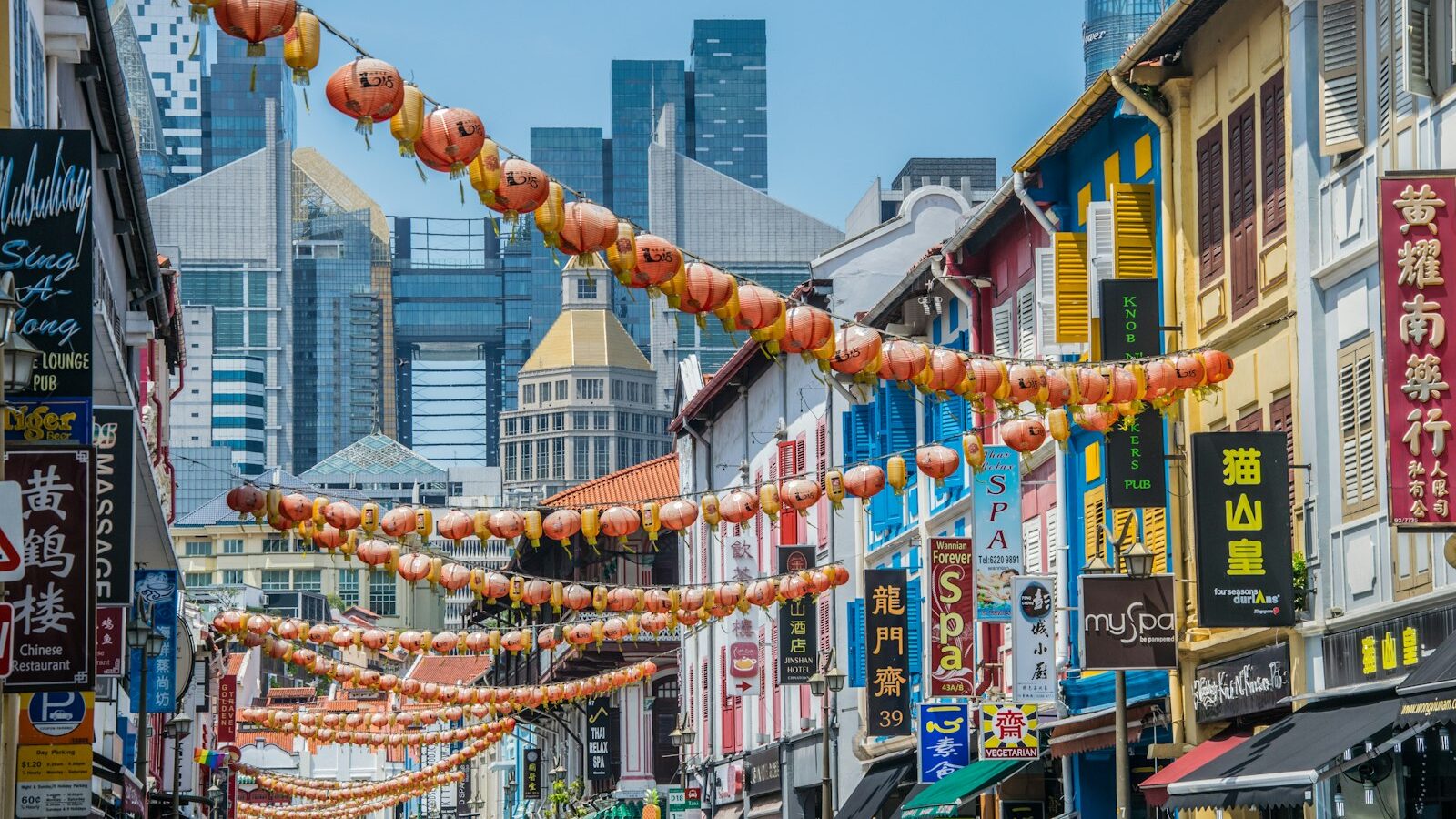
If you want to understand Singapore in an afternoon, start on foot in one of its historic quarters. The trio of Chinatown, Little India and Kampong Glam are the island’s most vivid heritage districts in Singapore, each a walkable pocket of temples, shophouses, markets and food that has kept its own character for well over a century. This guide covers what to see and do in each, a little of the history behind them, the best times to go, and how to get there by MRT.
A Quick History
Modern Singapore’s early town plan set aside different areas for different communities, and that blueprint still shapes the city you walk through today. Chinatown grew as the heart of the immigrant Chinese community, Little India developed around cattle trades and Indian merchants along the Serangoon area, and Kampong Glam was the historic seat of Malay and Muslim life, centred on royalty and trade.
Over the decades these districts filled with ornate shophouses, places of worship and family businesses. Many buildings have since been conserved, so the streetscapes you see keep their old proportions and details even as new cafes, galleries and shops move in. That layering of old and new is exactly what makes them worth exploring slowly.
Chinatown
Chinatown is the most compact and busiest of the three, a dense grid of red lanterns, temples and eateries. It rewards wandering: duck down a side lane and you will find traditional medicine halls, tea merchants, craft shops and street stalls tucked between conserved shophouses.
For landmarks, the Buddha Tooth Relic Temple is an unmissable anchor, a large and richly decorated temple complex that is free to enter (dress modestly). Nearby, the Sri Mariamman Temple is Singapore’s oldest Hindu temple, its colourful tower of sculpted figures rising unexpectedly in the middle of Chinatown, a reminder of just how mixed these districts have always been.
Beyond the big names, treat the area as zones to explore:
- The street markets and food streets, best for souvenirs, snacks and people watching.
- The heritage centre and small museums that tell the story of early immigrant life.
- The quieter conservation streets, where restored shophouses now hold cafes, bars and independent shops.
Come hungry. Chinatown is one of the best places in the city to eat your way through hawker classics, from noodles and roast meats to local desserts.
Little India
If Chinatown is dense, Little India is sensory. Expect garlands of jasmine and marigold, the scent of spices, gold jewellery glinting in shop windows, and shophouses painted in bold colours. It is a lively, everyday district rather than a manicured one, and that is the appeal.
The area is anchored by several ornate Hindu temples with tall, sculpted gopuram towers, worth pausing at even from the outside. Alongside them you will find a large, well-known 24-hour retail landmark and a sprawling wet-and-dry market, both good for a slice of local life and an easy introduction to Indian ingredients and textiles.
Things to seek out:
- The temples and their intricately carved towers (again, dress modestly if entering).
- The market halls, best in the morning when they are at their liveliest.
- The side streets full of spice shops, sari stores, flower stalls and casual eateries.
Little India is also where many people go for South Indian and North Indian food, from banana-leaf meals to sweet milky tea. Weekends, especially Sunday evenings, are busy and full of energy, so time your visit to match the mood you want.
Kampong Glam
Kampong Glam is the most laid-back of the three, and for many the prettiest. Its centrepiece is the golden-domed Sultan Mosque, a grand and much-photographed landmark that has stood as the focal point of the Malay-Muslim community for generations. You do not need to enter to appreciate it; simply approaching along the pedestrian street in front is a highlight.
Around the mosque, the district splits into distinct moods. One set of lanes leans traditional, with shops selling textiles, perfumes, carpets and prayer items. Another famous street nearby is known for its murals, independent boutiques, record stores and coffee, making Kampong Glam a favourite for photographers and browsers alike.
What to do here:
- Admire the mosque and stroll the palm-lined street in front of it.
- Explore the heritage area to learn about Malay and Muslim history in Singapore.
- Wander the boutique and mural streets for cafes, art and one-off shops.
The food ranges from Malay and Middle Eastern to modern cafe fare, so it is an easy place to linger over a long meal or a leisurely coffee.
Best Times to Visit
These are outdoor, walking districts, so timing matters.
A good rule of thumb: go early for markets and cooler air, or late afternoon into evening when the lanterns and lights come on and the food scene wakes up.
- Mornings are calm and good for markets, temples and photos before crowds build.
- Late afternoons and evenings are atmospheric and best for dining, especially in Chinatown and Kampong Glam.
- Festival seasons transform each district: expect decorations, street lights and bigger crowds around major cultural celebrations, which are wonderful but busy.
- Midday can be hot and humid, so plan indoor breaks in temples, museums or cafes.
Dress for heat and humidity, carry water, and bring modest cover if you plan to enter temples or the mosque.
Getting There by MRT
Singapore’s MRT makes all three easy to reach, and each has a station named for it:
- Chinatown station sits right in the heart of the district.
- Little India station drops you at the edge of the area, ready to walk in.
- Kampong Glam is served by nearby stations within a short, signposted walk; look for the ones closest to the Sultan Mosque area.
Fares are modest, and stored-value or contactless payment works on the gates. If you are feeling energetic, the three quarters are close enough that you could link them across a single day, resting and eating as you go.
Quick Tips Checklist
- Wear comfortable shoes; you will do a lot of walking on uneven pavements.
- Carry modest cover for temples and the mosque, and remove shoes where asked.
- Go early for markets, later for food and atmosphere.
- Keep some cash for hawker stalls and small shops.
- Treat named landmarks as anchors and let the surrounding streets surprise you.
Take these three districts at a gentle pace and they will give you the clearest, tastiest introduction to Singapore’s living heritage that you can find anywhere on the island.
Explore more: Free things to do in Singapore · Must-try hawker food in Singapore · A guide to Singapore’s festivals