
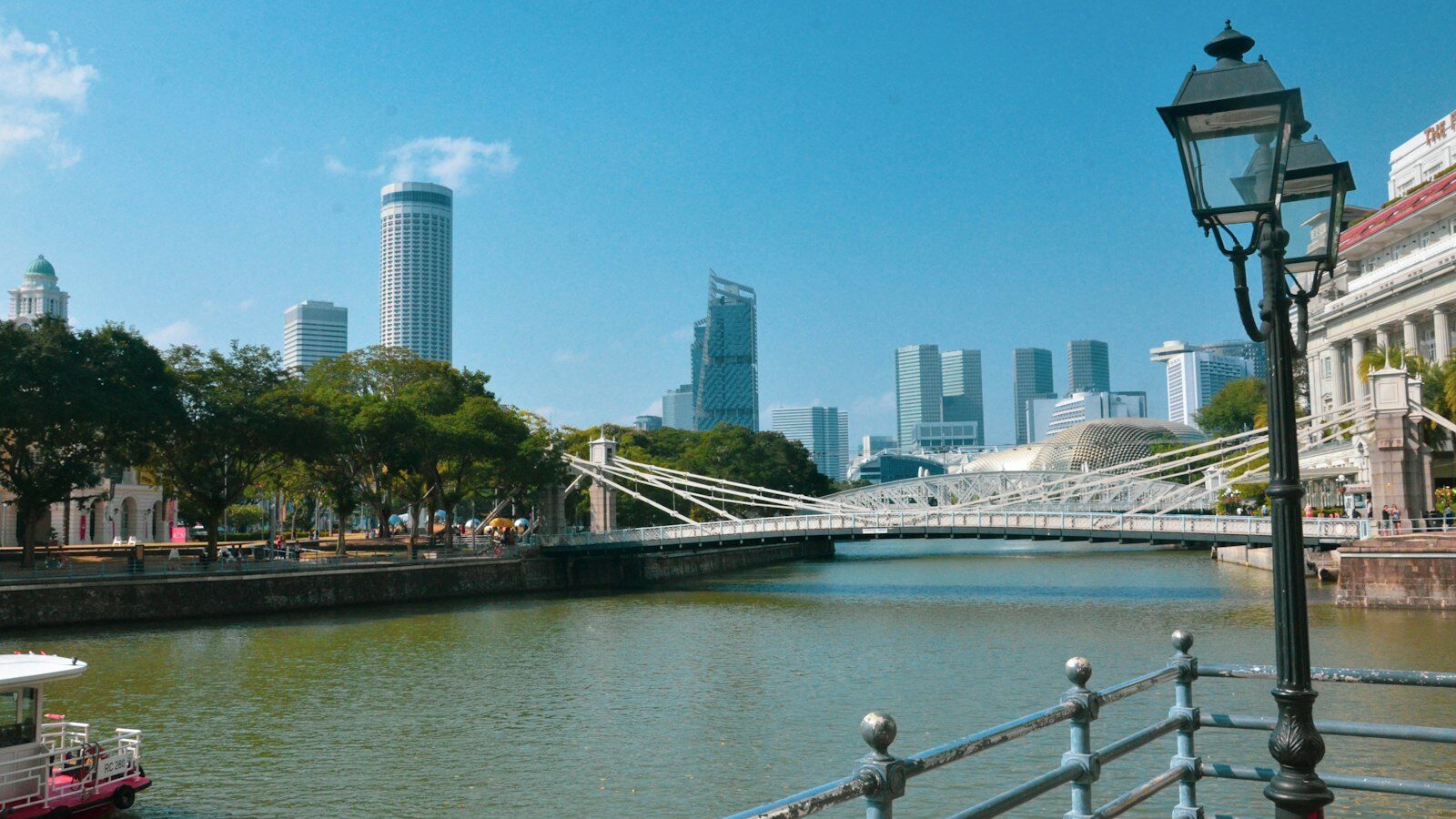
The Singapore River was once the beating heart of the port, crowded with bumboats ferrying goods between ship and shore. To cross it, and to knit the two banks into one working town, the settlement built a series of crossings that still stand today. The historic bridges of Singapore are more than functional structures. They are heritage landmarks in their own right, each with its own design, name and story, and together they make one of the finest heritage walks in the city. This guide introduces the main crossings and how to explore them on foot.
Why the River and Its Crossings Mattered
In the early town, the Singapore River divided the commercial south bank, packed with warehouses and merchant houses, from the civic and administrative north bank with its government buildings and open green. Everything depended on moving people and goods across the water. The earliest crossings were simple, and as traffic grew they were replaced by sturdier structures of timber, then iron, and eventually steel and concrete.
The bridges therefore trace the technological story of the growing town. Some were prefabricated far away and shipped out in pieces to be assembled on site, a common practice of the era. Their names honour colonial governors, officials and royalty, and reading those names as you cross is like turning the pages of the port’s history. Today, with the river cleaned up and lined with promenades, the bridges have found a second life carrying strollers, diners and heritage walkers rather than cargo.
The Landmark Crossings to Know
Several bridges stand out for their age, design and setting. Cavenagh Bridge is among the most cherished, a graceful suspension-style structure of ornate ironwork near the river mouth, close to the Fullerton. It is one of the oldest surviving crossings and still carries pedestrians, and an old police notice board at its approach warns against heavy traffic, a charming survivor from another age.
Anderson Bridge sits just beside it, a robust steel crossing with distinctive arched supports built to relieve the older Cavenagh Bridge when road traffic outgrew it. Nearby, Elgin Bridge spans the river at a historic crossing point that has carried a bridge in one form or another for generations, linking the commercial and civic sides at a spot long used by the town. Other crossings, including Coleman Bridge and the crossings further upstream, add their own chapters, and the modern Esplanade and pedestrian bridges continue the tradition into the present day.
Each has its own character. Some are prized for delicate ironwork, others for solid engineering, and several are recognised for their heritage value and cared for accordingly. Walking from one to the next, you can read the changing styles and materials across the decades.
Design, Materials and Conservation
The historic bridges of Singapore show a clear progression in engineering. The earliest surviving iron bridges were assembled from components cast and wrought elsewhere, their decorative details a point of pride. Later crossings turned to steel for greater strength, using arches and trusses to carry heavier loads. The materials tell you roughly when each was built and what it was meant to carry.
Conservation has kept these structures alive. Rather than demolish the old crossings, the authorities have restored and repurposed several of them, often turning them over to pedestrians while newer roads carry the traffic. This approach lets the bridges survive as working heritage. Where crossings are recognised for their historical significance, their upkeep is guided by conservation principles, and readers keen on the official listings can consult the National Heritage Board and the Urban Redevelopment Authority for details.
The table below sketches the character of some of the best known crossings to look out for on a river walk.
| Bridge | Character | What to notice |
|---|---|---|
| Cavenagh Bridge | Ornate iron pedestrian crossing near the river mouth | Delicate ironwork and the old traffic warning sign |
| Anderson Bridge | Sturdy steel crossing beside Cavenagh | Arched steel supports built for heavier road traffic |
| Elgin Bridge | Crossing at a long-used historic point on the river | Its role linking the commercial and civic banks |
| Coleman Bridge | A crossing upstream near the entertainment quarter | Balustrades and its setting among riverside nightlife |
Walking the Bridges Today
The best way to appreciate these crossings is on foot, following the river promenade that runs along both banks. Start near the river mouth by the Fullerton, where Cavenagh and Anderson bridges sit close together, and walk upstream past Elgin and Coleman, pausing at each crossing to look at its design and the views along the water. The full stretch is comfortable to cover in an easy stroll, with plenty of cafes and eateries along the quays for a break.
Getting there is simple. Several MRT stations serve the river and the Civic District, and from any of them it is a short walk to the water, while buses run along the surrounding roads. Early morning and the golden hour before sunset are lovely times to walk, when the light softens and the crowds thin. The route is flat and pedestrian-friendly, suitable for families and casual walkers.
Treat the bridges as connectors between other heritage sites. Cross from the commercial quays to the civic north bank and you arrive among the grand old halls, museums and the open green of the district. In that sense the bridges are not only destinations but the threads that tie the whole riverside heritage together, exactly as they did when the port was young.
Explore more
A walk across the river bridges leads naturally to the landmarks on either bank. On the north side, step up to the Fullerton Heritage precinct beside Cavenagh Bridge, then continue to the Victoria Theatre and Concert Hall and the Asian Civilisations Museum in the Civic District, all within an easy stroll of the water.