
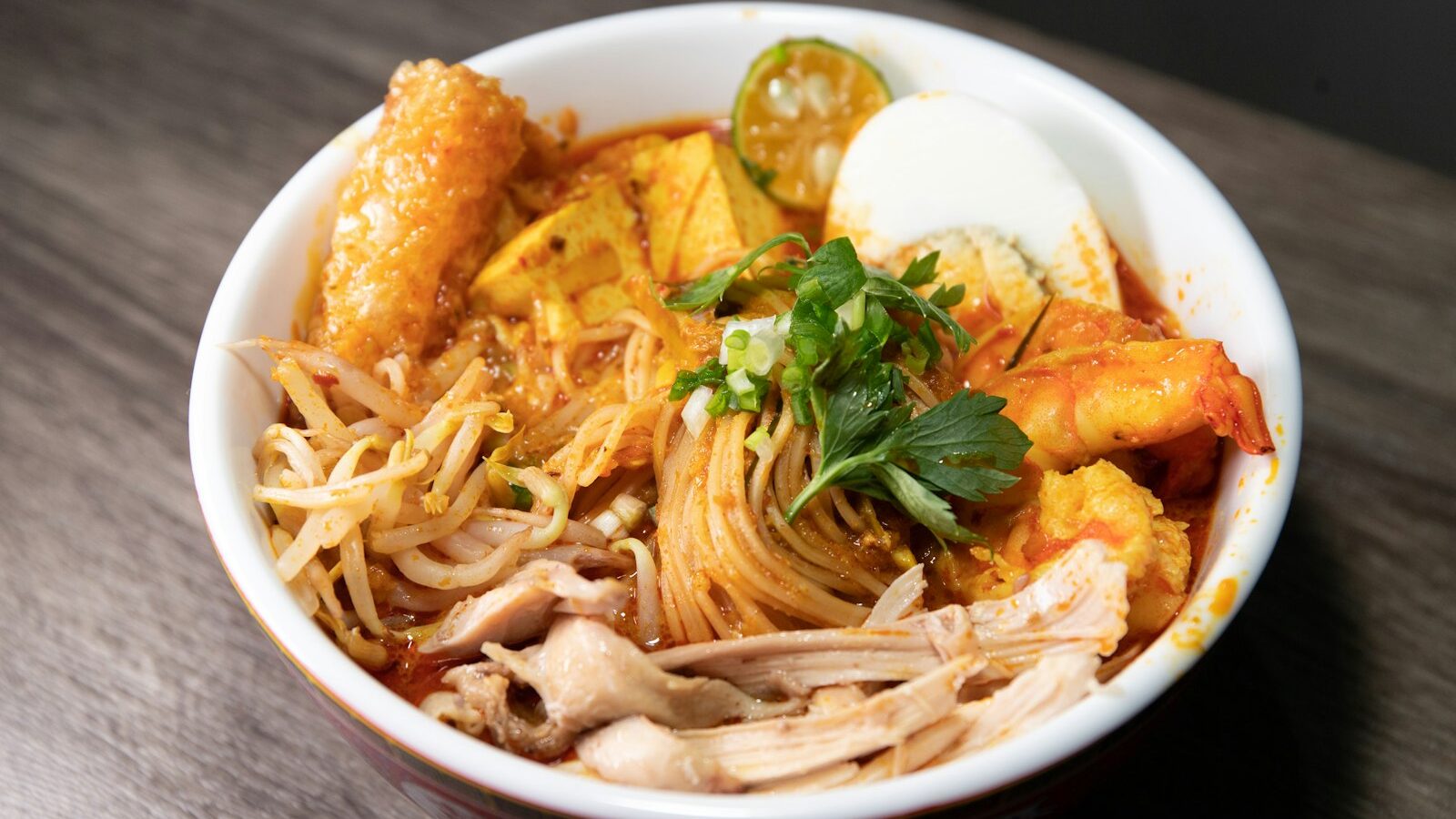
Ask ten Singaporeans where to find the best laksa in Singapore and you will get eleven answers, usually delivered with feeling. This spicy, coconut-rich noodle soup is one of the island’s most beloved local dishes, and the debate over the perfect bowl is a national pastime. Whether you are a lifelong fan chasing nostalgia or a newcomer trying to make sense of the Katong legend, this editorial shortlist gathers the stalls that are regularly cited by trusted Singapore food publications and by diners themselves.
A quick note before we start: this is a shortlist of frequently recommended places, not a definitive ranking. Laksa is deeply personal, and half the fun is finding your own favourite.
How to choose
Laksa quality lives in the details. Here is what an experienced diner looks for, and the pitfalls to avoid:
- The gravy is everything. A great laksa broth is rich and fragrant from coconut milk and dried shrimp, but never greasy or cloyingly heavy. It should coat the noodles, not drown them.
- Balance over heat. Good laksa carries warmth and depth rather than raw chilli burn. The spice should build gently and leave you wanting the next spoonful.
- Fresh cockles and prawns. Plump, clean-tasting cockles (hum) and sweet prawns are a sign of care. If the seafood tastes muddy or looks tired, that is a red flag.
- The noodle cut. Katong-style laksa serves thick bee hoon cut short so you can eat the whole bowl with a spoon alone. Other styles keep the noodles long. Neither is wrong, but consistency signals a stall that knows its craft.
- The laksa leaf. A scattering of finely shredded daun kesum (Vietnamese mint, or laksa leaf) on top is the aromatic finishing touch that many of the best bowls share.
- Watch for shortcuts. Overly thick, starchy gravy can mean cornflour is doing the work that coconut milk and rempah should. A queue of regulars is usually a better signal than a flashy signboard.
What to expect
Laksa in Singapore is mostly hawker food, which means it is generous and affordable. Most bowls at a hawker stall sit in the low single digits, while hotel and restaurant versions cost considerably more for a dressed-up experience. The figures below are a rough guide only and subject to change, so please confirm at the stall.
Singapore laksa is not a single dish. These are the main styles you will meet:
| Style | What it is | Best for |
|---|---|---|
| Katong / Nyonya laksa | Coconut-rich curry gravy, thick bee hoon cut short, eaten with a spoon | First-timers and anyone who loves creamy, spoonable comfort |
| Curry laksa (general) | Spicier, soupier curry broth, often with tau pok and long noodles | Diners who want more heat and a bigger, brothier bowl |
| Claypot laksa | Katong-style gravy served bubbling hot in a claypot | Cooler days and those who like their soup piping to the last sip |
| Assam laksa | Tangy, tamarind-based fish broth (Penang style), no coconut | Anyone after something sour, light and refreshing rather than creamy |
Most stalls open for breakfast and lunch and sell out by mid-afternoon, so aim to go early. Rough price bands: hawker laksa is typically $, larger or seafood-loaded bowls $$, and hotel or restaurant versions $$ to $$$.
Our shortlist
Last checked: August 2026. Outlets and details change, so please confirm directly before you visit.
We have grouped these by area so you can find a strong bowl wherever you happen to be. Every stall here is regularly cited across established Singapore food publications and remains open at the time of writing.
The Katong heartland
Katong and the East Coast are the spiritual home of Singapore laksa, and these three institutions are the ones most people argue about.
328 Katong Laksa (Katong / East Coast Road) – The name most synonymous with the dish, famous for its creamy, well-balanced gravy and short-cut noodles you can eat with a spoon. It draws a steady mix of locals and visitors and is a sensible first stop for newcomers. Price guide: $
Janggut Laksa (Roxy Square, East Coast Road) – Widely regarded as the original Katong laksa with roots going back to the 1950s, this heritage stall is prized for its thick, fragrant coconut gravy. A must for anyone tracing the dish to its source. Price guide: $
Katong Laksa (George’s) (Changi Road / Eunos) – A small, single-dish stall run personally by its owner, regularly praised as one of the highest-rated and best-value bowls in town. Go early, as it keeps short hours and sells out. Price guide: $
City and central
Handy if you are exploring town or working in the central districts.
Sungei Road Laksa (Jalan Berseh / Jalan Besar) – A legendary old-school stall known for a milky, restrained gravy and, famously, cooking over charcoal for years. Frequently named by chefs and critics for its pure, unfussy flavour. Price guide: $
Famous Sungei Road Trishaw Laksa (Hong Lim Food Centre, Chinatown) – A central favourite loaded with generous, fresh ingredients, often mentioned in the same breath as the Katong greats. Convenient if you are in the CBD or Chinatown. Price guide: $
Heartland gems worth the detour
Some of the most satisfying bowls sit far from the tourist trail.
928 Yishun Laksa (Yishun Central) – A north-side favourite celebrated for its well-balanced gravy and value, piled with thick bee hoon and juicy cockles. Worth the trip if you are anywhere near Yishun. Price guide: $
Depot Road Zhen Shan Mei Claypot Laksa (Alexandra Village Food Centre, Bukit Merah) – Best known for serving its rich Katong-style gravy in a claypot, so it stays bubbling hot right to the end. A distinctive take for those who like their laksa served theatrical. Price guide: $
63 Laksa (Ghim Moh Food Centre) – A quietly excellent west-side stall with a loyal following, a reliable choice for a comforting, fragrant bowl away from the crowds. Price guide: $
Tips and FAQ
When is the best time to go for laksa?
Aim for late morning to early lunch. Most laksa stalls are hawker operations that open early and sell out by mid-afternoon, so going before noon gives you the freshest bowl and the best odds of not being turned away.
Is Singapore laksa very spicy?
Generally no. Katong-style laksa leans creamy and fragrant rather than fiery, with heat that builds gently. If you are sensitive to spice, ask for less chilli, and if you want more, most stalls keep sambal on the side.
What is the difference between laksa and curry?
Laksa gravy is built on coconut milk, dried shrimp and a spice paste (rempah), giving it a lighter, more aromatic profile than a heavier meat curry. It is served as a noodle soup rather than as a dish eaten with rice.
Is laksa suitable for newcomers to Singapore food?
Very much so. It is one of the easiest local dishes to love: rich, comforting and approachable. Start with a classic Katong-style bowl, and if you prefer to skip cockles, simply ask for your laksa without hum.
Do I need to book?
No. These are walk-in hawker stalls, so you cannot reserve. Just be ready to queue at peak times and to share a table, which is normal and part of the experience.
Explore more: The complete Singapore laksa guide, The best zi char in Singapore, The best seafood in Singapore