
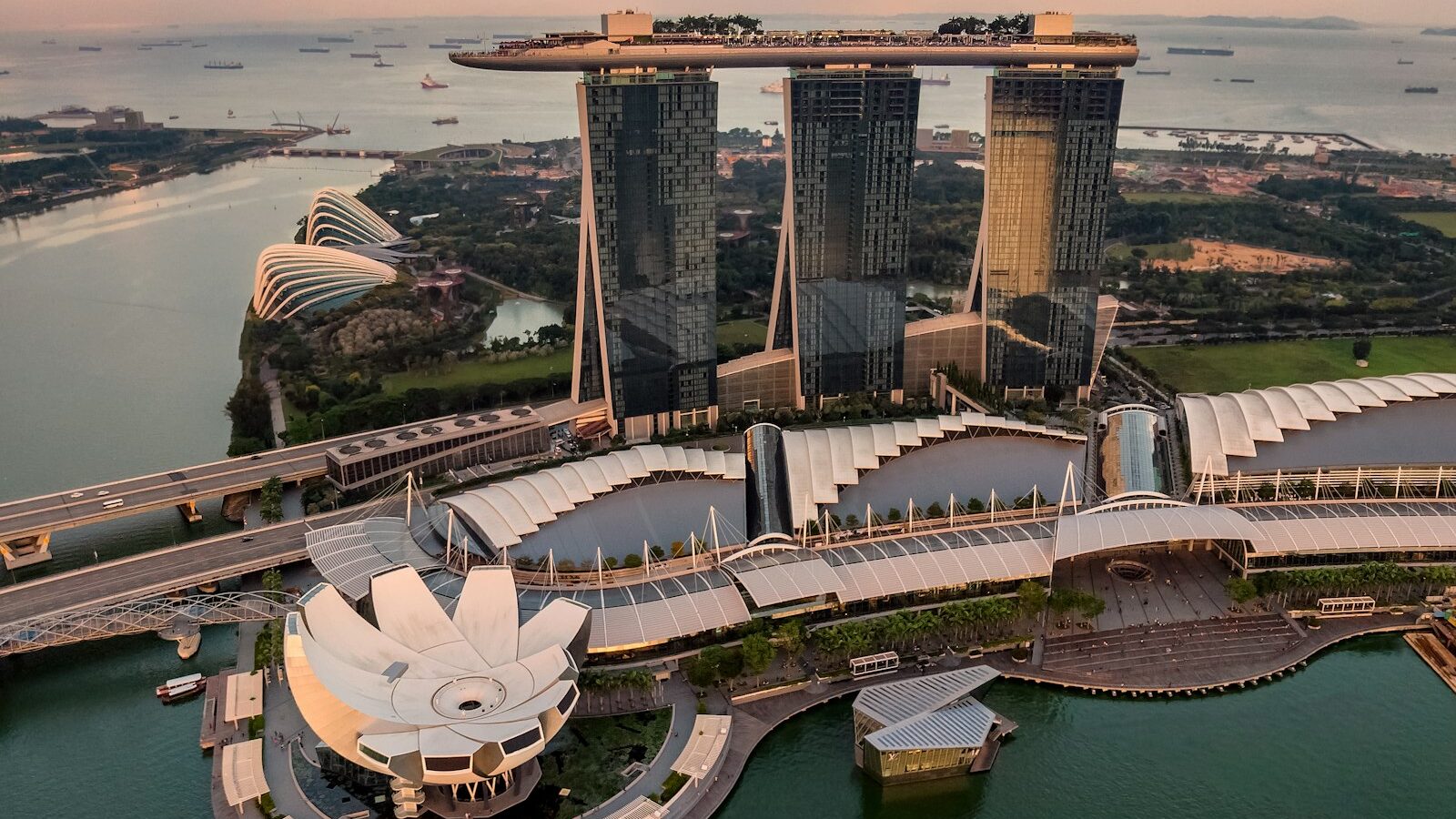
Singapore has a reputation as a glossy, expensive city, all rooftop bars and designer malls. That reputation is only half the story. If you know where to look, doing Singapore on a budget is not only possible, it can be one of the most rewarding ways to see the place. Some of the best experiences here, the hawker meals, the gardens, the skyline at dusk, cost very little or nothing at all. This guide is for backpackers, students and anyone who wants to enjoy the city without watching their wallet empty by lunchtime.
Where to sleep without splurging
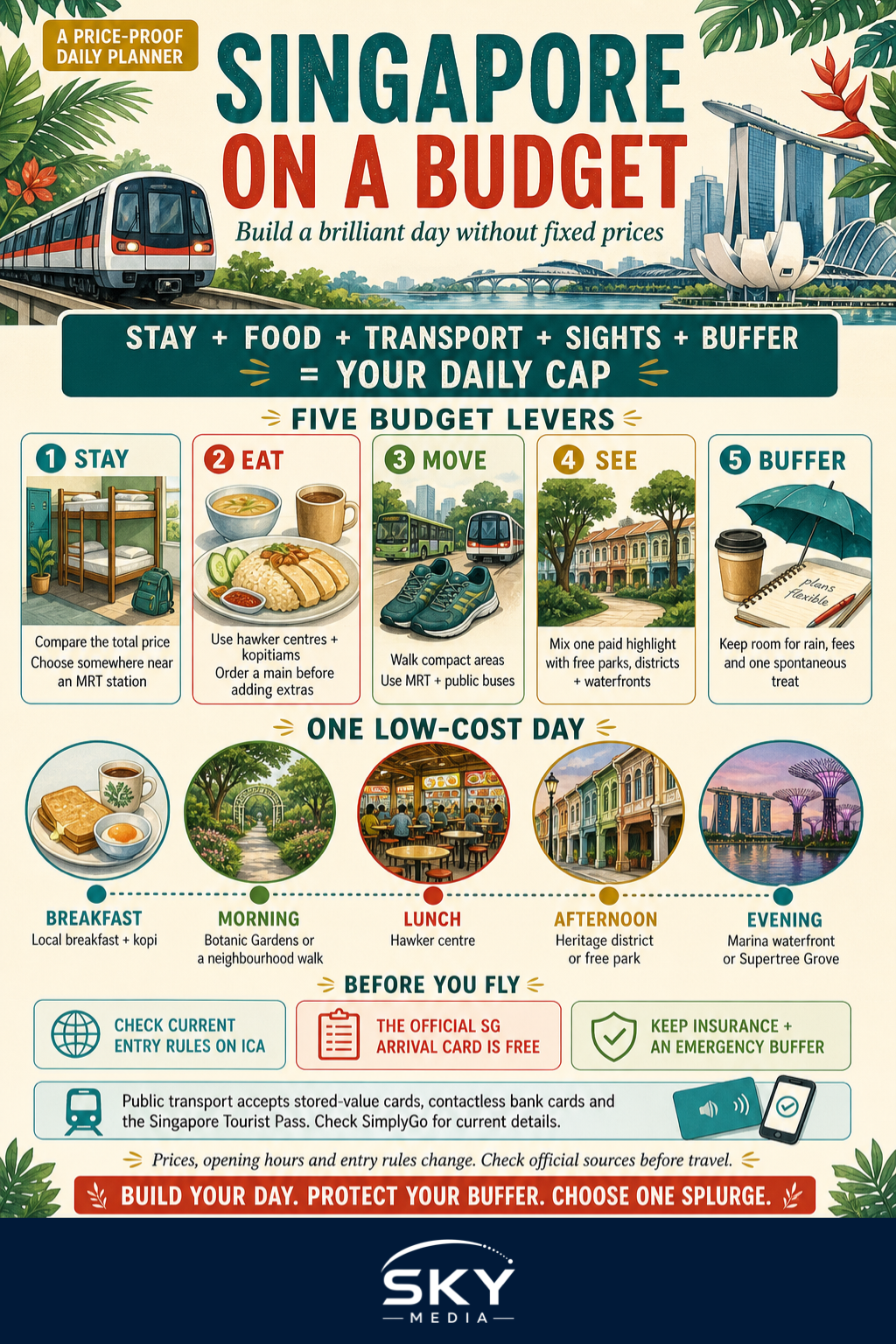
Accommodation is usually the biggest line in any trip budget, so this is where smart choices pay off most.
- Hostels are the classic backpacker option. A bed in a shared dorm is the cheapest way to sleep in a central location, and many hostels throw in free breakfast, air conditioning and a common area where you will meet other travellers.
- Capsule hotels sit a small step up. You get a private, enclosed pod with a bit more quiet and a curtain or door, for a little more than a dorm bed. Good if you want privacy without paying for a full room.
- Budget hotels and guesthouses in neighbourhoods like Geylang, Little India, Lavender and Jalan Besar offer basic private rooms at gentler prices than the central business district.
A few tips that stretch your money further: book somewhere near an MRT station so you are not paying to get to transport, look for places with a shared kitchen if you plan to cook, and read recent reviews for cleanliness and noise. Staying slightly outside the very centre often costs less and is only a short train ride from the action.
Eat like a local at hawker centres
Here is the happy truth about eating in Singapore: the cheapest food is also some of the best. Hawker centres are open-air food courts where individual stalls serve one or two dishes they have perfected over years. A plate of chicken rice, char kway teow, laksa or a bowl of noodles will cost a fraction of what a restaurant charges, and it is often tastier.
You will find hawker centres in almost every neighbourhood, near markets, MRT stations and housing estates. Well known ones include Maxwell Food Centre, Old Airport Road Food Centre and Lau Pa Sat, but the smaller, less famous ones in residential areas are just as good and even cheaper.
A simple rule for eating cheap in Singapore: follow the queues of office workers and aunties. Locals know where the value is, and a long line at lunchtime is the best review you will ever read.
To save more, eat where locals eat rather than in tourist zones, order a set or a single main instead of several dishes, and drink at the stall or bring your own bottle rather than buying pricey packaged drinks. Kopitiams, the traditional coffee shops, are another reliable spot for cheap coffee, toast and simple meals.
Free and low-cost attractions
This is where Singapore quietly shines. A surprising number of its headline sights are free or nearly free.
Gardens, parks and nature
- Gardens by the Bay charges for its two indoor conservatories, but the outdoor gardens and the Supertree Grove are free to wander. Time your visit for the evening light show at the Supertrees, which is free and genuinely spectacular.
- Singapore Botanic Gardens is a UNESCO World Heritage Site and free to enter, with sprawling lawns, a rainforest trail and lakes.
- East Coast Park, the Southern Ridges and MacRitchie Reservoir give you beaches, treetop walkways and jungle trails at no cost.
- Marina Barrage is a favourite local spot for picnics and kite flying, with one of the best free skyline views in the city from its grassy rooftop.
Culture, museums and light shows
Several national museums and galleries offer free or discounted entry on certain days, and some are free for residents year round, so it is worth checking each venue’s website before you go. Along the waterfront, the free light and water show at Marina Bay runs in the evenings and is a lovely way to end a day. Walking the streets of Chinatown, Little India, Kampong Glam and the colonial district around the Padang costs nothing and shows you more of the real city than any paid attraction.
Getting around cheaply
Singapore’s public transport is clean, efficient and cheap, which is a gift for budget travellers.
The MRT (the train network) and public buses will get you almost anywhere. The simplest way to pay is a stored value EZ-Link card or a contactless bank card tapped at the gate, both of which charge lower fares than paying with cash or single tickets. Fares are distance based and modest, so hopping across the city rarely costs much.
Walking is genuinely pleasant in many areas, with covered walkways and sheltered links between buildings that keep the sun and rain off. For longer stretches, the bus often shows you more of the city than the underground train for the same low fare. Avoid taxis and ride hailing where you can, since they cost several times more than the train for the same trip.
Money-saving tips that add up
Small habits make a real difference over a few days.
- Drink the tap water. Singapore’s tap water is safe to drink, so carry a refillable bottle and skip buying bottled water, especially in the heat.
- Travel and eat off-peak. Some attractions and eateries are cheaper or quieter outside busy hours, and off-peak train travel is more comfortable too.
- Look for free events. Neighbourhood festivals, temple celebrations and public performances happen often and cost nothing.
- Carry a little cash. Many hawker stalls and small shops prefer cash, and it helps you stick to a daily spending limit.
- Layer up on free views. Rooftop bars charge a premium, but public spots like Marina Barrage and the Supertree Grove give you the same skyline for free.
Quick budget checklist
- Book a hostel or capsule near an MRT station
- Eat most meals at hawker centres and kopitiams
- Get an EZ-Link card or use a contactless card for transport
- Plan your days around free gardens, parks and light shows
- Refill a water bottle instead of buying drinks
A rough daily budget
Every traveller spends differently, so treat these as a loose guide rather than a fixed rule. A frugal backpacker sleeping in a dorm, eating at hawker centres and sticking to free attractions and public transport can keep a day fairly low. Add a private budget room, the occasional paid attraction and a sit down meal or two, and your daily spend rises to a comfortable mid range. The point is that Singapore flexes to your budget: you decide how much of the pricier, polished city you dip into, and how much of the free, everyday city you enjoy. Both versions of the trip can be brilliant.
The trick to visiting cheap Singapore is not to miss out, it is to choose the experiences that give the most back for the least money. Do that, and you will save money on your Singapore trip while still eating well, sleeping soundly and seeing the sights that make the city special.
Explore more: Free things to do in Singapore · Cheap eats in Singapore · Cost of living in Singapore