
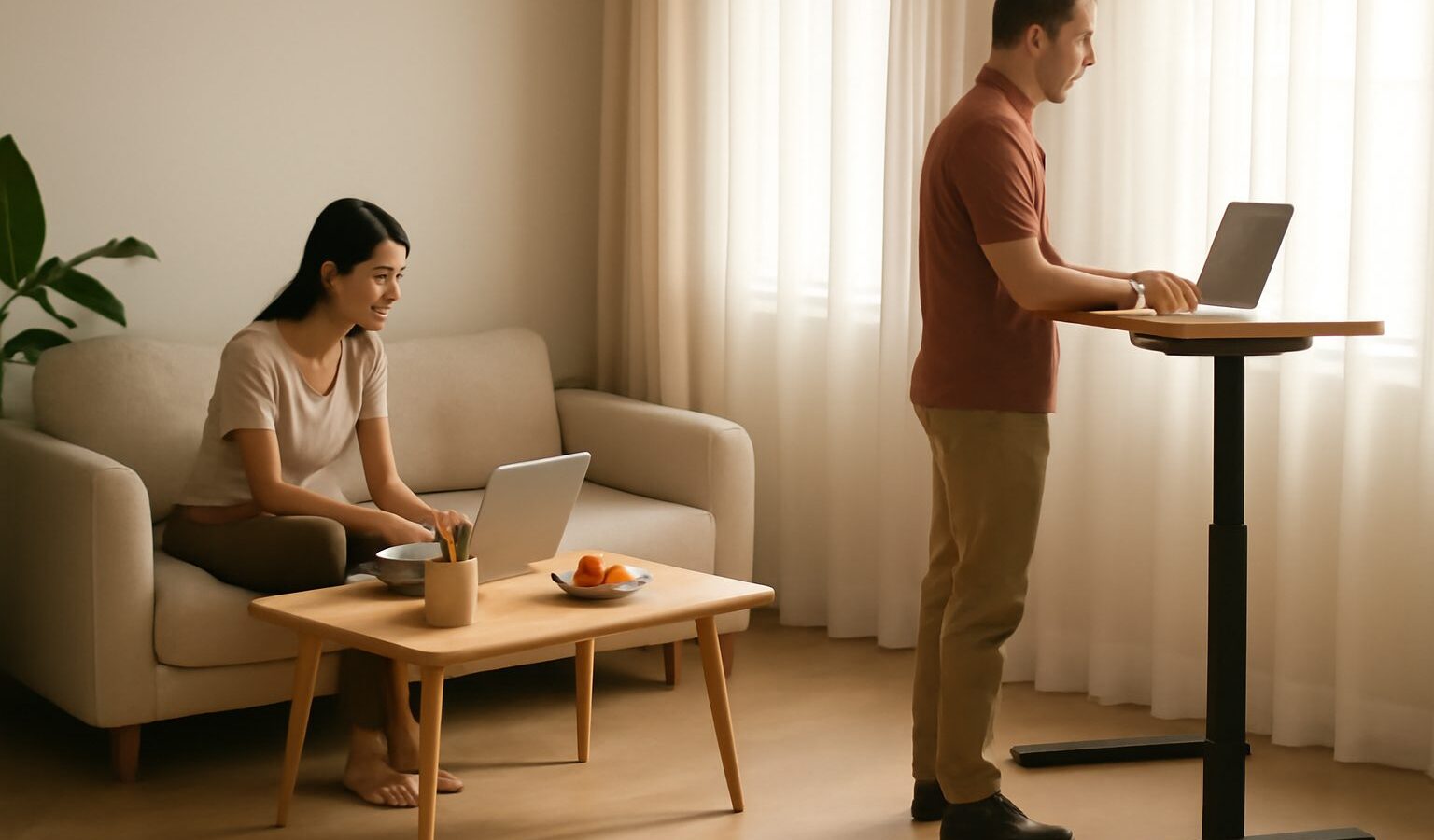
Most of us spend the bulk of our waking hours parked in a chair, commuting on the MRT, then slumping on the sofa at home. That pattern has picked up the nickname “sitting disease”, and it is why the standing desk singapore office workers keep asking about has become so popular. This is general wellbeing information rather than medical advice, and the honest headline is simple: a standing desk is a useful tool, but it is not a cure. What matters far more is moving regularly through the day, whatever furniture you happen to own.
What “sitting disease” actually means
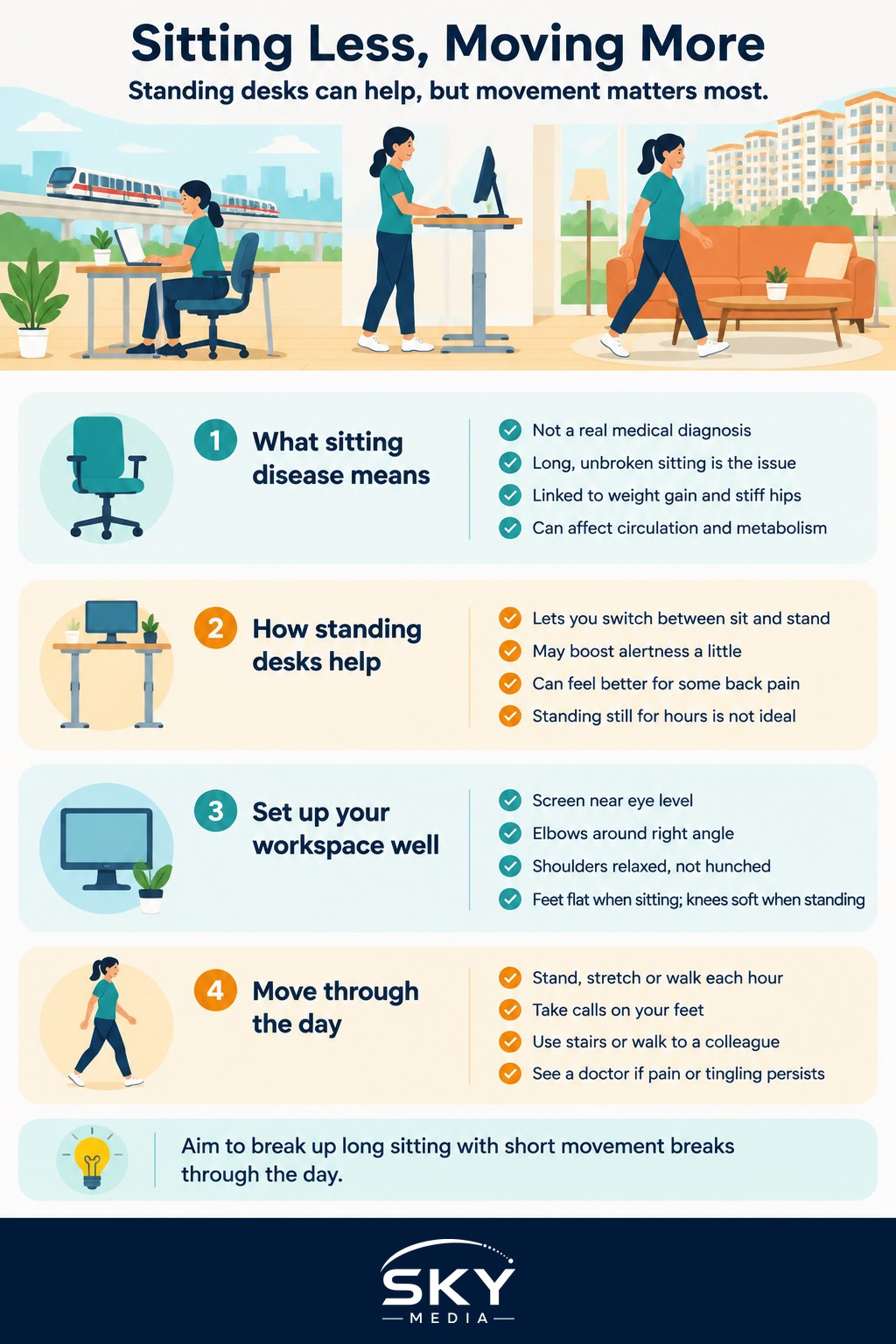
“Sitting disease” is not a real medical diagnosis. It is a catch-all phrase for the health downsides linked with long, unbroken periods of sitting. Research has connected very sedentary days with a higher risk of things like weight gain, stiff hips and back, poorer circulation, and less favourable metabolic health over time. The key word is unbroken. The problem is less about sitting itself and more about sitting still for hours with almost no movement in between.
That distinction matters, because it means you do not need to demonise your chair or feel guilty for sitting down. You simply need to interrupt long stretches of stillness. Someone who sits at a desk but takes regular short walks, uses the stairs, and stretches through the day is in a very different position from someone who sits motionless from nine to six.
Does a standing desk help?
A standing desk lets you switch between sitting and standing without stopping work. The genuine benefits are modest but real. Standing burns slightly more energy than sitting, tends to keep you a little more alert in the afternoon slump, and encourages small shifts in posture and weight. For people with certain kinds of lower back discomfort, alternating positions can feel easier than staying seated all day.
What a standing desk does not do is turn a sedentary job into an active one. Standing still for hours has its own downsides, including tired legs, sore feet, and aching lower back, and it is not automatically better than sitting. The goal is variety, not swapping one static posture for another. A sensible rhythm is to alternate, for example standing for part of the morning, sitting for focused work, then standing again after lunch when drowsiness creeps in.
If a proper desk is out of budget or your HDB home office has no room for one, you do not need to buy anything. A stack of sturdy boxes, a kitchen counter, or an ironing board can raise your laptop for a while. The principle is what counts.
Setting up your workspace sensibly
Whether you sit or stand, a few general ergonomics guidelines help you stay comfortable:
- Screen roughly at eye level so you are not craning your neck down.
- Elbows at about a right angle when typing, wrists fairly straight.
- Shoulders relaxed, not hunched up towards your ears.
- When sitting, feet flat on the floor and lower back supported.
- When standing, weight even on both feet, a slight bend in the knees, and consider an anti-fatigue mat.
Good posture is not about holding one perfect statue-like position. The best posture is genuinely the next one, meaning your body likes change and movement. For more detail on dialling in your seated setup, improving your posture at a desk job is a helpful companion read.
Movement matters more than the furniture
Here is the part that gets lost in the standing desk hype. The single most valuable habit is breaking up long sitting with regular movement, and you can do that with any setup. Try to stand up, stretch, or walk for a couple of minutes at least once an hour. Take phone calls on your feet. Walk to a colleague instead of messaging. Use the stairs. Fill your water bottle at a further tap so you are forced to move.
These small bursts of activity, sometimes called incidental movement, add up more than people expect. To understand why all that low-key motion is so valuable, understanding NEAT and everyday movement explains the science in plain terms, and how to move more during your workday offers practical office-friendly ideas. Even a short walk around the block at lunch, or a few laps of the park connector after work, makes a real difference. If you want a simple, sustainable starting point, the health benefits of walking more is a gentle place to begin.
When to see a doctor
Occasional stiffness from a long day is normal. But if you have persistent back, neck, or shoulder pain, numbness or tingling, or discomfort that does not settle with movement and rest, see a doctor or a physiotherapist rather than trying to fix it yourself. They can check your setup, rule out other causes, and give you exercises suited to your body.
The practical takeaway
A standing desk can be a pleasant, useful addition to your workspace, but it is not a health guarantee and you do not need one to stay well. Whatever you sit or stand on, aim to interrupt long stretches of stillness, keep your setup comfortable, and weave gentle movement through the day. In the end, the healthiest desk is the one you keep getting up from.
Further reading: Choosing a Standing Desk and Accessories · Desk Exercises for Office Workers