
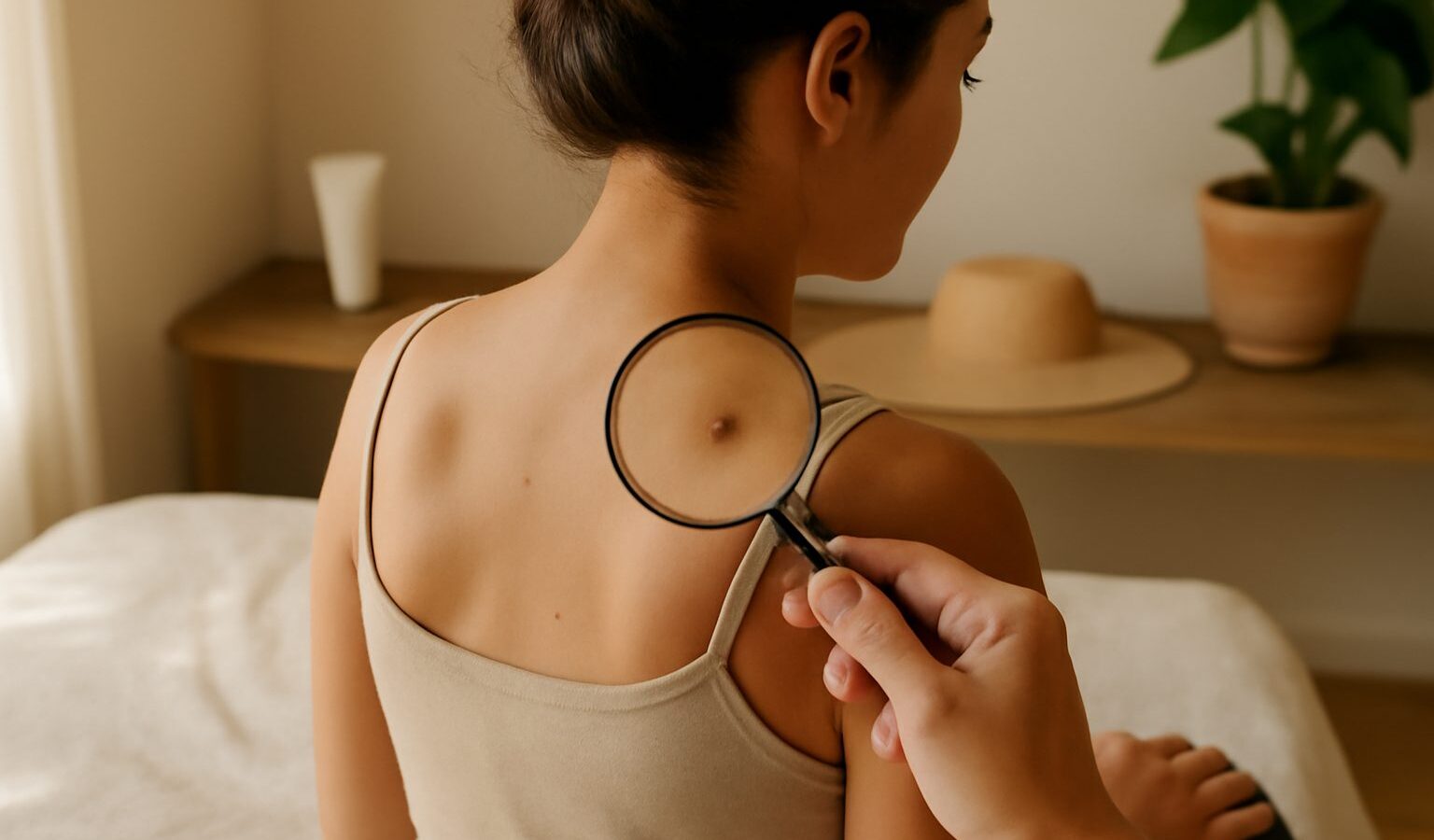
Most of us have moles, and the vast majority are perfectly ordinary. Still, knowing what a healthy spot looks like, and what changes are worth showing to a doctor, is a sensible part of looking after yourself. Mole checks in Singapore matter because our sunny, tropical climate means plenty of ultraviolet exposure across the year, whether you are at the beach, walking the park connectors, or simply commuting under a strong midday sun.
This guide explains the general warning signs to be aware of and how to keep an eye on your skin. It is important to be clear from the start: this article helps you notice changes, not diagnose them. Only a doctor or dermatologist can properly assess a mole. If anything looks new, is changing, or seems unusual, please see one promptly rather than trying to judge it yourself.
Understanding Skin and Sun in Singapore
Skin cancer develops when skin cells are damaged, often over years, and ultraviolet radiation from the sun is a major factor. Living close to the equator, Singapore has strong UV levels for much of the year, even on cloudy or hazy days. People of every skin tone can develop skin cancer, so this is not something only fair-skinned people need to think about.
Sun protection is the everyday foundation. Seeking shade during the strongest hours, wearing a hat and covering up, using sunglasses, and applying a broad-spectrum sunscreen generously all help reduce cumulative damage. These habits sit comfortably alongside the wider skin care covered in seeing a dermatologist for tropical skin problems in Singapore, and they are worth building into family routines early.
Protecting your skin does not mean avoiding the outdoors. Movement and time outside are good for you. It simply means being sun-smart while you enjoy them.
The ABCDE Warning Signs
Dermatologists often teach a simple memory guide called ABCDE to describe features that are worth getting checked. It is a prompt to seek assessment, not a home diagnosis, and no single feature confirms or rules anything out.
- A is for Asymmetry: one half of the mole does not match the other.
- B is for Border: edges that are irregular, ragged, notched, or blurred.
- C is for Colour: more than one colour, or uneven shades of brown, black, red, white, or blue.
- D is for Diameter: larger than about the size of a pencil eraser, though smaller spots can still matter.
- E is for Evolving: any change over time in size, shape, colour, or how it feels.
Alongside ABCDE, pay attention to the general idea of a spot that stands out from the others, sometimes called the “ugly duckling”. A mole that itches, bleeds, crusts, or does not heal is also worth showing to a doctor. Again, these are reasons to seek an appointment, not signs you can interpret on your own.
How to Keep an Eye on Your Skin
A simple habit of noticing your skin can help you spot changes early, so you know when to make an appointment. Many people find it easiest to glance over their skin after a shower, in good light, perhaps once a month.
Practical tips include:
- Use a well-lit room and a hand mirror to see areas such as your back, scalp, and the backs of your legs.
- Ask a partner or family member to help check spots you cannot see easily.
- Do not forget less obvious areas, such as behind the ears, the soles of the feet, between the toes, and under nails.
- Take dated photos of any spots you want to keep an eye on, so changes are easier to notice over time.
If you have many moles, a family history of skin cancer, or you have had significant sun exposure or sunburn in the past, mention this to your doctor. They can advise whether more regular professional checks are appropriate for you. General preventive care fits naturally with getting a health screening in Singapore and thinking ahead about preventive health in your 30s, 40s and 50s in Singapore.
Why Only a Doctor Can Assess a Mole
It is tempting to look up photos online and try to reassure yourself, but skin lesions can be genuinely difficult to judge by eye, even for experienced clinicians. That is exactly why a proper assessment matters. A doctor or dermatologist can examine a spot closely, sometimes using a special magnifying tool, and arrange further tests if needed.
Please do not use this article, or any online guide, to decide that a particular mole is harmless. This guide cannot see your skin, and it cannot tell you that any spot is safe. If you have a new, changing, or unusual spot, or you are simply worried, book an appointment promptly. Early assessment gives you the best chance of straightforward treatment if anything is found, and often it brings reassurance.
A Practical Wrap-Up
Being sun-smart, knowing the ABCDE warning signs, and glancing over your skin now and then are all sensible, everyday habits. They help you notice when something has changed. What they do not do is replace a professional opinion. Treat any new, changing, or unusual spot as a reason to see a doctor or dermatologist without delay, and let the experts do the assessing while you focus on protecting your skin and enjoying life outdoors.