
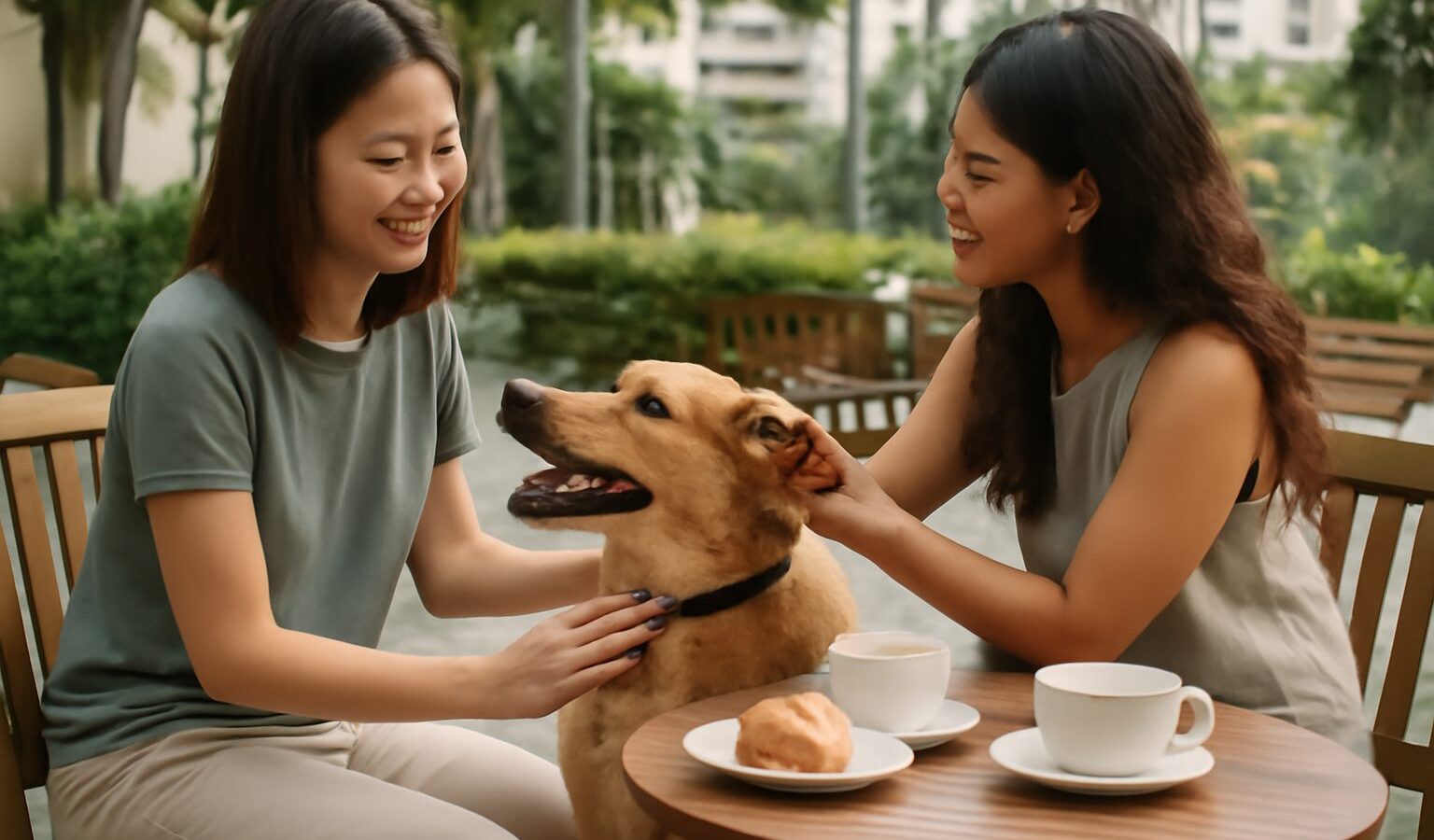
Socialising your dog in Singapore is one of the kindest, most useful things you can do as an owner. A well socialised dog moves through our busy, high density island calmly, whether that means passing joggers along the park connector, sharing a lift with a stranger, or hearing the rubbish truck reverse outside the block. Socialisation is not about making your dog love everyone and everything. It is about teaching them that the ordinary sights, sounds and creatures of daily life are safe and unremarkable, so they can relax instead of react.
In a place like ours, where flats are close together and public spaces are shared, a confident dog is a happier dog and an easier neighbour. This guide covers why socialisation matters, when to start, and how to introduce your dog to the world at a pace that builds trust rather than fear.
Why Socialisation Matters So Much Here
A dog that has never learned to cope with novelty tends to fill the gaps with worry. That worry shows up as barking at every passing bicycle, lunging at other dogs, freezing in the lift, or hiding during a thunderstorm. Poorly socialised dogs are more likely to be surrendered, so early effort is also a welfare issue.
Singapore adds its own layer. Most of us live in HDB flats or condos, which means lifts, corridors, void decks, delivery riders, trolleys and other dogs at close quarters every day. Our weather brings sudden downpours and, during festive periods, fireworks. A dog who has been thoughtfully introduced to all of this simply takes it in stride. Good socialisation also supports responsible ownership: a calm dog is easier to bring to the vet, to the groomer, and to the pet friendly spaces we want to keep welcoming for everyone.
The Puppy Socialisation Window
Puppies have a sensitive period early in life when they soak up new experiences most readily and form lasting impressions about what is safe. This window closes gradually as they mature, which is why the early weeks and months matter so much. Experiences a young puppy meets gently during this time tend to stick as normal for life.
There is a real tension here, because your vet will guide you on when your puppy is protected enough to meet unknown dogs and walk in high traffic areas. Follow your vet’s advice on vaccinations and timing; it varies from dog to dog. You do not have to choose between safety and socialisation, though. You can start at home and in controlled settings:
- Carry your puppy in your arms or a sling to watch the world go by from a safe distance.
- Invite calm, vaccinated, friendly adult dogs from trusted friends over for gentle introductions.
- Let your puppy hear household sounds, meet visitors of different ages, and feel different surfaces underfoot.
- Reward calm curiosity with treats and praise, and never force them toward something they find scary.
If you adopted an older dog and missed this window, do not despair. Adult and rescue dogs can still learn to feel safe; it simply takes more patience and a slower pace.
Introducing the Everyday World, Step by Step
The core principle is distance and choice. Let your dog observe new things from far enough away that they stay relaxed, pair the experience with something good, and let them approach in their own time. Here is a quick reference for common local situations.
| Situation | How to socialise your dog to it |
|---|---|
| Meeting new people | Let the person ignore the dog at first; allow the dog to approach and sniff. Ask visitors not to loom over or grab. Reward calm greetings. |
| Other dogs | Start with calm, friendly, vaccinated dogs on neutral ground. Keep first meetings short. Walk parallel at a distance before any nose to nose contact. |
| Traffic and bicycles | Watch from a quiet side road or park connector edge. Reward for staying relaxed as vehicles pass, then slowly reduce the distance over days. |
| HDB lifts and corridors | Practise short, calm lift rides at off peak times. Reward for sitting quietly. Give space to neighbours who may be nervous of dogs. |
| Delivery riders and trolleys | Let your dog watch riders and wheeled trolleys from a distance. Pair the sight and sound with treats so they become boring, not alarming. |
| Loud sounds and storms | Play household and traffic sounds softly, build up gradually, and create a cosy safe spot for thunderstorms and festive fireworks. |
Go at your dog’s pace, not a fixed schedule. A handful of good, calm experiences beats a dozen overwhelming ones.
Dog Runs, Parks and Playdates
Off leash dog runs and group play can be wonderful, but they are best once your dog already has some social confidence and reliable recall. A packed dog run is a poor place for a nervous dog to start. Before diving in:
- Visit at quieter hours first and let your dog observe from outside the fence.
- Enter only if the dogs inside are playing well, not ganging up or bullying.
- Keep sessions short and end on a good note, before your dog gets over tired.
- Step in early if play tips into chasing, pinning or mounting, and give both dogs a break.
One to one playdates with a known, well matched dog are often gentler than a busy run, especially for puppies and shy dogs, and a steady older dog can be a brilliant role model. Pairing socialising with training builds a dog who listens even when excited.
Reading Your Dog’s Body Language
Socialisation only works if you can tell when your dog is comfortable and when they are asking for space. Dogs communicate constantly, and honouring those signals is how you build trust.
Signs a dog is relaxed include a loose, wiggly body, a soft open mouth, a tail carried at a natural height, and easy give and take in play. Signs of stress include lip licking, yawning when not tired, turning away, a tucked tail, flattened ears, a tense frozen posture, showing the whites of the eyes, or hiding behind you. Growling is not naughtiness; it is honest communication to respect, not punish, because punishing a warning can teach a dog to skip straight to snapping.
When you see stress signals, calmly increase distance from whatever is worrying your dog and let them reset. Ending an encounter early is never a failure. It tells your dog that you have their back.
Helping a Fearful or Rescue Dog Go Slow
Many dogs in Singapore are rescues, whether local Singapore Specials from the SPCA and shelters or dogs with unknown histories. Some arrive already wary of people, other dogs, traffic or specific sounds. With these dogs, slow is fast. Push too hard and you can set progress back for weeks.
Give a new or fearful dog a quiet base at home first, and let them decompress for days or weeks before asking much of them. Keep early outings short and predictable, choose calm routes and times, and let them retreat whenever they need to. Never flood a frightened dog by forcing them into a crowd to make them cope; that usually deepens the fear. Reward every small brave choice, and celebrate a dog who looks at something scary and then looks back at you.
If your dog shows fear that is not improving, or any aggression, work with a qualified, reward based trainer or a vet who can rule out pain, because dogs in discomfort are often less tolerant.
Avoiding Bad Experiences
A single frightening incident can undo weeks of patient work, so protect your dog from experiences they are not ready for. Advocate for them: it is fine to ask another owner to keep their dog away, to step off the path, or to skip the crowded dog run today. Do not let strangers or excited children swarm a nervous dog, and steer clear of dogs that are tense or over the top. The goal is a steady stream of gentle wins that add up to a dog who trusts the world, and trusts you most of all.
Explore More
Socialisation and training go hand in hand, so pair this with our guide to dog training and obedience in Singapore to build calm manners at home and out and about. When your dog is ready for supervised off leash fun, our roundup of dog runs and parks in Singapore can help you pick quieter spots to start.