
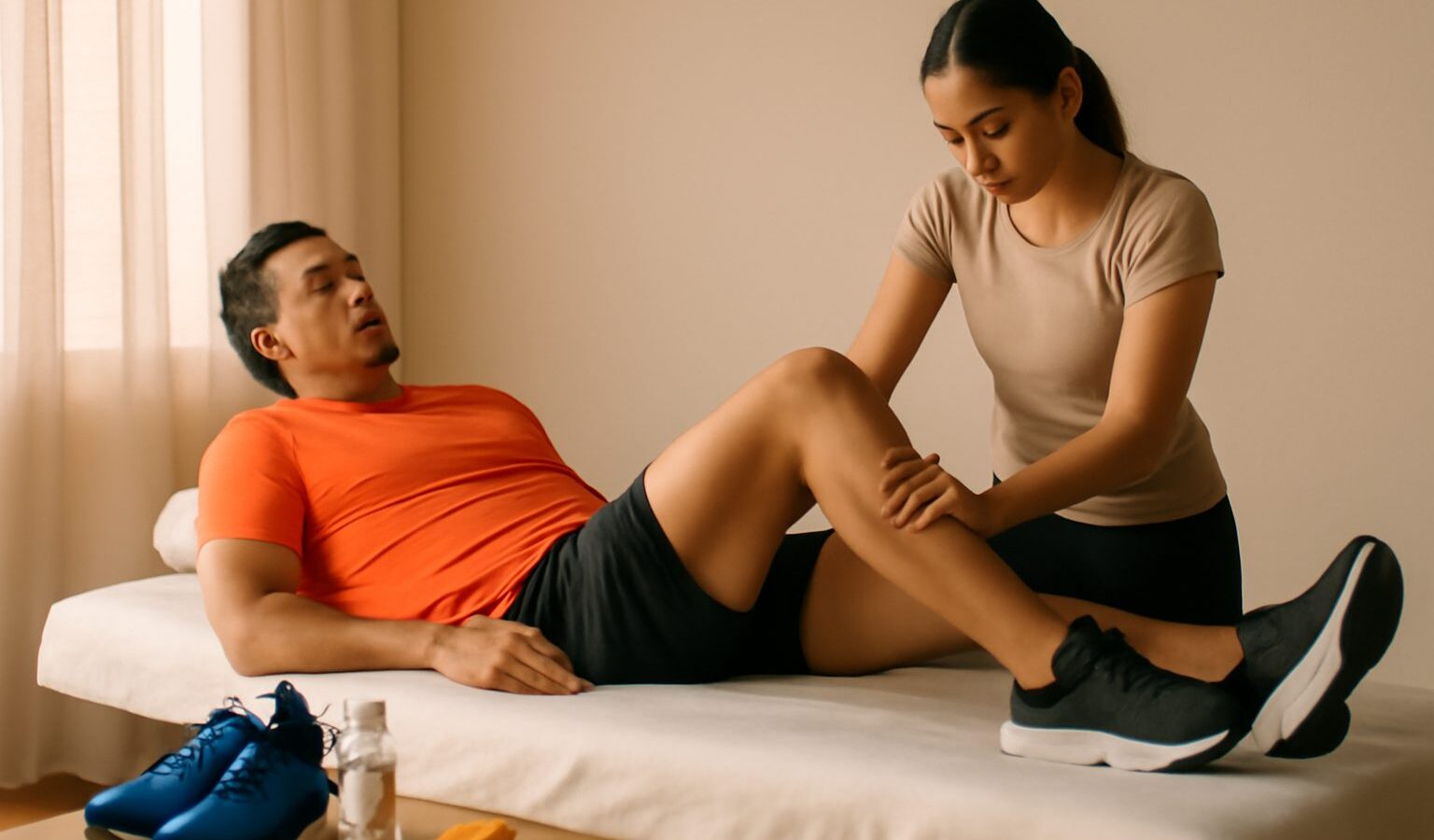
If you run along the Park Connector Network before work, lift three times a week or train for an annual marathon, your muscles take a steady beating, and Singapore’s heat and humidity add to the load. Sports massage in Singapore has grown from something only elite athletes used into a regular part of many active people’s routines. This guide explains what a sports massage actually is, how it fits around training, what to expect in a session and how to choose a therapist who knows what they are doing.
This is general information, not medical advice. If you have pain that is sharp, worsening or linked to a specific injury, see a doctor or physiotherapist first.
What Makes a Sports Massage Different From a Spa Massage
A spa or relaxation massage is designed to help you unwind. Pressure is usually even, strokes are long and flowing, and the goal is general comfort. A sports massage has a narrower job: helping the muscles and soft tissue you use in training recover, move well and stay ready for the next session.
In practice, that usually means:
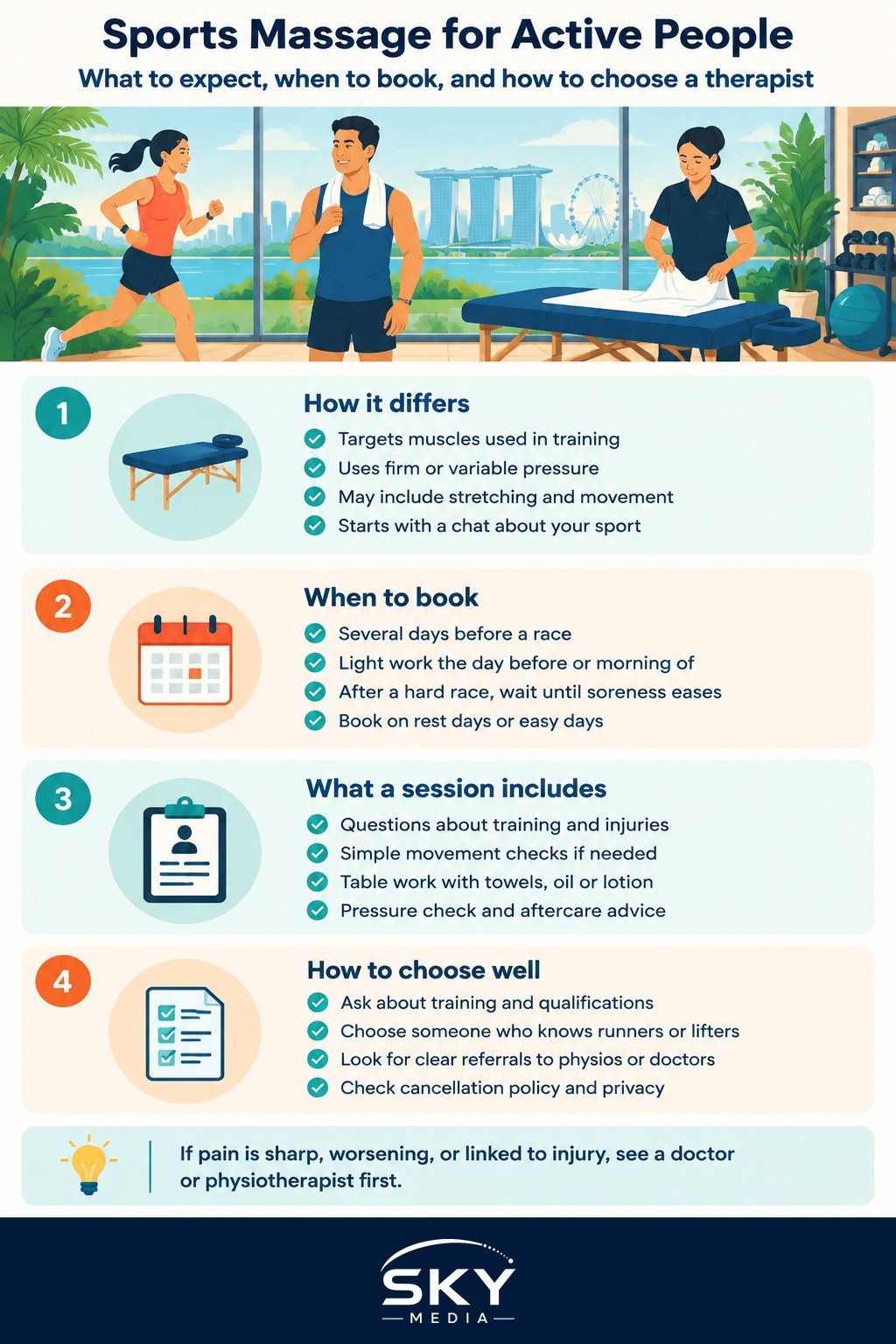
- Targeted work. The therapist focuses on the areas your sport loads most, such as calves, hamstrings and hip flexors for runners, or shoulders, upper back and glutes for lifters.
- Variable pressure. Some parts of the session may feel firm or uncomfortable in a “good pain” way. It should never feel sharp or make you hold your breath.
- Active techniques. Many therapists combine massage with assisted stretching, moving a limb while applying pressure, or asking you to contract and relax a muscle.
- Training conversation. A good therapist asks about your sport, weekly volume, upcoming events and any niggles before starting.
If you want a broader overview of styles such as Swedish, Thai, tuina and deep tissue, our guide to types of massage therapy in Singapore covers the full range. This article stays focused on recovery for active people.
Timing Your Massage Around Training and Race Day
When you book matters almost as much as who you book with. Firm work leaves muscles feeling tender for a day or so in many people, so a heavy session right before a key workout can backfire. The table below shows how sessions are commonly timed.
| Timing | Typical Purpose | Usual Pressure | What to Keep in Mind |
|---|---|---|---|
| Several days before a race | Ease tightness built up during training | Moderate | Leave room for any soreness to settle before race day |
| The day before or morning of an event | Light flush and loosening | Light | Avoid trying a new therapist or deep work right before you compete |
| A day or more after a hard race | Help you feel less stiff as you recover | Light to moderate | Wait until acute soreness eases; skip if you suspect an injury |
| Regular maintenance during training blocks | Keep problem areas from building up | Moderate to firm | Schedule on an easy or rest day, not before intervals or heavy lifts |
A few practical habits help:
- Book maintenance sessions on rest days or before an easy run.
- Drink water before and after, especially if you have trained outdoors in the heat.
- Tell your therapist if you have a race, a heavy leg day or a long run coming up in the next 48 hours.
- Do not book deep work immediately after a long run in the midday sun. Cool down, rehydrate and eat first.
What Happens During a Typical Session
Most sports massage appointments follow a similar flow, whether you go to a dedicated sports clinic, a massage studio or a therapist attached to a gym.
- Intake chat. Expect questions about your sport, training load, past injuries, medical conditions and medication. Answer honestly; some conditions mean certain techniques should be avoided.
- Quick assessment. The therapist may watch you walk, squat or move a joint through its range to see where you are tight.
- Hands-on work. Usually on a massage table, with towels for draping. Oil or lotion is common. Ask if you have skin sensitivities.
- Feedback throughout. You should be asked about pressure. Many therapists use a simple scale so you can say “that’s a 7, please ease off”.
- Aftercare advice. This might include stretches, mobility drills, hydration or a suggestion to rest a particular area.
It is normal to feel mildly sore for a day afterwards, similar to the feeling after a new workout. It is not normal to bruise heavily, feel numbness or tingling, or have pain that gets worse. If that happens, stop booking that type of work and speak to a doctor.
When a Massage Is Not the Right Answer
Massage can feel great and help you move more freely, but it does not fix every problem. Some issues need a diagnosis first.
See a doctor, sports physician or physiotherapist before massage if you have:
- Pain on one specific spot of a bone that hurts more when you hop or run, which may need checking for a stress injury. Our article on stress fractures in runners explains the warning signs.
- Knee pain that keeps coming back, swelling, clicking or the knee giving way. See our guide to runner’s knee and knee pain for background before your appointment.
- A sudden sharp pain during exercise, a pop, or visible swelling and bruising.
- Numbness, pins and needles, or weakness down an arm or leg.
- A recent illness, fever, skin infection, blood clotting condition, or if you are pregnant, unless your doctor has cleared you.
Massage also works best alongside the basics. Sleep, sensible training increases, fuelling and strength work do more for most runners and lifters than any number of rubdowns. If you are not already doing it, strength training for runners is one of the most useful habits for staying injury-resistant.
How to Choose a Sports Massage Therapist in Singapore
The terms “sports massage” and “therapist” are used loosely, so it is worth doing a little homework before you book.
Questions to Ask Before Booking
- What training do you have? Ask where they trained and whether their qualification covers sports or remedial massage specifically.
- Who do you usually work with? A therapist who sees many runners or lifters will understand your sport’s patterns.
- Do you work alongside physiotherapists or doctors? Clinics that do can refer you on quickly if something needs assessing.
- What does a first session include? Some include an assessment; others are straight hands-on time.
- What is the cancellation policy? Useful if your training plan changes or you pick up an injury.
Signs of a Good Fit
- They ask about your health and training before touching you.
- They check in on pressure and respect it when you ask them to ease off.
- They explain what they are doing and why, in plain language.
- They know when to say “this needs a physio or doctor” rather than massaging through it.
- Draping and privacy are handled professionally at all times.
Where Sessions Are Commonly Offered
You will find sports massage at physiotherapy and sports medicine clinics, independent massage studios, some larger gyms and fitness centres, and mobile therapists who visit homes. Prices vary widely by setting, session length and therapist experience, so compare the current rates directly with each provider. Some corporate health plans or insurance policies may cover certain therapies when prescribed or performed by a registered professional, but this depends entirely on your policy wording, so check with your insurer or HR before assuming you can claim.
Building Massage Into a Sensible Recovery Routine
For most recreational athletes, sports massage is a useful extra rather than a requirement. A realistic approach looks like this:
- Start with the free basics. Sleep, hydration, rest days, and a gradual increase in training load.
- Add self-care tools. A foam roller or massage ball at home can help between professional sessions.
- Book professionally when it adds value. For example, during a heavy training block, before and after a target race, or when a familiar tight spot starts to build up.
- Track how you feel. Note in your training log whether a session helped you move better over the following days. That tells you whether the frequency is right.
Used well, a sports massage is less about pampering and more about keeping you training consistently, comfortably and for the long run.