
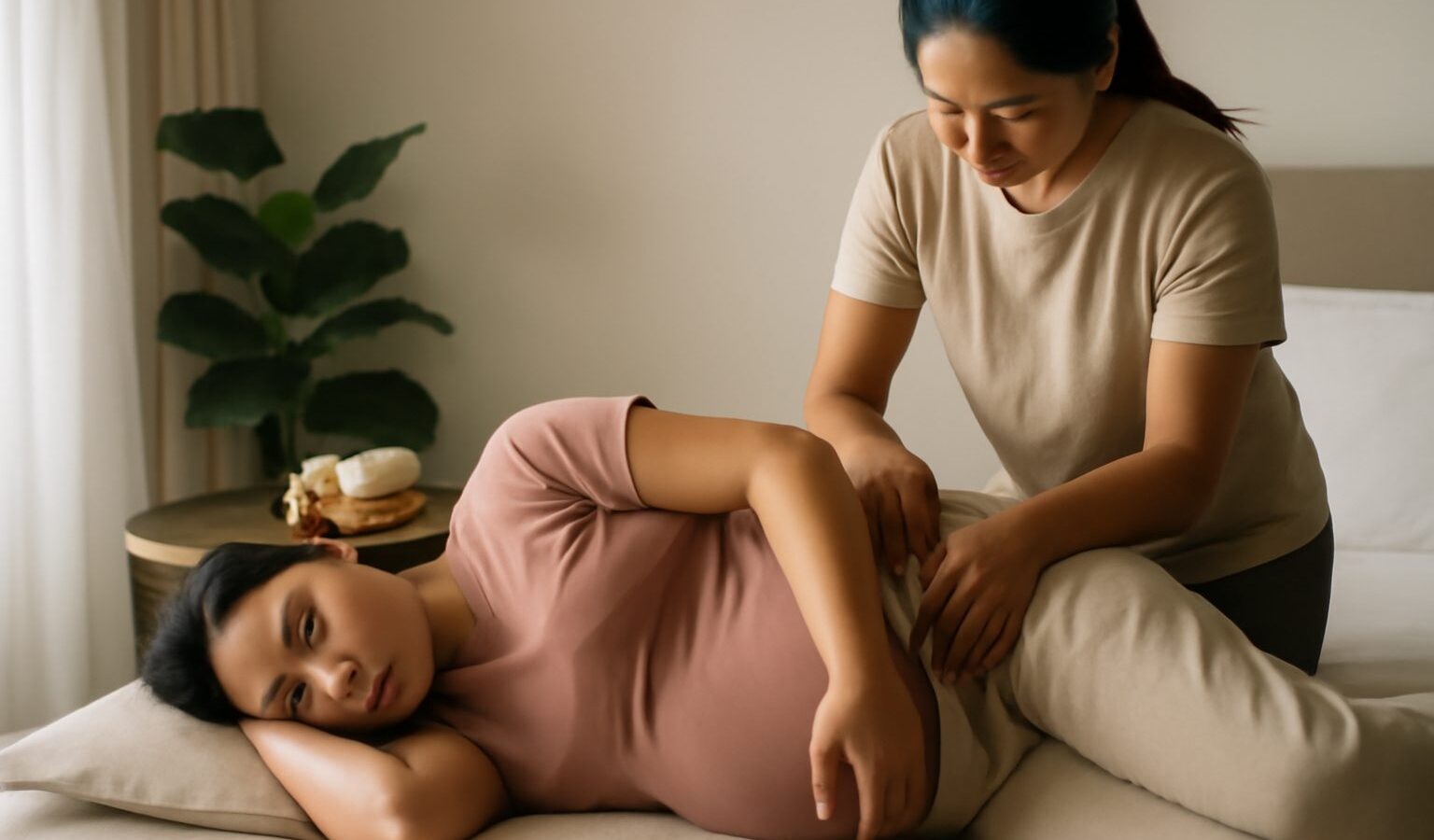
Pregnancy brings a long list of new aches: a tight lower back, heavy legs after a day on your feet, sore shoulders from a changing posture and broken sleep. Many expectant parents start looking at prenatal massage in Singapore as a way to ease some of that discomfort. It can be a lovely, calming hour, but it is not the same as booking a regular spa massage, and a little preparation makes the experience safer and more enjoyable.
This guide walks through the decisions that matter: when to speak to your doctor first, what a pregnancy session actually looks like, how to judge whether a therapist is properly trained, and what to ask before you pay. It is general information, not medical advice. Your obstetrician or polyclinic doctor knows your pregnancy and should always have the final say.

Start With a Conversation With Your Doctor
Before booking anything, mention it at your next antenatal visit. Most people with a straightforward pregnancy are told that gentle massage from a trained therapist is fine, but your doctor may advise caution or a pause if your pregnancy has particular risk factors. Conditions that commonly prompt doctors to say “check with me first” include high blood pressure, a history of preterm labour, bleeding, placenta concerns, swelling that appears suddenly, or a known clotting problem.
A few practical points help this conversation:
- Ask whether there is any stage of pregnancy when your doctor would rather you avoid massage. Many centres have their own policy on the first trimester, and some will only book clients after a certain point.
- Ask whether any area should be avoided. Some doctors prefer that deep pressure is kept away from the legs because of the higher clot risk in pregnancy.
- If your doctor is happy, some centres ask you to sign a declaration or bring a short note. Having that ready saves time.
If you have regular checkups lined up, our guide to prenatal checkups and screening in Singapore explains what each visit typically covers, which is a good moment to raise questions like this.
What a Pregnancy Massage Session Usually Involves
A prenatal session is adapted around your changing body. The biggest difference is positioning. Lying flat on your stomach becomes uncomfortable as the bump grows, and lying flat on your back for long periods can feel faint later in pregnancy. Trained therapists usually work with you lying on your side, supported by pillows or bolsters between the knees and under the bump, or semi-reclined against a wedge.
Pressure is generally lighter to moderate rather than deep tissue. The focus tends to be on areas that carry the load of pregnancy: the lower back, hips, shoulders, neck, and the calves and feet if your doctor has no concerns. A good therapist checks in often, asks you to change sides when you need to, and lets you get up for the toilet without fuss.
Expect a short intake chat before you start. You will typically be asked how many weeks along you are, whether your pregnancy has any complications, and whether anything hurts more than usual. If a centre skips this step entirely, treat it as a warning sign.
Choosing a Trained Prenatal Massage Therapist
Singapore has a wide mix of massage providers, from hotel spas and wellness studios to home-visit therapists and traditional practitioners. Not every massage therapist is trained in pregnancy work, so it is worth asking directly. If you want to understand the broader landscape first, our overview of types of massage therapy in Singapore explains the main styles you will see on menus.
Things worth checking:
- Specific pregnancy training. Ask what prenatal course the therapist completed and how much pregnancy work they do in a typical week.
- Equipment. Do they have side-lying bolsters, a pregnancy cushion or a table designed for a bump? A “pregnancy massage” done on a standard face-down table is a red flag.
- Oils and products. Ask what they use. Some essential oils are commonly avoided during pregnancy, and your skin may be more sensitive now. Many parents prefer an unscented oil.
- Hygiene and setting. Clean linen, a private room and a therapist who explains what will happen are basic expectations.
- Licensing. Massage establishments in Singapore are regulated, and the rules can change. If in doubt, check the current requirements with the Singapore Police Force licensing pages, which cover massage establishment licences.
Traditional postnatal and confinement massages are a separate service from prenatal massage. Some providers offer both, but do not assume a confinement massage specialist is trained in pregnancy work.
Comparing Your Booking Options
Where you book affects the experience, the equipment available and how easy it is to reschedule if you feel unwell. The table below compares the common options in general terms, without endorsing any business.
| Option | What to expect | Worth checking |
|---|---|---|
| Spa or wellness centre | Calm setting, dedicated rooms, often a published prenatal menu | Whether the assigned therapist is pregnancy trained, not just the centre |
| Home-visit therapist | Massage in your own bed or sofa, no travel when tired | Brings a portable table or cushions, clear identity and booking records |
| Maternity or women’s wellness studio | Pregnancy focus, may also run classes and postnatal care | Staff qualifications, cancellation terms if you go into labour early |
| Hotel spa | Comfortable facilities, often used as a special treat | Policy on pregnancy stage, whether side-lying is standard |
Whichever route you choose, ask about cancellation terms. Pregnancy is unpredictable, and a provider that lets you move appointments without heavy penalties is easier to work with, especially in the third trimester.
Questions to Ask Before You Pay
A short phone call or message can tell you a lot. Consider asking:
- How many weeks pregnant must I be before you will book me?
- Is the therapist trained in prenatal massage, and how long have they practised it?
- What position will I be in, and what supports do you use?
- Which areas do you avoid, and which oils will you use?
- What happens if I feel dizzy, uncomfortable or need to stop?
- Do you need a note from my doctor?
- What is your cancellation or rescheduling policy?
Prices vary by provider, length of session and setting, and they change over time, so compare current rates directly. Some packages bundle prenatal and postnatal sessions. Read the terms carefully before buying a package, including what happens if you need to pause for medical reasons.
Signs to Stop and Get Medical Advice
Massage should feel soothing. Stop the session and tell the therapist if you feel dizzy, short of breath, overheated, nauseous, or if any area becomes painful. Contact your doctor or go to the hospital promptly if you notice bleeding, fluid leakage, regular tightenings, reduced baby movements, sudden swelling of the face or hands, a severe headache, or a painful, swollen and warm calf. These symptoms need medical attention whether or not you have had a massage.
Making Massage Part of a Wider Self-Care Routine
Massage works best alongside other gentle habits rather than as a one-off fix. Staying lightly active, stretching, keeping hydrated in our humid climate and sleeping with good pillow support all help with the same aches. Our guide to prenatal exercise and yoga covers safe ways to keep moving, and many parents find classes and massage complement each other well.
At home, a partner can help with simple, light shoulder or foot rubs, keeping pressure soft and stopping if anything feels uncomfortable. After the baby arrives, the focus often shifts to your little one, and baby massage and bonding is a gentle next step many families enjoy.
The key takeaway is simple: get the green light from your doctor, choose a therapist who genuinely specialises in pregnancy, and listen to your body throughout. Done that way, a prenatal massage can be a well-earned hour of rest during a demanding season.
Further reading: Postnatal Massage in Singapore for Recovery and Rest