

Everyone who has ever been funny on stage started with a nervous first set in a small room. If you have been watching comedy and thinking “I could try that”, your first stand-up open mic is the place to start. Open mics are low-stakes nights where new and experienced comics test material, usually for a few minutes each, in front of a small audience. This guide walks you through writing a five-minute set, finding and signing up for a local mic in Singapore, and getting through the night in one piece.
What an Open Mic Night Is Actually Like
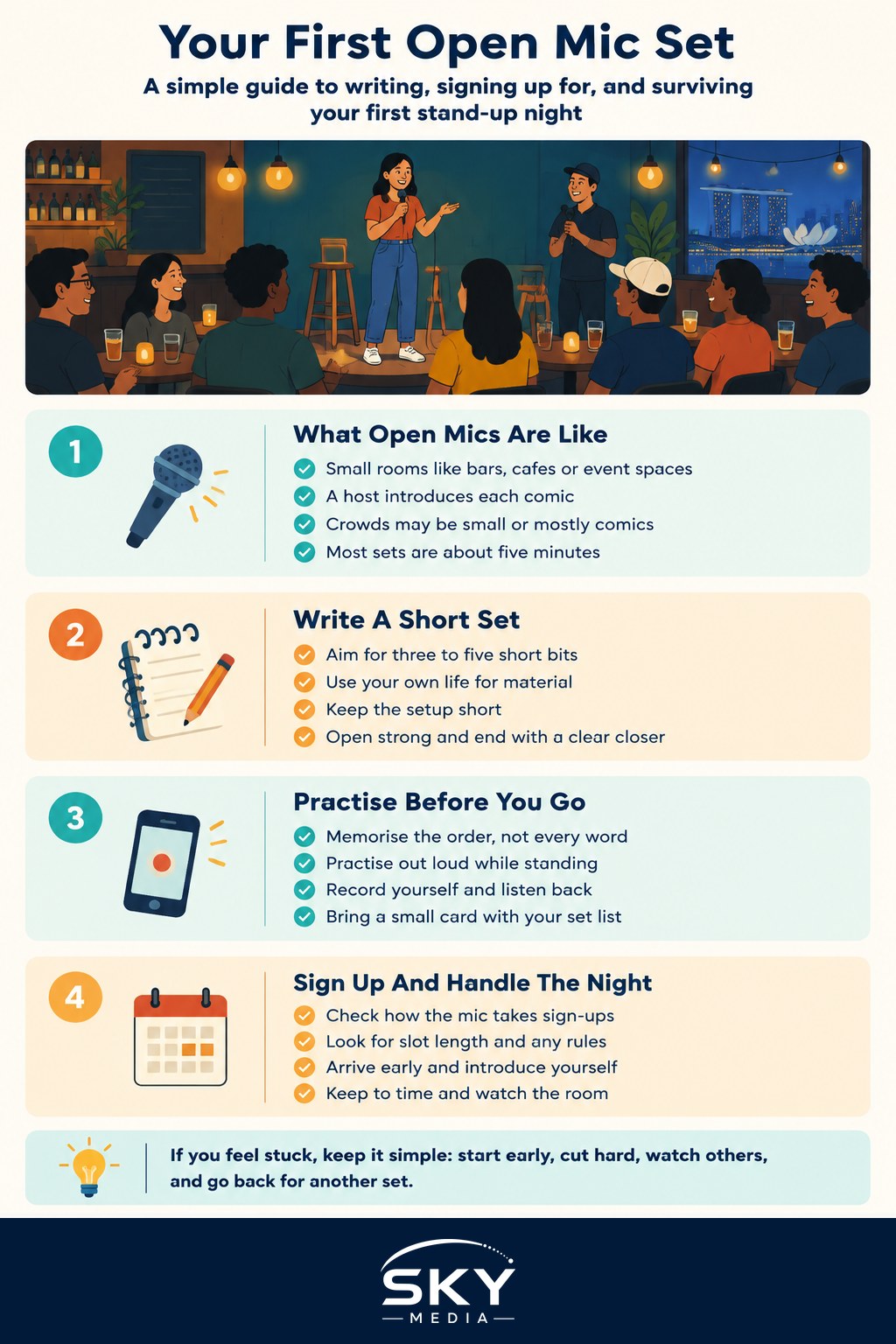
Open mics are not polished comedy shows. Expect a bar, cafe or small event space, a host who introduces each comic, and a crowd that may be mostly other comedians waiting for their turn. Some nights are packed and lively; others have a handful of people. Each comic usually gets a fixed slot, often around five minutes, and the host or organiser will signal when your time is nearly up, typically by flashing a light or holding up a phone.
Singapore’s comedy scene runs English-language mics, and some nights welcome Mandarin, Singlish or mixed-language sets. Many venues are around the city centre, but nights move, start and stop often, so the scene changes from year to year. If you have never been to one, watch a few nights first. Our guide to open mic comedy nights for first-time audiences explains what to expect from the crowd’s side, and comedy and stand-up in Singapore gives a wider view of the scene.
Writing a Five-Minute Set
Five minutes sounds short, but on stage it feels long. You need roughly three to five short “bits”, or one longer story with several laughs inside it.
Start From Your Own Life
The strongest early material usually comes from things only you can talk about: your job, your family, your NS days, moving here from another country, your strange flatmate, the hawker uncle who judges your order. Specific details are funnier than general observations. “Taxis are expensive” is flat; the exact conversation you had with a driver about your destination is not.
Use a Simple Joke Structure
- Premise: your opinion or observation, ideally with an attitude (“I hate group chats”).
- Setup: the information the audience needs, kept as short as possible.
- Punchline: the twist or surprise that reframes the setup.
- Tags: extra punchlines on the same idea, which squeeze more laughs out of one setup.
Cut every word that does not move you towards the laugh. Beginners almost always have setups that are too long.
Shape the Set
- Open strong. Your first line should get a laugh quickly, within the first 20 to 30 seconds. A short line about yourself that the audience can see, like your look or your accent, often works.
- Put your second-best bit at the start and your best bit at the end.
- End on a clear closer so the host knows you are done. Say “That’s my time, thank you” and leave the stage.
Write it all down, then say it out loud and time it. Spoken jokes are always longer than they look on paper. If you are running at six minutes in your bedroom, you will run longer on stage because of laughter and nerves. Trim to four and a half minutes.
Rehearsing Without Over-Rehearsing
- Learn the order, not a script. Memorise the bullet points and key punchlines. Word-for-word recital sounds stiff.
- Practise out loud, standing up. Use a microphone-sized object if it helps you get used to holding something.
- Record yourself on your phone and listen back for dead spots and rambling.
- Write your set list on a small card or the back of your hand. Glancing at it on stage is normal.
- Prepare for nerves. Slow breathing before you go on helps; see our tips on stand-up comedy breathing tricks for stage anxiety.
Finding and Signing Up for a Local Mic
There is no single official list of open mics in Singapore. Most comics find them through comedy collective social media pages, event listing apps and word of mouth from other comedians. Ways to sign up vary:
| Sign-up method | How it works | What to check |
|---|---|---|
| Pre-registration online | Fill in a form or message the organiser days ahead | Deadline, slot length, whether spots are confirmed |
| On-the-night list | Write your name on a list when doors open | Arrival time, as lists can fill early |
| Bringer system | You get a slot if you bring a paying or ticketed guest | Exact rules, and whether your friend needs a ticket |
| Lottery or bucket draw | Names are drawn at random through the night | You may not get on, so be ready to come back |
Before you go, check the event page for the slot length, any language or content guidance, whether there is a cover charge or minimum purchase, and the age policy, since some venues serve alcohol and may restrict entry. Be polite to organisers. Many run mics for free in their spare time, and comics who show up, support others and do not overrun get invited back.
On the Night
- Arrive early and introduce yourself to the host. Tell them your name clearly and how you want to be introduced.
- Watch the comics before you. It shows respect, and you learn what the room responds to.
- Check the mic stand before your slot. Many beginners fumble with it. If you do not need the stand, move it behind you.
- Speak into the mic, slightly closer than feels natural.
- Keep to time. When you see the light, finish your current bit and close. Overrunning is the fastest way to annoy a host.
- Record your set if the venue allows, so you can review it later.
Content Sense in Singapore
Comedy is about saying what others will not, but keep in mind that Singapore takes race and religion seriously, and jokes that demean or insult a racial or religious group can cross legal lines, not just offend a crowd. Punch up rather than down, make yourself the target when in doubt, and respect venue guidance. This is general information, not legal advice.
After Your First Set
Whether it went well or badly, you have done the hardest part. Listen to your recording a day later, when the adrenaline has faded. Keep the lines that got laughs, rewrite the ones that almost worked, and cut what died. Then sign up again. Most comedians say it takes many sets before a beginner finds their voice, so consistency matters more than any single night. Go back, try again, and enjoy getting a little funnier each time.