

Your name gets called. Your heart hammers, your mouth goes dry, your hands shake around the mic and your first line comes out twice as fast as you rehearsed it. Almost every comedian, musician and speaker knows this moment. The good news is that the body’s alarm system responds to something you can control on stage: your breath.
This guide focuses on breathing for stage anxiety in live performance, using stand-up comedy as the example because it is one of the most exposed forms of performing there is. You are alone, the audience reacts every few seconds, and silence feels enormous. The same techniques work for open mics, improv, music gigs, speeches and presentations.
It is general information, not medical advice. If anxiety is severe, affects daily life or comes with chest pain, fainting or breathing difficulty, see a doctor or a mental health professional.
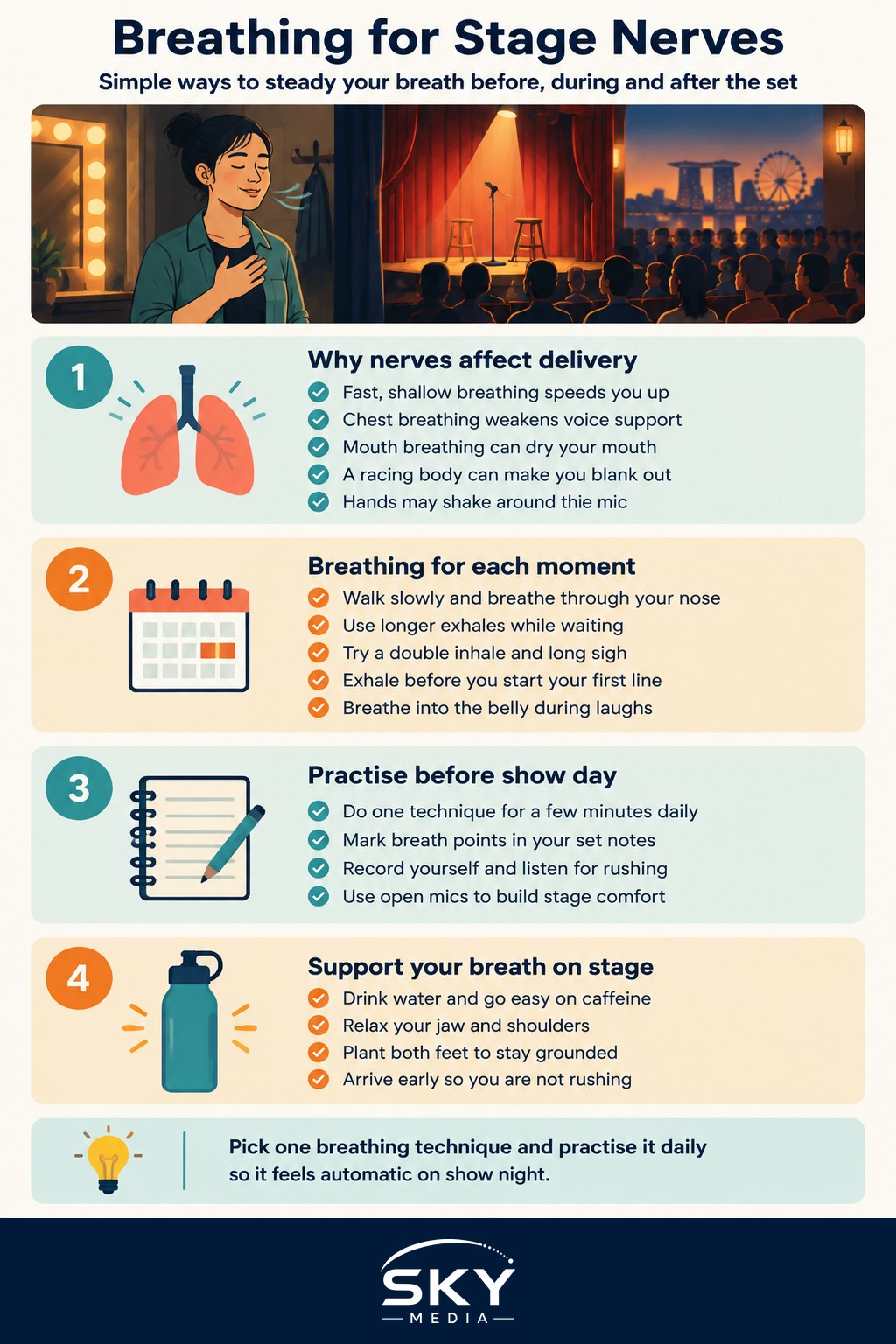
Why Stage Nerves Hit the Body So Hard
Stage fright is the body’s stress response switching on in a situation it reads as risky. Adrenaline rises, the heart speeds up, breathing becomes quick and shallow, and blood moves towards big muscles. That is useful for running away. It is not useful for delivering a punchline.
Comedians notice specific effects:
- Rushing. Fast, shallow breathing makes you talk faster and step on your own laughs.
- A thin or shaky voice. Breathing high in the chest gives less air support behind the voice.
- Dry mouth. Mouth breathing and adrenaline both reduce saliva.
- Blanking. A racing body makes it harder to recall the next bit.
- Shaky hands. Most visible when holding the mic or notes.
Breathing is one of the few parts of this response you can change on purpose. Slow, longer exhales tend to signal safety to the nervous system, which is why most of the techniques below lean on the out-breath.
Breathing Techniques by Stage of the Show
Different moments call for different tools. Here is a quick map, with details after the table.
| Moment | Technique | What it helps with | How long it takes |
|---|---|---|---|
| Hours before the show | Slow nasal breathing during a walk | General jitters, restless energy | 10 to 15 minutes |
| Waiting in the back of the room | Extended exhale breathing | Racing heart, tight chest | 1 to 3 minutes |
| Just before your name is called | Double inhale, long sigh | Sudden adrenaline spike | 2 to 3 breaths |
| First line on stage | Exhale, then speak | Rushed delivery, shaky voice | 1 breath |
| During laughs and pauses | Belly breath on the laugh | Keeping pace, staying grounded | A few seconds each |
| After the set | Box breathing | Coming down from the high or the bomb | 2 to 4 minutes |
Slow nasal breathing before the show
Instead of pacing and rereading your set list, take a slow walk and breathe in and out through your nose. Keep it gentle and unhurried. It settles general restlessness and keeps your mouth from drying out.
Extended exhale breathing while you wait
Breathe in through the nose for a count of about four, then out slowly through the mouth for a count of about six to eight, as if fogging a mirror. Make the exhale longer than the inhale. Repeat for a minute or two. Nobody in a dark room will notice you doing it.
The double inhale and long sigh
Take a normal breath in through the nose, then a second short top-up sniff, then let it all out in a long, slow sigh through the mouth. Two or three of these right before you walk up can take the edge off a spike of nerves quickly.
Exhale, then speak
Many new comedians take a big gasp and launch straight into the opener. Instead, walk to the mic, adjust the stand, let out a breath, then take a comfortable breath in and start. That pause also gives the audience a beat to look at you, which helps your first joke land.
Belly breath on the laugh
When the audience laughs, that is your breathing window. Let your belly expand as you breathe in, rather than lifting your shoulders. Waiting for the laugh to peak and fade while you breathe also stops you rushing the next line.
Box breathing after the set
Breathe in for four, hold for four, out for four, hold for four. Repeat for a few rounds. It helps you come down whether you killed or bombed, so you can watch the rest of the show and give useful notes to yourself.
Building the Habit Off Stage
Breathing tricks work best when they are already familiar. Under pressure you fall back on what you have practised.
- Practise daily for a few minutes. Pick one technique and do it at the same time each day, for example on the MRT or before bed.
- Rehearse your set with breath marks. Mark where you will breathe in your notes, especially after setups and before tags.
- Record yourself. Listen for gasps, rushing or trailing off at the end of lines.
- Borrow from singers. Vocalists train breath support carefully. Our guide to breathing techniques for singing has exercises that translate well to comedy delivery.
- Get reps. Exposure is the most reliable long-term cure for nerves. Open mics and improv classes give regular low-stakes stage time. See getting into improv comedy in Singapore for a gentle way in.
Body Habits That Support Your Breathing
Breath does not work in isolation. A few simple habits make it easier.
- Drink water before the show, and keep a bottle near the stage if the venue allows. Go easy on caffeine and alcohol, which can make nerves and dry mouth worse.
- Loosen your jaw and shoulders. Roll the shoulders, yawn widely and gently massage the jaw while you wait.
- Plant your feet. Standing with weight evenly on both feet helps the breath drop lower.
- Hold the mic lower and closer to your body if your hands shake, or leave it in the stand for the opening minute.
- Eat lightly. A heavy meal right before the set makes deep breathing uncomfortable.
- Arrive early. Rushing in from a late train undoes all your breathing work. Give yourself time to settle in the room.
When Breathing Is Not Enough
Most stage nerves fade with practice and good routines. Sometimes they do not. Seek help from a GP, polyclinic or mental health professional if:
- Anxiety stops you performing or affects work, study or sleep.
- You have panic attacks, chest pain, dizziness or fainting.
- You rely on alcohol or other substances to get on stage.
- You have asthma, heart or lung conditions and are unsure whether breathing exercises such as breath holds are suitable for you.
A professional can suggest approaches tailored to you, and there is no shame in asking.
Putting It Together on Show Night
A simple routine might look like this: a slow nasal-breathing walk before you leave home, extended exhales at the back of the room, two long sighs as the host introduces you, one exhale before your opener, belly breaths on every laugh, and a few rounds of box breathing once you are off.
Stage nerves will probably never vanish completely, and many performers say a little adrenaline sharpens their timing. The aim is not zero nerves but nerves you can steer. Ready to try it out? Our guide to comedy and stand-up in Singapore explains how the local scene works and where newcomers usually start.
Further reading: How to Do Your First Stand-Up Comedy Open Mic Set