

Singapore is a safe place to live, but no city is free of fraud, and scams in Singapore are something every newcomer should understand early. When you have just arrived, you are still learning which organisations are real, what official messages look like, and how local services normally contact you. Scammers know this, and they often target people who are new and unsure. The reassuring news is that staying safe comes down to a few clear habits. Once you build them, you can go about daily life with confidence.
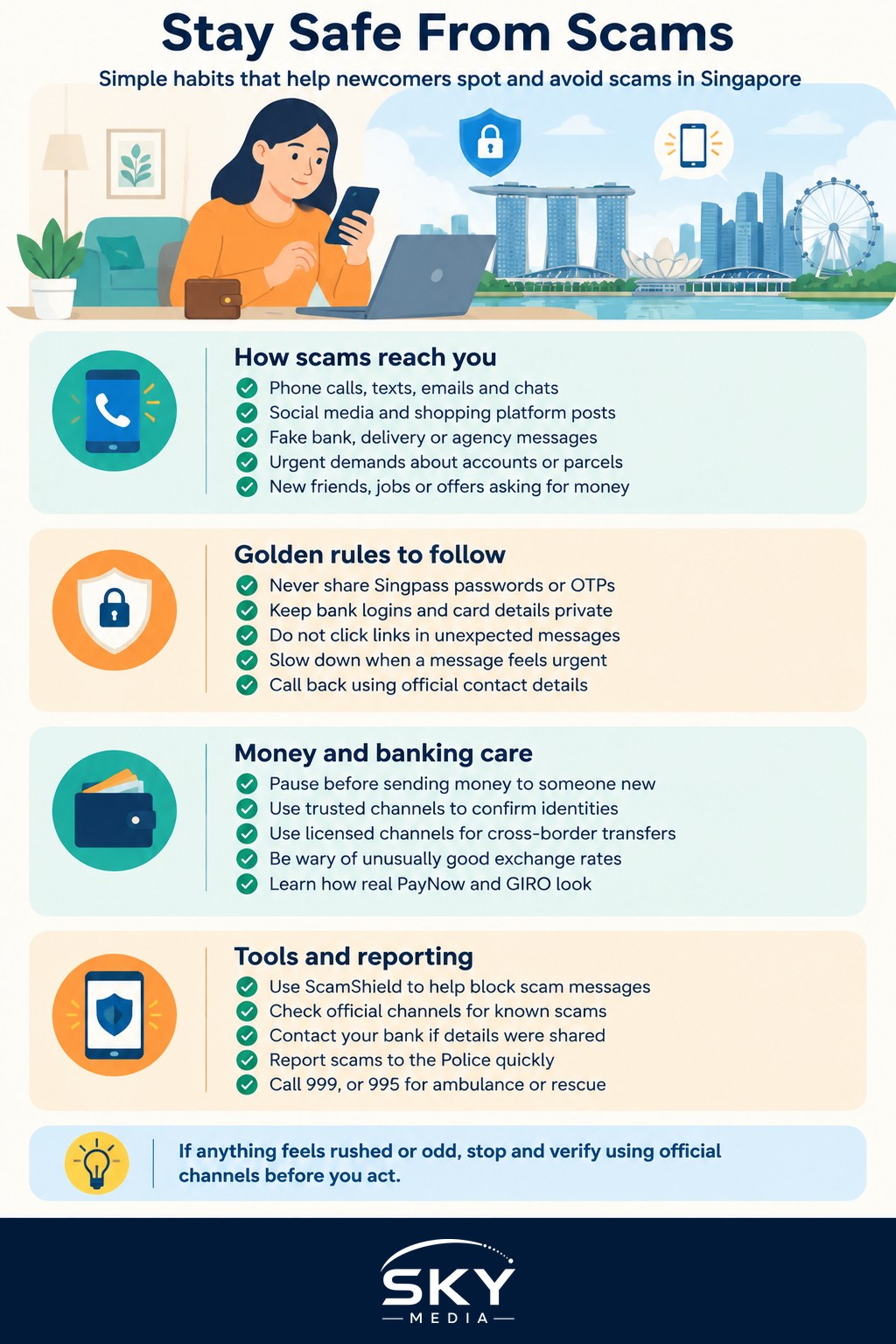
How Scams Usually Reach You
Scams tend to arrive through the same everyday channels you already use, which is what makes them tricky. They may come as a phone call, a text message, an email, a chat message, or a post on social media or a shopping platform. The story changes, but the goal is almost always the same: to pressure you into sending money or handing over information that lets someone else take it.
Common tactics you might encounter include:
- Someone pretending to be from a bank, a delivery company, or a government agency.
- A message saying there is a problem with your account, a parcel, or your immigration status that you must fix immediately.
- An offer that seems too good to be true, such as easy money, cheap goods, or a guaranteed investment return.
- A new online friend or romantic contact who eventually asks for money.
- A fake job offer that asks you to pay a fee or share personal details upfront.
Notice the common thread. Real organisations do not rush you, threaten you, or demand secrecy. Scammers rely on panic and urgency, because a worried person is easier to fool than a calm one.
The Golden Rules That Protect You
A handful of firm rules will keep you safe in the vast majority of situations. Treat these as non negotiable.
- Never share your Singpass password, your bank login, or any one time password, known as an OTP, with anyone. No genuine bank or agency will ever ask for them. An OTP is the key to your account, so guard it as you would your house key.
- Never give out your full bank card details, internet banking details, or account passwords over a call, message, or unfamiliar website.
- Do not click links in unexpected messages. Go to the official website or app yourself instead.
- Slow down. If a message creates fear or urgency, that is a warning sign, not a reason to act fast.
- Verify before you act. Hang up and call the organisation back using a number from their official website or the back of your bank card, not a number the caller gave you.
Your Singpass account deserves special care, because it connects to many government and financial services. If you are still setting yours up, our guide on Singpass setup for newcomers explains how it works so you can spot anything that looks wrong.
Extra Care With Money and Banking
Money moves are where scams do the most damage, so add a second layer of caution here. Before transferring funds to anyone new, pause and confirm who they really are through a channel you trust. If you are sending money across borders, use only licensed and regulated channels, and be wary of anyone offering unusually good rates through informal means. Our guide on managing money across two countries as a newcomer covers safer ways to handle cross border transfers.
As you get comfortable with local payments, take a moment to learn how the legitimate systems work so imitations stand out. Our guide on setting up PayNow and GIRO will help you recognise the real thing. Once you know what a normal transaction looks like, a fake request is much easier to catch.
Tools, Reporting, and Who to Contact
Singapore has practical tools to help residents block and check suspicious activity. You can use the ScamShield app to help filter out scam calls and messages, and there are official channels where you can verify whether something is a known scam before you act. Building these into your routine gives you an extra safety net.
If you think you have encountered a scam, act quickly:
- Contact your bank straight away if you have shared any financial details or made a payment, so they can help protect your account.
- Report the scam to the Police. You can make a report through the official police channels.
- Use ScamShield to help block and report suspicious calls and messages.
- Warn friends, family, and neighbours, because scammers often reuse the same tricks.
For any emergency where someone is in danger, call 999 for the Police, or 995 for an ambulance or fire and rescue from the SCDF. Keep these numbers handy. It is also worth building a wider list of key contacts, which our guide on building an emergency contact list as a newcomer walks you through.
Settling In With Confidence
It is easy to feel uneasy reading about scams, but remember the bigger picture. Singapore is genuinely safe, and the people trying to trick you are relying on you not knowing the rules. Now you do. Keep your Singpass and OTPs private, verify before you act, never let anyone rush you, and report anything suspicious. Do that, and you can enjoy your new home with peace of mind while these habits quietly protect you in the background.
Frequently Asked Questions
What should I do if I have already clicked a suspicious link? Act fast. Disconnect from the page, change the passwords for any accounts you used, and call your bank using the number on your card if you entered any financial details. Run a security scan on your device and report the incident to the Police.
How can I tell if an online seller or rental listing is genuine? Be wary of prices far below the market rate and anyone who insists on a deposit before you have seen the item or viewed the flat. Meet in person where possible, use traceable payment methods and check the seller’s history. If a deal feels rushed, walk away.
Can I get my money back if I have been scammed? Recovery is not guaranteed, but reporting immediately gives the best chance. Contact your bank right away so they can try to stop or trace the transfer, and make a Police report with screenshots and receipts. The sooner you act, the better the options.
How can I protect my elderly parents from scams? Talk openly about the common tricks, especially callers pretending to be officials, and agree they will always check with family before sending money. Set low transfer limits on bank accounts if possible. Remind them that genuine organisations never demand secrecy or instant payment.
Is it safe to give my FIN or passport details to someone who asks? Only share identity details with organisations you have verified and for a clear, legitimate reason. A stranger asking by phone, text or chat is a red flag. When in doubt, contact the agency yourself using its official website or published number.
Official sources: ScamShield
Further reading: How to Spot Shark Karung Guni Scams in Singapore · Staying Safe in Singapore