

Moving to Singapore rarely means a clean financial break from where you came from. You might still have a bank account, a property, a loan, family you support, or a pension building up back home, and now you have a whole new financial life here as well. Managing money across countries can feel like juggling two clocks at once, but with a few steady habits it becomes routine rather than a monthly headache. This article is general information to help you get organised, not financial, tax, or legal advice. For your own situation, always check with your bank, a qualified professional, and the official Singapore authorities.
Getting Your Two-Country Setup Organised
The first step is simply to see both sides clearly. Many newcomers arrive without a full picture of what they still hold back home and what they now need here, and that fog is where mistakes and missed payments happen.
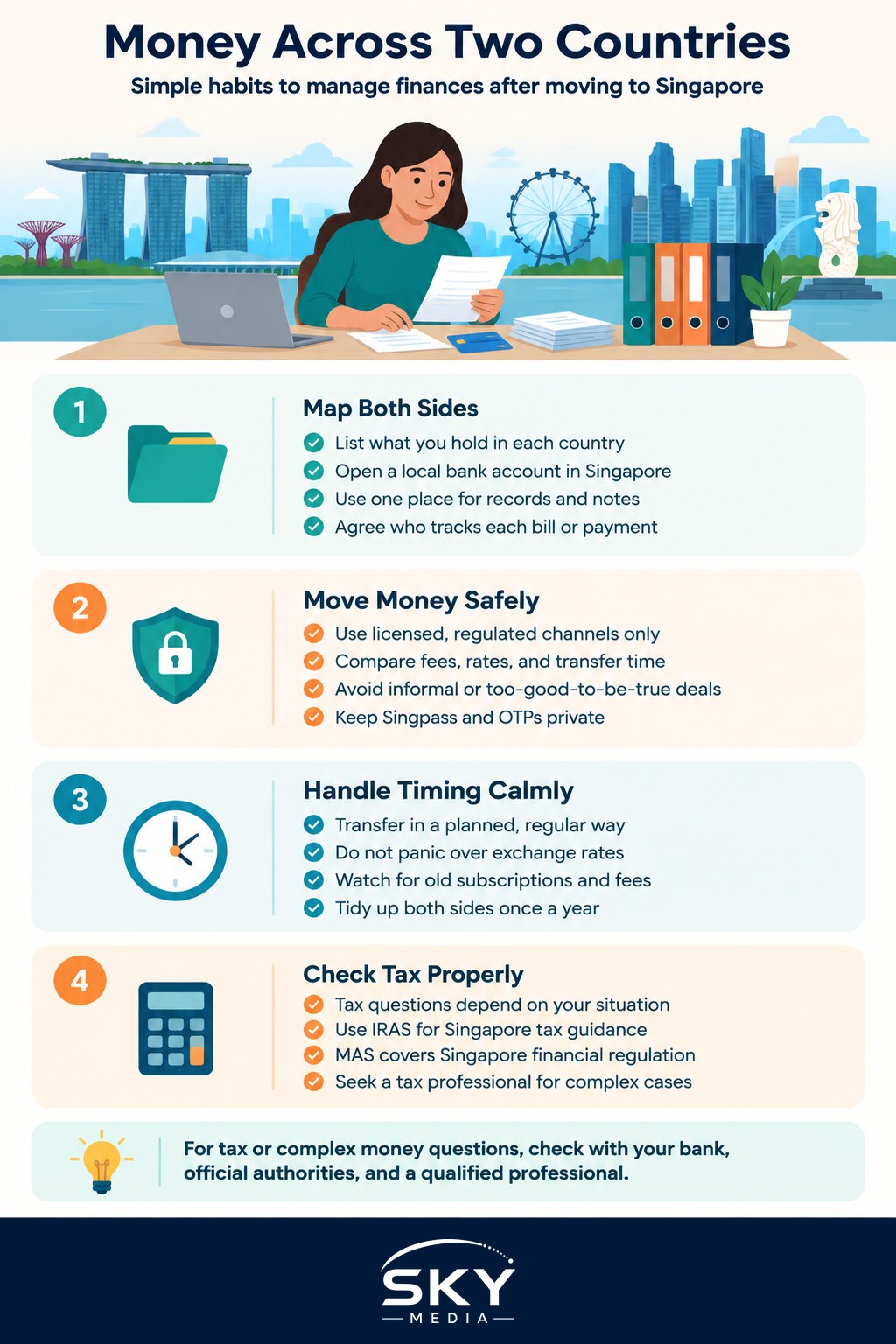
Start by listing what you have in each country. On the home side, that might be a bank account, direct debits still running, insurance, investments, or property. On the Singapore side, you will want a local bank account set up as a foundation for salary, bills, and everyday spending. If you have not sorted that yet, opening a bank account in Singapore is the place to begin, and setting up PayNow and GIRO as a newcomer covers the local tools you will use for bills and instant transfers.
A few habits keep the two sides from tangling:
- Keep your Singapore day-to-day spending in your Singapore account, and try not to run local life off a home-country card, where currency conversion and delays can creep in.
- Keep a small buffer in each country so you are never caught short on either side.
- Note the payment dates that still run back home, so an old subscription or loan does not quietly bounce while you are focused on settling in here.
- Keep your records in one place. A simple shared folder or spreadsheet for both countries saves a lot of stress later.
If you moved with a partner or family, agreeing early on who tracks what avoids the classic situation where each of you assumes the other paid a home-country bill.
Moving Money Between Countries Safely
At some point you will need to move money across the border, whether to support family, cover a home-country commitment, or bring savings over. The single most important rule is to use licensed, regulated channels only. Use your bank, or a money transfer service that is properly licensed and regulated. Avoid informal arrangements, friends of friends, or anyone who offers a deal that seems too good, because that is exactly where losses and scams happen.
Before any transfer, take a moment to compare your options sensibly. Costs and exchange rates differ between providers and change over time, so check the actual figures at the moment you transfer rather than assuming. Look at the total cost, not just the headline, and confirm how long the money will take to arrive. Because rates and fees move, this guide deliberately does not quote numbers, always look them up fresh.
Guard yourself against scams, which often target newcomers moving money. A few protective habits go a long way. Never share your Singpass, one-time passwords, or full banking details with anyone. Be very wary of unexpected messages or calls pressuring you to transfer money urgently or to a “safe account”. Verify any request through an official channel before you act, and if something feels off, slow down. Our guide on staying safe from scams as a newcomer has fuller protective steps, and in Singapore you can use ScamShield and report to the Police.
Currency, Timing, and Not Overthinking It
Exchange rates go up and down, and it is tempting to try to time every transfer perfectly. For most newcomers, that way lies stress with little reward. A calmer approach is to move money in a planned, regular way for things you know you need to cover, and to avoid making big currency decisions in a panic. If you have larger or more complex sums, a conversation with a licensed professional is worth far more than guessing.
Keep an eye on the small leaks too. Old subscriptions billed back home, dormant account fees, and forgotten memberships can quietly drain money across a border where you are not watching closely. A yearly tidy-up of both sides is a good habit.
Tax Is Its Own Question, So Ask the Right Source
Having income, property, or assets in two countries can raise tax questions, and these are genuinely individual. Do not rely on what a friend did or what worked in another country. For anything about your Singapore tax position, the official source is the Inland Revenue Authority of Singapore (IRAS), and Singapore’s financial regulation sits with the Monetary Authority of Singapore (MAS). Your home country will have its own rules too. Where your situation is at all complex, a qualified tax professional who understands both countries is money well spent.
Steady Habits Beat Clever Moves
Managing money across countries is less about clever tricks and more about calm, boring consistency. Keep both sides visible, use licensed channels, protect yourself from scams, check real figures before you transfer, and take tax questions to IRAS and a proper professional rather than guesswork. Get those foundations in place, and your two-country finances stop feeling like a juggling act and settle into a quiet background routine, leaving you free to enjoy actually living here.