
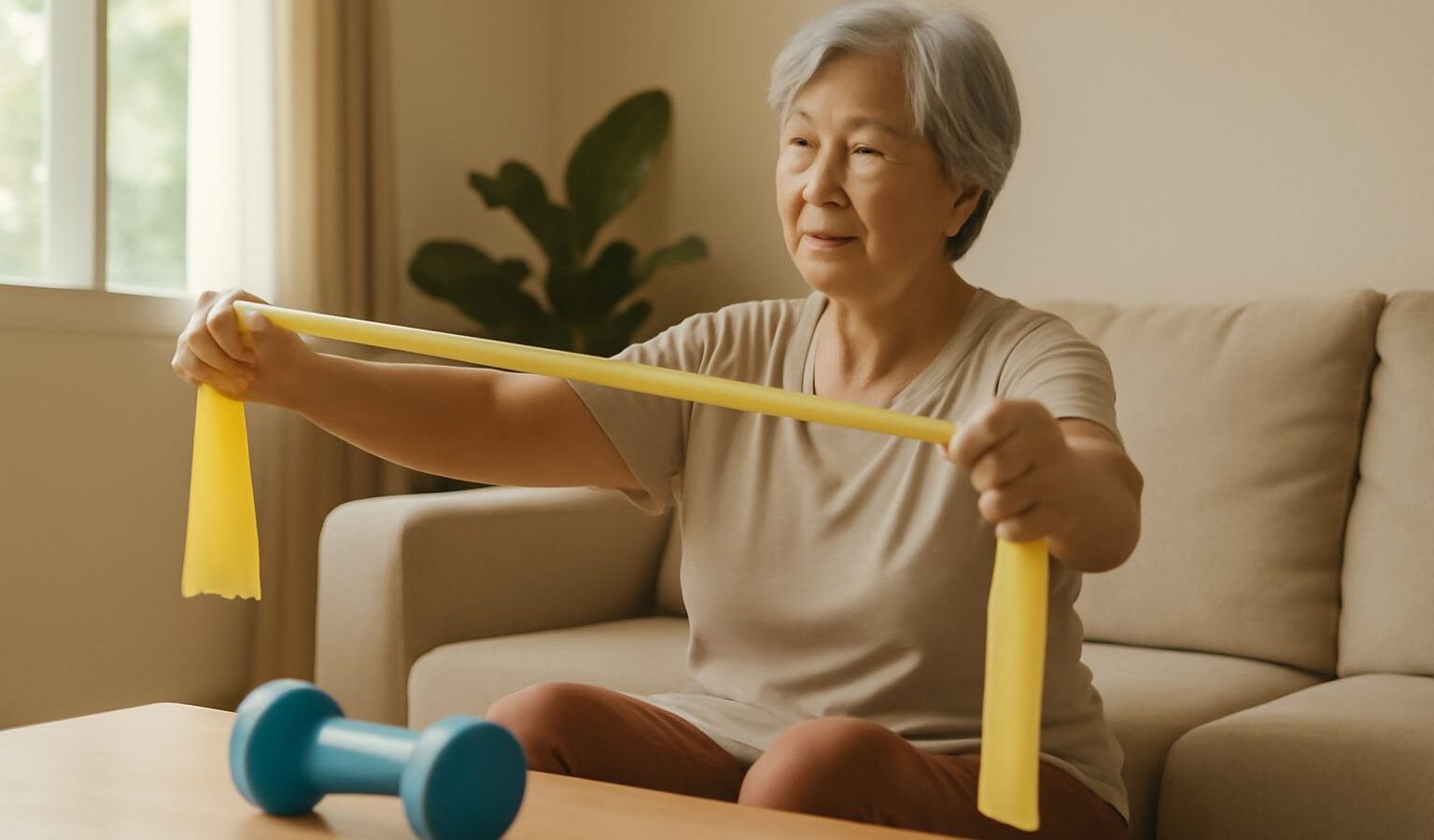
Many people think of exercise for older age as walks and stretches, and forget that muscles matter too. Yet keeping your muscles working is one of the best things you can do for staying steady, independent, and able to do the things you enjoy. Sensible strength training for seniors singapore residents can take up need not mean a gym full of heavy weights. It can be as simple as rising from a chair or lifting a light bottle of water. This is general safe-movement guidance, not a medical or rehabilitation plan, so please read the cautions and check with a professional before you begin.

Why muscle matters as you age
From our fifties onwards, muscle tends to fade quietly unless we use it. This gradual loss can make everyday tasks harder, such as climbing stairs, carrying groceries, getting up from a low seat, or catching yourself if you stumble. Weaker muscles also tend to go hand in hand with poorer balance, which raises the risk of falls.
The encouraging news is that muscle responds to gentle, regular work at almost any age. Working your muscles a little can help you stay steady on your feet, protect your joints, support your bones, and keep you doing daily activities on your own. It also tends to lift mood and energy. You do not need to become an athlete. You just need to give your muscles a reason to keep showing up. Our guide to sarcopenia and preventing muscle loss in older age explains the background in more detail.
Check with a professional before you start
Before beginning any new strength programme, speak with your doctor or a physiotherapist, especially if you have a heart condition, high blood pressure, weak or thinning bones, joint problems, or you are recovering from an injury or surgery. They can tell you what is safe for you and what to avoid.
A physiotherapist or a trained instructor can also show you correct technique, which protects your joints and back and helps you get the benefit without strain. Many community centres and active ageing settings run supervised group sessions suited to older beginners, which is a friendly and safe way to learn.
How to start safely
The safest approach is to start light and build up slowly. Some general principles:
- Begin with your own body weight or very light resistance, such as a resistance band or a small bottle of water.
- Warm up with a few minutes of easy movement first.
- Move slowly and with control, and keep breathing normally rather than holding your breath.
- Aim for smooth, comfortable movements. You should feel your muscles working, not sharp pain.
- Rest a day between sessions that work the same muscles, giving your body time to recover and strengthen.
- Progress gradually, adding a little more only when the current level feels easy.
Simple everyday moves are a fine place to start, such as standing up from a chair without using your hands, gentle heel raises while holding a steady surface, or wall push-offs. Twice or three times a week is a common, manageable rhythm for older beginners, and consistency over the months matters far more than pushing hard in any single session. Pair strength work with balance practice for the best all-round benefit, as our guide to improving your balance to prevent falls explains.
When to stop and seek help
Stop and rest if you feel sharp or worsening pain, and stop straight away and seek help if you have chest pain, unusual breathlessness, dizziness, or you feel faint. For chest pain, severe breathlessness, stroke signs, or a serious fall, call 995 or go to A&E. Some muscle tiredness after a session is normal, but pain is a signal to check with your doctor.
Building and keeping muscle is one of the kindest investments you can make in your own independence. It is never too late to begin, and even people well into their later years can grow stronger with gentle, regular effort. Start gently, get the right guidance, and let progress come slowly and steadily. Combined with staying generally active, described in our guide to staying fit and active as a senior, a little regular strength work can help you stay capable and confident for years to come.
Further reading: Staying Strong as You Age