

A household income drop in Singapore can happen for many reasons: a pay cut, fewer shifts, lower commissions, a business going quiet, a health issue, or one partner stopping work to care for a child or parent. Whatever the cause, the first few weeks matter most. Quick, calm decisions protect your home and your credit, while panic or delay can turn a manageable dip into a debt problem.
This guide focuses on financial triage: what to do first, what to cut, and who to talk to, so your household stays steady while income recovers. It is general information, not financial advice.
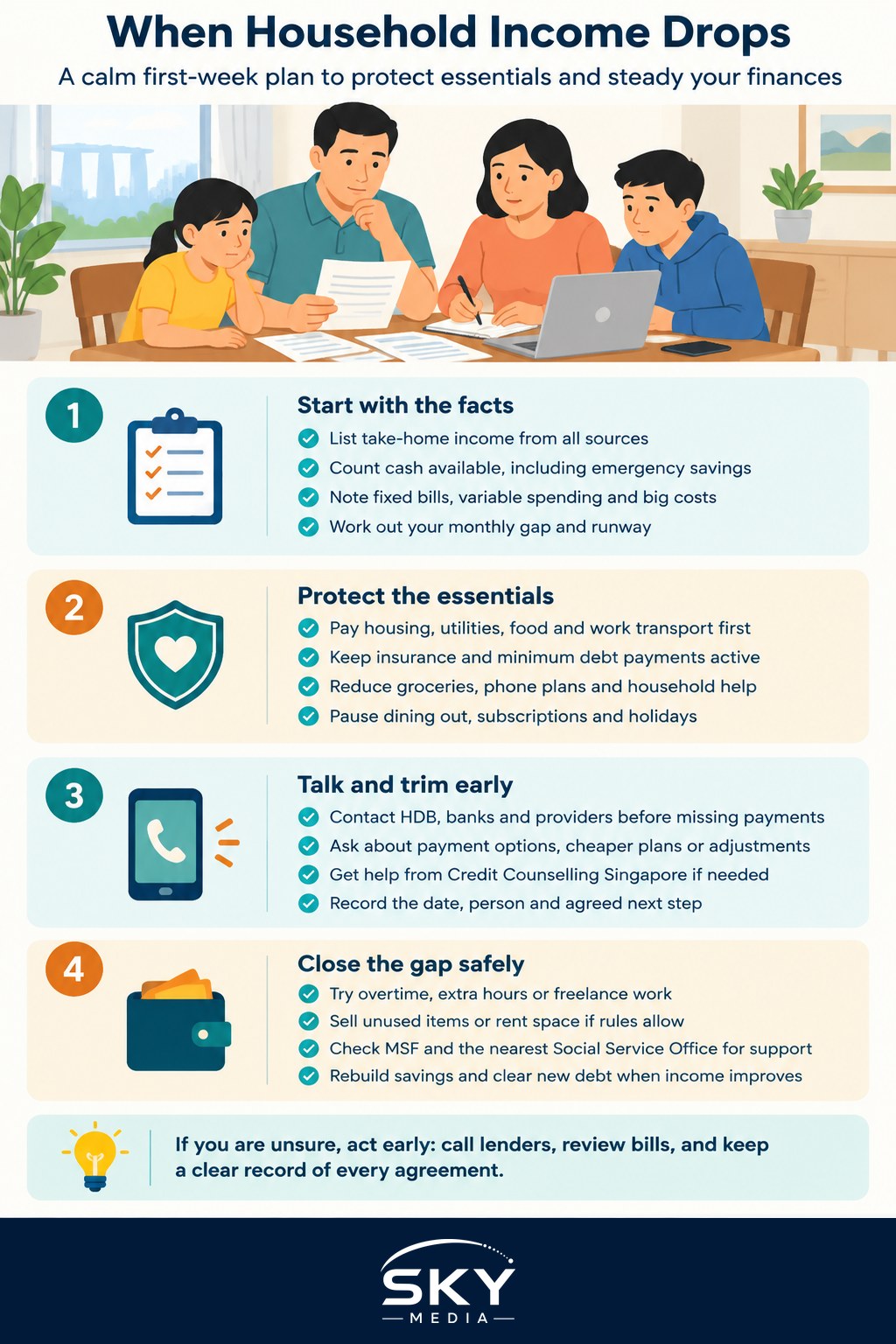
The First Week: Get a Clear Picture
Before cutting anything, find out exactly where you stand. Sit down together, if you share finances, and list:
- New monthly take-home income from every source, using a cautious estimate if it is irregular.
- Cash available now across savings accounts, including any emergency fund.
- Fixed commitments such as housing loan or rent, insurance premiums, loan repayments, school fees and phone plans.
- Variable spending such as groceries, transport, dining out, subscriptions and shopping.
- Upcoming large costs in the next three months, such as annual insurance premiums, property tax, school expenses or festival spending.
Then work out the monthly gap between what comes in and what goes out, and how many months your cash covers that gap. That single number, your runway, shapes every decision that follows.
Avoid two common mistakes in this first week: putting essentials on a credit card while hoping things improve, and cancelling important protection such as insurance without thinking it through.
Triage Your Spending by Priority
Not all bills are equal. Rank them so the most important ones are always paid first. The table below is a useful starting framework.
| Priority | Examples | What to do |
|---|---|---|
| Protect first | Housing payments, utilities, basic food, transport to work, essential medication | Pay in full and on time; contact the lender early if this becomes hard |
| Keep but review | Health and life insurance, children’s school costs, minimum loan and card payments | Keep active, but check for cheaper plans or payment options |
| Reduce | Groceries beyond basics, phone and internet plans, household help, enrichment classes | Downgrade, switch providers or pause where possible |
| Pause or cut | Dining out, subscriptions, holidays, gadget upgrades, non-essential shopping | Stop for now and revisit once income stabilises |
Families differ, so adjust the tiers to your situation. For realistic spending levels at different income bands, our guide to Singapore household budgets by income can help you reset targets.
Talk to Lenders and Providers Early
Many people wait until they have missed a payment before asking for help. Reaching out earlier usually gives you more options.
- Housing loans. If you have an HDB loan, contact HDB to discuss your situation. If you have a bank loan, speak to your bank. Lenders may be able to discuss options such as temporary adjustments, but terms vary and are never guaranteed, so ask what is available and what it will cost over the longer term.
- Credit cards and personal loans. Paying only the minimum keeps the account in good standing but lets interest build up quickly. If several debts feel unmanageable, Credit Counselling Singapore offers guidance on repayment plans.
- Insurance premiums. Before you surrender or lapse a policy, ask the insurer about options such as changing the payment mode or reviewing coverage. Cancelling some policies can lose benefits that are hard to replace, especially if your health has changed. Read your policy wording and speak to the insurer.
- Utilities and telcos. Ask about cheaper plans or payment arrangements if bills become difficult.
Keep a record of every call: the date, the person you spoke to and what was agreed.
Rebuild a Lean Monthly Budget
Once you know your priorities, build a new, simpler budget around the reduced income.
- Start with the protected items and see what is left.
- Set a weekly cash or card limit for groceries and daily spending. Weekly limits are easier to stick to than monthly ones.
- Switch to cheaper routines. Cook more at home, use hawker centres instead of restaurants, buy house brands, and plan meals around what is already in the fridge.
- Review every subscription. Streaming, apps, gym memberships and cloud storage often add up to more than expected.
- Use free activities. Parks, libraries and community events keep family life enjoyable without cost.
- Check your budget weekly for the first two months and adjust quickly.
Be honest that this is temporary. A lean budget is easier to sustain when everyone knows why it exists and roughly how long it might last.
Have the Money Conversation at Home
An income drop affects everyone in the household, and tension often rises around money. A few things help:
- Share the facts calmly, including the runway figure and the plan.
- Give each person a role, such as tracking groceries or finding cheaper options for a subscription.
- Talk to children in age-appropriate terms. They do not need every detail, but they notice stress. Simple explanations and reassurance help.
- Avoid blame. If one partner’s income fell, focus on the household plan rather than fault. Our article on handling unequal incomes in marriage has ideas for keeping money talks fair.
If parents or adult children live with you, consider whether they can contribute in small ways, such as covering a utility bill or groceries, for a set period.
Look for Ways to Close the Gap
Cutting spending buys time, but closing the gap usually needs some extra income too. Options to consider:
- Extra hours or overtime at your current job, if available.
- Short-term or freelance work using skills you already have.
- Selling unused items such as gadgets, furniture or baby gear.
- Renting out space, but only after checking HDB, URA or condo rules and tax obligations with IRAS.
- Reviewing government and community support if hardship is serious. The Ministry of Social and Family Development (MSF) and your nearest Social Service Office can explain what assistance schemes may apply. Eligibility depends on your circumstances, so check directly.
Avoid high-cost borrowing from unlicensed moneylenders, and be wary of schemes that promise quick income for an upfront fee.
Protect Your Recovery
When income begins to recover, do not return to old spending straight away. Instead:
- Clear any new debt taken on during the dip, highest interest first.
- Rebuild your emergency fund, aiming to cover several months of essential spending.
- Keep the habits that worked. Many households find some cuts were painless and keep them for good.
- Review insurance and income protection so the next shock is easier to handle.
A sudden drop in household income is stressful, but it is manageable with a clear picture, firm priorities and early conversations. Act in the first week, protect the essentials, and give yourself a realistic plan to get back on track.
Frequently Asked Questions
Should I stop paying my insurance premiums if money is tight? Think twice before letting a policy lapse. Cancelling some policies can lose benefits that are hard to replace, especially if your health has changed. Ask the insurer about changing the payment mode or reviewing coverage first, and read your policy wording.
Is it better to pay only the minimum on credit cards during a cash crunch? Paying the minimum keeps the account in good standing, but interest builds up quickly, so it is only a stopgap. If several debts feel unmanageable, Credit Counselling Singapore offers guidance on repayment plans. Speak to your card issuer early rather than after a missed payment.
What help is there if I cannot pay my housing loan? Contact your lender early. For an HDB loan, speak to HDB; for a bank loan, speak to your bank. Options such as temporary adjustments may exist, but terms vary and are never guaranteed, so ask what it costs over the longer term.
Where can a struggling family get government or community support? The Ministry of Social and Family Development and your nearest Social Service Office can explain which assistance schemes may apply. Eligibility depends on your circumstances, so ask them directly. Avoid unlicensed moneylenders and schemes that promise quick income for an upfront fee.
How should I explain a money squeeze to my children? Keep it simple and age-appropriate, with reassurance. Children do not need every detail, but they notice stress. Explain that spending is being adjusted for a while, give them a small role if they are old enough, and avoid blaming anyone at home.
Official sources: Ministry of Social and Family Development (MSF)
Further reading: Income Protection Insurance in Singapore