

Many families notice the same pattern. A parent with dementia is fairly settled in the morning, then as the light fades they become restless, anxious, suspicious or determined to “go home” even when they are home. This is often called sundowning. Sundowning dementia symptoms can wear down the whole household, especially in a small flat where everyone feels the tension at once.
This guide focuses on the practical side: how to shape the day, the room and your own responses so evenings become calmer. It is general information, not medical advice. If behaviour changes suddenly or sharply, speak to your loved one’s doctor, polyclinic or memory clinic, because new confusion can have causes that need treatment.
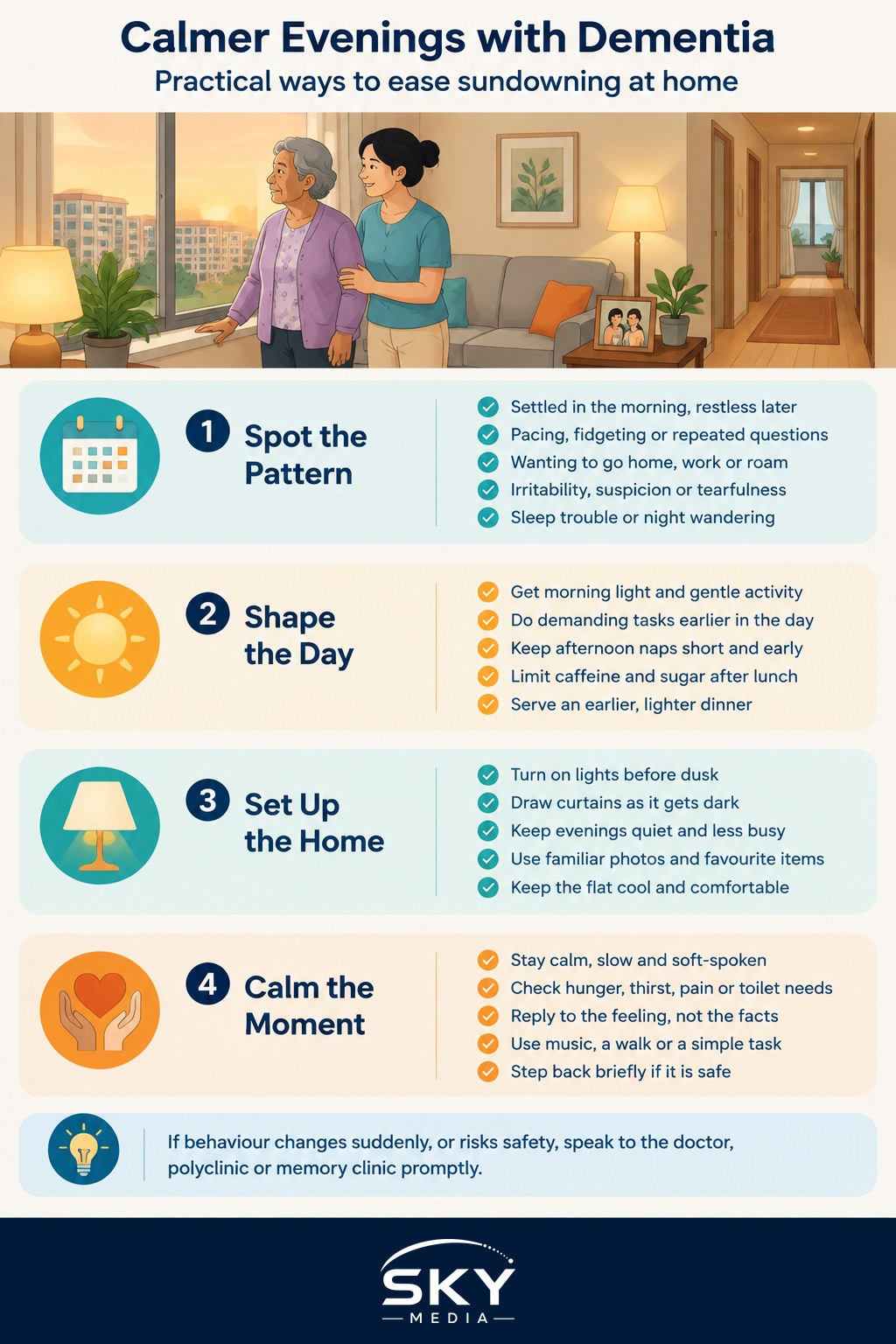
What Sundowning Looks Like and Why It Happens
Sundowning is not a separate illness. It is a cluster of behaviours that tend to appear or worsen in the late afternoon and evening in some people living with dementia. Common signs include:
- Pacing, fidgeting or following the caregiver from room to room
- Repeated questions, or asking for people who have passed away
- Insisting on leaving to go to work, fetch children or return to a childhood home
- Irritability, shouting or tearfulness that seems to come from nowhere
- Suspicion, such as believing someone has taken their wallet
- Trouble settling to sleep, or waking and wandering at night
Doctors do not point to one single cause. Factors often linked to it include tiredness built up over the day, disrupted body clocks, fading light that makes shadows and shapes harder to read, hunger or thirst, pain, a full bladder, and the general bustle of evenings when family members return home and dinner is being prepared. Some medicines and infections can also make confusion worse, which is why a check with the doctor matters.
Build a Day That Leads to a Calmer Evening
What happens at 6pm often starts at 9am. A predictable rhythm gives the brain fewer surprises to process.
Get morning light and activity. Daylight helps set the body clock. A gentle morning walk around the void deck or neighbourhood park helps; avoid the hottest hours.
Front-load the demanding tasks. Schedule bathing, doctor visits, haircuts and outings for the morning or early afternoon, when your loved one is usually at their best. Leave the late afternoon for familiar, low-pressure activities.
Watch the afternoon nap. A short rest can prevent exhaustion, but a long late nap may make night-time sleep harder. Many caregivers find a brief early-afternoon rest works better than dozing in front of the TV until evening. Experiment and note what helps.
Limit caffeine and sugar later in the day. Kopi and teh are part of daily life, but a cup in the late afternoon can add to restlessness. Try switching to decaffeinated options or barley water after lunch.
Offer an earlier, simpler dinner. A heavy meal late in the evening can cause discomfort. A lighter meal served before the household rush, at a regular time, often goes more smoothly.
Keep a simple log. For a week or two, note when agitation starts, what came just before, and what helped. Patterns often emerge.
Set Up the Home for Late Afternoon
Small changes to lighting, sound and layout can reduce the confusion that fading light brings.
Turn on the lights before dusk. Switch on lights well before the room becomes dim, so there is no sudden darkening. Even, warm lighting reduces shadows that can look like people or objects. Night lights along the route from bedroom to toilet help with night waking.
Close curtains as it gets dark. A dark window can reflect the room back like a mirror, and some people find their own reflection frightening. Drawing curtains also signals that the day is winding down.
Cut the noise. Evenings in many homes bring television, cooking sounds, phone calls and children’s homework all at once. Where possible, keep the TV off or low, avoid loud or violent programmes, and give your loved one a quieter corner.
Make the space feel familiar. Familiar photos, a favourite chair, a known blanket or a radio station from their younger days can be reassuring cues that this is home.
Keep the flat cool. Being too warm adds to restlessness, particularly on humid evenings.
Calming Tactics When Agitation Starts
When the restlessness has begun, arguing with facts rarely works. The goal is to reduce distress, not to win the point.
- Stay calm yourself. Speak slowly, softly and in short sentences. Your tone carries more than your words.
- Check basic needs first. Ask yourself if they could be hungry, thirsty, cold, in pain, constipated or needing the toilet.
- Respond to the feeling, not the facts. If they want to “go home”, try “You miss home. Tell me about your house.” Acknowledging the feeling often settles it faster than correcting them.
- Redirect gently. Offer a simple task: folding towels, sorting buttons, watering plants, peeling vegetables or looking through an old photo album.
- Use music. Familiar songs, whether Hokkien oldies, Malay classics, Tamil film songs or Mandarin ballads, can calm and anchor many people.
- Change the scene. A slow walk along the corridor or a move to another room can reset the mood.
- Give space when safe. If they are not in danger, stepping back for a few minutes can prevent escalation.
The table below sums up what tends to help and what tends to backfire.
| Situation | What often helps | What often makes it worse |
|---|---|---|
| Wants to “go home” or to work | Acknowledge the wish, talk about that place, offer tea or a short walk | Insisting “You are already home” repeatedly |
| Room getting dim | Lights on early, curtains drawn, warm even lighting | Waiting until it is dark, leaving harsh shadows |
| Restless and pacing | Simple repetitive task, familiar music, a safe walking route | Loud TV, many people talking, hurrying them |
| Suspicious or accusing | Help them “look for” the item, keep tone neutral | Arguing, scolding or showing frustration |
| Cannot settle at night | Calm bedtime routine, toilet before bed, night lights | Late caffeine, long evening naps, stimulating screens |
Safety, Wandering and When to See the Doctor
Evening restlessness sometimes leads to attempts to leave the flat. Simple steps include keeping keys out of sight, using a door chime, and making sure your loved one carries identification with a contact number. Singapore has community Dementia Go-To Points where members of the public can bring someone who appears lost; read our guide on Dementia Go-To Points and what to do if a parent goes missing so you have a plan ready.
Speak to the doctor promptly if you notice:
- Confusion that appears suddenly or is much worse than usual, which can signal an infection or other medical issue
- Signs of pain, fever, falls or changes in toilet habits
- New behaviour after starting or changing a medicine
- Aggression that puts your loved one or others at risk
- Severe sleep disruption that is affecting the caregiver’s health
Do not start, stop or change medicines, including sleeping aids or supplements, without medical advice. The doctor or memory clinic can review medicines, check for underlying problems and refer you to support services.
Looking After Yourself as the Caregiver
Sundowning often hits just when caregivers are most tired after a working day. That is not a personal failing; it is a hard time of day for everyone in the house.
- Share the evening shift. If siblings or a helper can take over a few evenings a week, plan it.
- Brief anyone who helps, including domestic helpers, on the routine.
- Ask about day care or respite services. Your doctor, a polyclinic medical social worker or the Agency for Integrated Care (AIC) can explain what is available and how to apply.
For a wider view of services, see Dementia Care in Singapore and Dementia and Caregiver Support in Singapore. If the person you care for is your spouse, Supporting a Partner With Dementia in Singapore covers the emotional side of that shift.
Consistency matters more than perfection. Some evenings will still be difficult. Note what happened, rest where you can, and try again tomorrow.
Frequently Asked Questions
Why does my parent get worse in the evening even at home? Several factors are often linked, including tiredness built up over the day, disrupted body clocks, fading light that makes shadows harder to read, hunger, thirst, pain and the bustle of evenings. Some medicines and infections can also worsen confusion, so a doctor check matters.
Should I correct my mother when she insists on going home? Arguing with facts rarely works. Respond to the feeling instead, for example saying you know she misses home and asking her to tell you about her house. Offer tea or a short walk, and avoid repeatedly insisting that she is already home.
What can I do about suspicion that someone stole their wallet? Help them look for the item and keep your tone neutral. Arguing, scolding or showing frustration often makes it worse. Checking basic needs such as hunger, pain or tiredness may also help, and the doctor can review any new behaviour.
How can I stop my father from leaving the flat at night? Keep keys out of sight, use a door chime, and make sure he carries identification with a contact number. Singapore has Dementia Go-To Points where members of the public can bring someone who appears lost, so have a plan ready in case he goes missing.
Where can caregivers find respite or day care help? Your doctor, a polyclinic medical social worker or the Agency for Integrated Care can explain what is available and how to apply. Share the evening shift with siblings or a helper, and brief anyone who helps on the routine.
Official sources: HealthHub
Further reading: How to Talk to a Parent With Dementia: Repeated Questions, Denial and Confusion · The Stages of Dementia: What to Expect From Early to Late Stage · Mild Cognitive Impairment: Is It Normal Ageing or Early Dementia?