

Small children explore the world with their mouths, so it is no surprise that swallowing something they should not is one of the classic parenting scares. Most swallowed objects children pick up pass through without harm, but some, especially button batteries and magnets, are genuine emergencies that can cause serious internal injury within hours. This guide gives general safety information so you know the difference and act fast when it counts. It is not a substitute for medical care, and if you have any concern, seek help immediately.
The most important message first
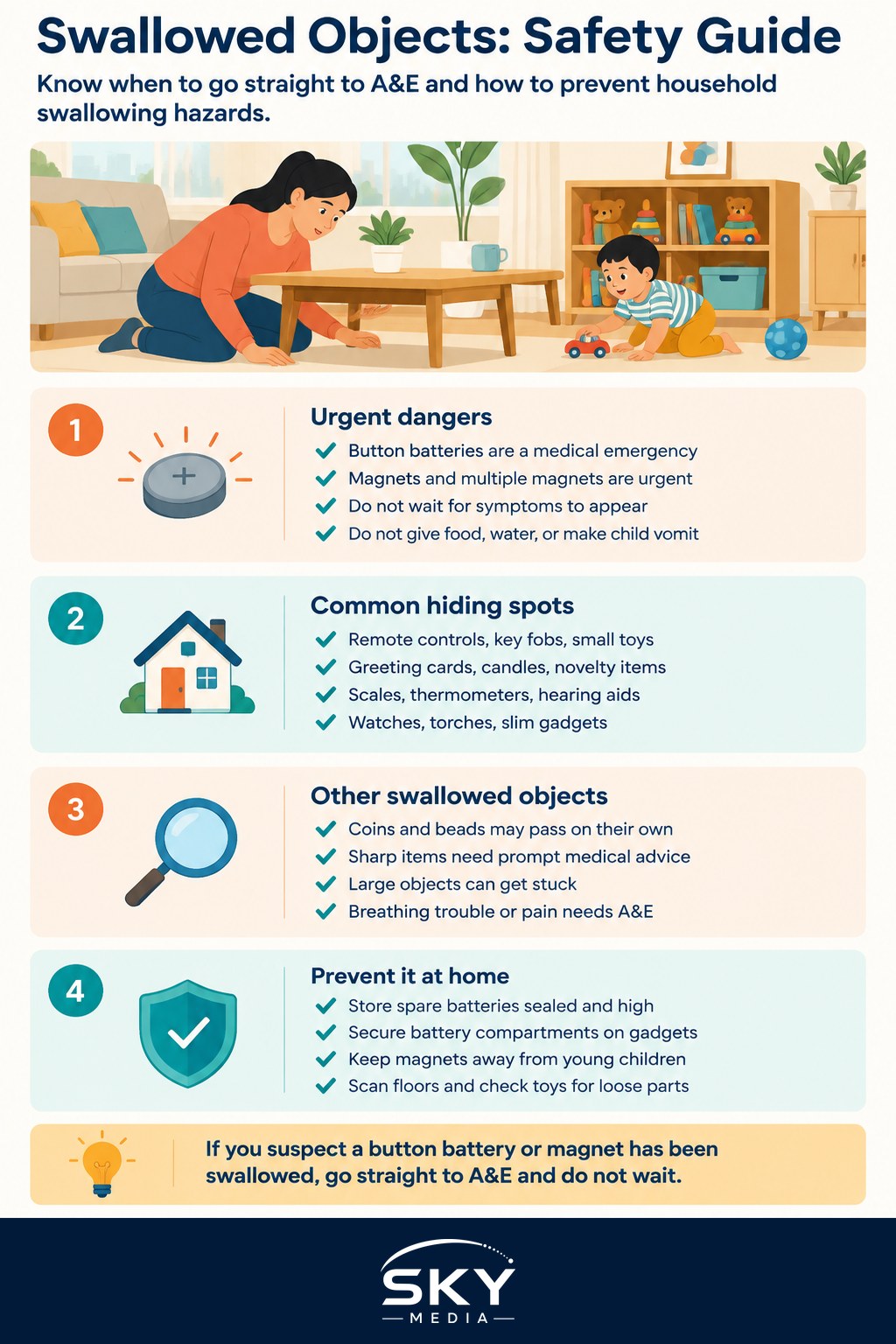
Please read this part even if you read nothing else. If you know or even suspect your child has swallowed a button battery, a magnet, or more than one magnet, treat it as a medical emergency and go straight to A&E. Do not wait to see if symptoms appear. Do not wait until morning. Do not give food or water unless a medical professional tells you to, and do not try to make your child vomit.
A button battery, the flat round silver battery found in many household items, can start to burn through the tissue of the food pipe within a couple of hours of being swallowed, even if your child seems completely fine. Magnets are just as dangerous, because if a child swallows two or more, or a magnet with another metal object, they can attract each other through the walls of the gut and cause serious damage. In these situations, every hour matters, so get to hospital without delay.
Where these dangers hide at home
Button batteries and small magnets are everywhere in a modern home, and they are easy to overlook. Knowing where they lurk is the first step to keeping them out of little hands.
Common sources of button batteries include:
- Remote controls, car key fobs, and small toys
- Musical greeting cards, flameless candles, and novelty items
- Kitchen and bathroom scales, thermometers, and hearing aids
- Watches, small torches, and slim electronic gadgets
Common sources of dangerous magnets include:
- Small, strong magnetic balls and building sets marketed as desk toys
- Magnetic construction toys and fridge magnets
- Fashion accessories and some novelty items
Because these are found in almost every HDB flat, it pays to do a room-by-room check and secure anything with an accessible battery compartment or loose magnets, keeping them well out of reach of young children.
Other swallowed objects
Children also swallow all sorts of everyday items, from coins and beads to small parts of toys. Many small, smooth objects that reach the stomach will pass through naturally over a few days without causing problems. However, it is not something to simply assume, and there are situations that still need medical attention even when a battery or magnet is not involved.
Seek medical advice promptly if your child has swallowed:
- Anything sharp, such as a pin, a fish bone, or a broken piece of plastic
- A larger object that could get stuck
- More than one item at once
- Anything you are simply not sure about
And treat it as urgent, going to A&E or calling 995, if after swallowing something your child has:
- Difficulty breathing, noisy breathing, choking, or is turning blue
- Drooling, trouble swallowing, or refusing to eat or drink
- Chest pain, tummy pain, vomiting, or vomiting blood
- Any suggestion of a button battery or magnets
If your child is choking and cannot breathe, cry, or cough, that is an immediate emergency. Knowing basic first aid makes a real difference in those first minutes, and our guide to baby and child CPR basics is worth reading before you ever need it.
What to do, and what not to do
If you suspect a swallowed battery or magnet, do not delay for anything. Take your child to the nearest A&E, or call 995 for an ambulance if your child is struggling to breathe or is seriously unwell. If you can, bring the product or an identical battery or magnet so the medical team can see exactly what was swallowed and its size.
Please do not try home remedies. Do not induce vomiting, do not give honey or any home treatment unless a medical professional specifically instructs you, and do not assume that a calm, happy child means all is well, because the most dangerous items can cause harm silently at first.
If you are ever weighing up whether a situation needs the hospital or the clinic, our guide on when to take your child to A&E versus the GP can help, though anything involving a battery or magnet always means A&E.
Preventing swallowed objects in the first place
Prevention is where you have the most power, and small changes make a big difference. The goal is simple: keep small, swallowable, and dangerous items out of reach and out of sight.
- Store spare button batteries in a sealed container, high up and locked away
- Tape shut or secure any battery compartment on toys and gadgets that a child can open
- Keep strong magnets and magnetic toys away from young children entirely
- Get into the habit of scanning the floor for small items, especially before crawling babies are on the move
- Choose age-appropriate toys and check them for loose parts and batteries
- Remind grandparents and helpers about these dangers, so the whole household is on the same page
A wider sweep of your home for hazards is well worth the time, and our guide to childproofing your home in Singapore walks you through it room by room. It is also sensible to keep a simple household plan for emergencies, which our guide to family first aid and emergency preparedness can help you put together.
The bottom line
Swallowed objects children pick up are common, and many pass through harmlessly, but button batteries and magnets are a different story and demand urgent action every single time. If you suspect one, go straight to A&E and do not wait for symptoms. The rest of the time, trust your instincts, watch for the warning signs, and get your child checked whenever you are unsure. With a well childproofed home and a clear plan, you can lower the risk and act fast if the worst happens. Every child is different, and when it comes to these dangers, being cautious is always the right choice.
Frequently Asked Questions
Why is a swallowed button battery more dangerous than a coin? A button battery can start burning through the tissue of the food pipe within a couple of hours, even if your child seems fine, whereas many smooth objects pass through naturally. Go straight to A&E without waiting for symptoms, and do not induce vomiting.
What if my child swallowed a magnet but looks perfectly well? Still go to A&E. Two or more magnets, or a magnet with another metal object, can attract each other through the walls of the gut and cause serious damage without early signs. Bring the product or an identical one so the team can see what was swallowed.
How long does a swallowed coin or bead take to pass? Many small, smooth objects that reach the stomach pass naturally over a few days, but do not simply assume that. Seek medical advice if your child swallowed something sharp, large, more than one item, or anything you are unsure about, or if symptoms appear.
Should I give my child honey or water after they swallow a battery? No. Do not give food, water, honey or any home treatment unless a medical professional specifically tells you to, and do not try to make your child vomit. Head to A&E, or call 995 if your child is struggling to breathe or seriously unwell.
How do I make a battery compartment safe from small hands? Tape shut or otherwise secure any compartment a child can open, and store spare button batteries in a sealed container, high up and locked away. Check remote controls, key fobs, scales and musical cards, and remind grandparents and helpers to do the same.
Official sources: HealthHub