
Every parent wants their child to be safe without being scared. The good news is that the two go together: children who feel calm and capable are usually safer than children who are frightened. Teaching child personal safety in Singapore is less about warning your little one that the world is dangerous, and more about quietly building skills and confidence they can carry everywhere. This guide covers the core lessons, body autonomy, trusted adults, what to do if lost, and how to ask for help, in a warm, age-appropriate way that empowers rather than frightens.
Safety Skills, Not Scary Warnings
The old approach of warning children about “strangers” is both frightening and unreliable. Most children who need help will need it from a stranger, such as a shopkeeper or another parent, and children can struggle to judge who is safe based on appearance. It is far more useful to teach skills and situations than to teach fear.
Keep the tone calm and matter of fact, the same way you teach road safety or crossing at the green man. Children take their emotional cues from you, so if you are relaxed and practical, they will be too. Short, regular conversations woven into daily life work far better than one big, worrying talk. Role-play and “what would you do if” games make the learning stick and feel more like play than a lecture.
Above all, keep the door open. The single most protective thing in any child’s life is knowing they can tell you anything, even something they think will upset you, and that you will listen calmly. A child who trusts they will not be blamed or dismissed is a child who will come to you when something feels wrong.
Body Autonomy and Trusted Adults
Teaching body autonomy helps children understand that their body belongs to them. In an age-appropriate way, you can teach that:
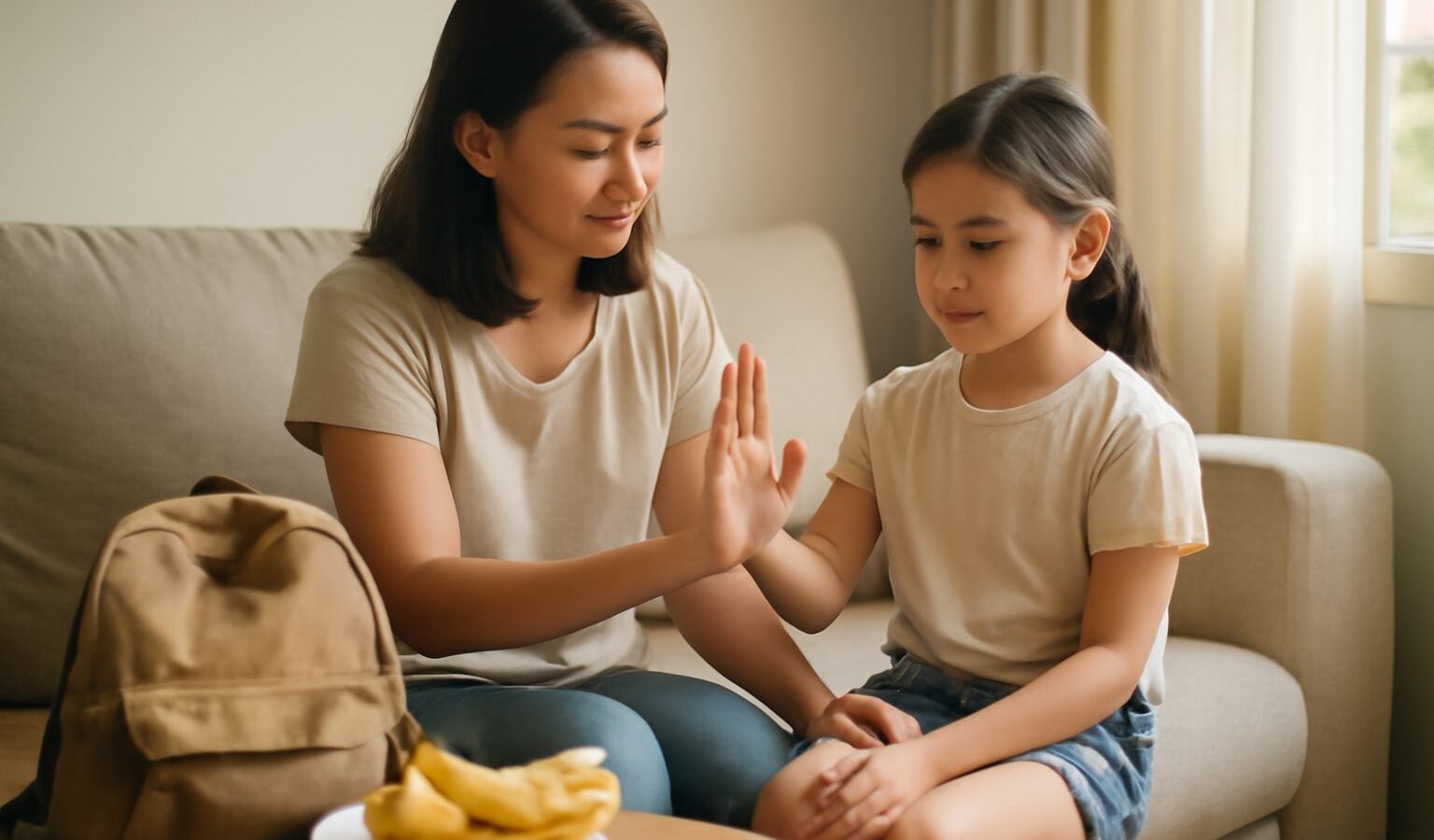
- They are allowed to say no to hugs or physical contact they do not want, even from relatives, and can offer a wave or high-five instead.
- The parts of the body covered by underwear are private.
- No one should touch their private parts, ask to see them, or ask the child to touch someone else’s, except a parent or doctor helping them stay clean and healthy, and even then usually with a parent nearby.
- There is no such thing as a secret that has to be kept from Mum and Dad. Distinguish happy “surprises”, like a birthday gift, from secrets they are told to hide, which they should always share with you.
Use the correct names for body parts from a young age. It is not embarrassing; it helps a child describe clearly if anything is ever wrong, and research-minded child safety educators widely recommend it.
Pair this with the idea of trusted adults. Help your child name a small circle of people they can go to for help, such as parents, grandparents, a teacher, or the school counsellor. Teach them to notice their own warning feelings too, the uh-oh feeling in their tummy that tells them something is not right, and to trust it and speak up. Your calm, ongoing relationship is the foundation of all of this, something explored further in our guide to staying connected with your child as they grow.
What to Do If Lost or Needing Help
Getting separated in a crowded mall, at the MRT, or at a busy event is one of a child’s most common frightening moments, and it is very teachable. Agree on a simple plan:
- Stay put. Teach your child to stop where they are rather than wandering to look for you, so you can retrace your steps to them.
- Find safe helpers. Point out who to approach: a staff member in uniform, someone at an information counter, a security guard, or, if none is nearby, a mum or dad with children of their own. Practise this when you are out together.
- Know key details. As they grow, help your child learn their full name, a parent’s phone number, and how to ask an adult to call it. Younger children can carry this information on a card or wristband.
- Make noise if needed. Reassure your child it is completely fine to speak up loudly, say “I am lost and need help,” or make a fuss if someone makes them feel unsafe. Politeness never has to come before safety.
Teach the local emergency numbers as your child gets older: 999 for police and 995 for fire or ambulance. Explain that these are only for real emergencies, and practise what they might say and when. Knowing they have a plan turns panic into confidence. These conversations sit naturally alongside wider preparedness at home, which our guide to building a family emergency plan can help you organise.
Growing Independence, Growing Skills
As children get older and start doing more on their own, such as walking to a nearby shop, taking public transport, or staying home briefly, personal safety grows with them. Match new freedoms to new skills: knowing their route, checking in with you, keeping personal details private, and staying aware of their surroundings rather than glued to a screen. Online safety belongs here too, since much of a modern child’s world is digital, and our guide to raising kids in a digital age covers keeping them safer online.
Revisit these conversations as your child grows, because what a preschooler needs is different from what a tween heading out with friends needs. Keep the tone confident and empowering. The aim is not a child who is anxious about the world, but one who feels capable in it, who knows their body is their own, who has trusted adults to turn to, and who believes, deep down, that asking for help is always the right thing to do. That quiet confidence is the best personal safety skill of all.