
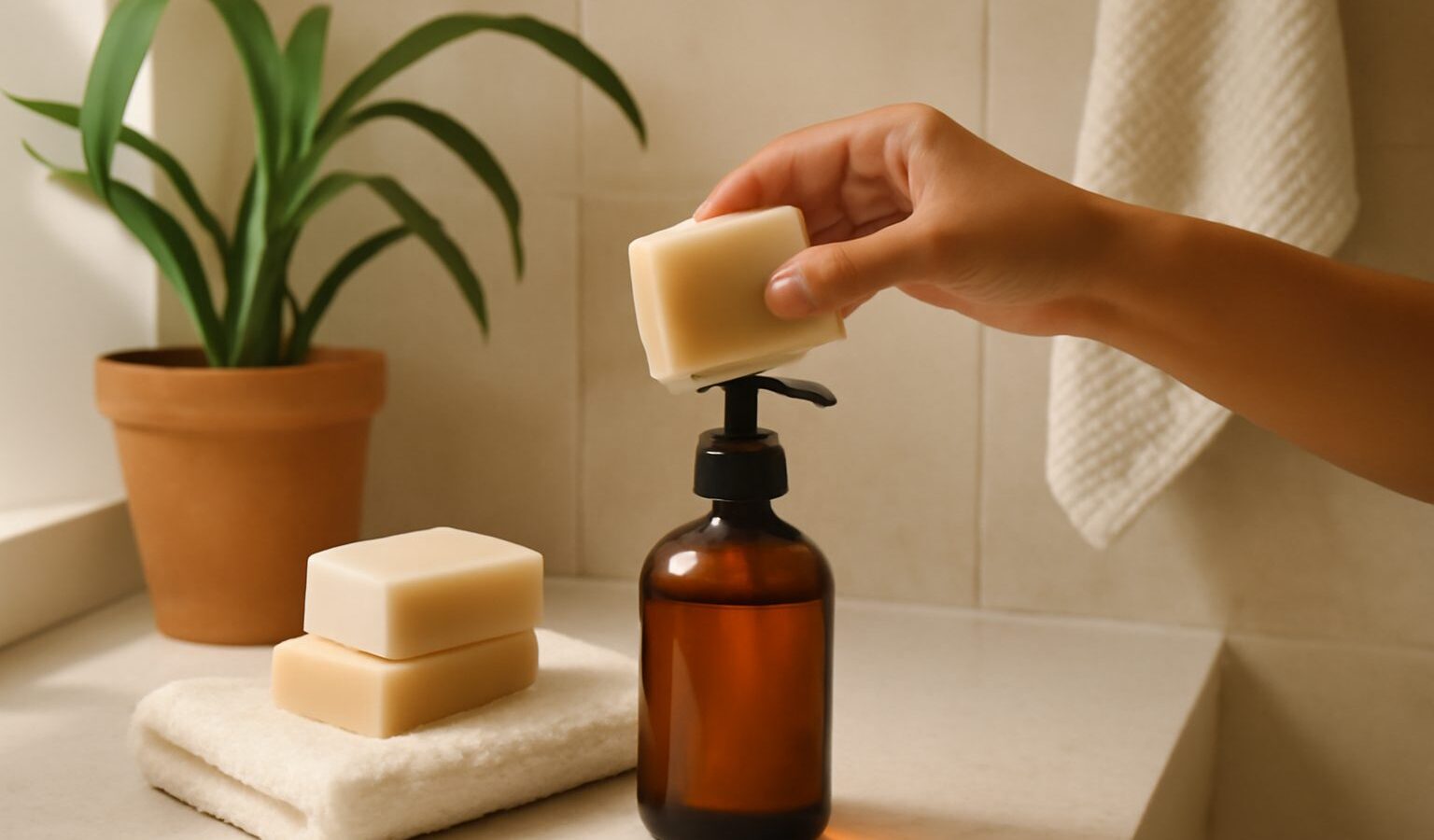
Bottled shampoo and shower gel are so normal that most of us never question them. Yet those bottles are bulky, frequently replaced and made of exactly the kind of plastic that piles up fastest in a bathroom bin. Shampoo and soap bars offer a simple alternative: the same job, far less packaging, and often a smaller, lighter product that lasts surprisingly long. If you have been curious but unsure whether they really work, especially in Singapore’s heat and humidity, this guide walks through what to expect, how to store them, and how to switch without any drama.
Bars are one of the highest-impact swaps in a low-waste bathroom, because you replace a frequent, heavy plastic item with something that usually comes in little or no packaging. They pair naturally with the wider changes in our guide to plastic-free bathroom swaps.
What Shampoo and Soap Bars Actually Are
A soap bar is familiar to everyone: a solid block for washing your body or hands. A shampoo bar is the same idea applied to hair, a solid form of shampoo you rub between wet hands or straight onto wet hair to build a lather. Because you are not paying to ship and store water in a plastic bottle, a single bar can replace several bottles’ worth of product.
The main appeal is packaging. Bars typically come wrapped in paper, cardboard or nothing at all, so they sidestep the bottle, pump and cap entirely. That matters, because those mixed-material bottles are awkward to recycle and often end up as general waste. Understanding how to avoid recycling contamination shows just how many bathroom plastics never make it through the system cleanly, which is a strong reason to avoid creating them in the first place.
The Real Benefits, and the Honest Trade-Offs
Bars are not magic, and it helps to go in with clear eyes. Here is the balanced picture.
What is genuinely good:
- Far less plastic. No bottle, no pump, no cap. This is the headline benefit.
- Compact and travel-friendly. A bar takes up little space, does not leak, and sails through hand luggage rules.
- Long-lasting. Kept dry, a bar can outlast a bottle of the equivalent product, which can make it good value over time.
- Concentrated. You are not buying water, so less weight is shipped and stored.
What takes adjusting:
- A transition period. Some people find their hair feels different for a week or two as it adjusts, especially when moving off heavily formulated shampoos. This usually settles.
- Finding the right match. Hair types differ, and the first bar you try may not suit you. It can take a little experimenting, just as bottled products do.
- Storage matters more. In our climate, a bar left sitting in water turns soft and mushy fast, so it needs a draining spot.
- Upfront feel. A good bar can cost a little more at the till than a basic bottle, though the per-wash cost is often comparable or lower because it lasts.
Treat any specific product claim generically and check current details yourself, since formulations, ingredients and prices change.
Bars Versus Bottles at a Glance
| Consideration | Shampoo and soap bars | Bottled shampoo and gel |
|---|---|---|
| Packaging | Paper, cardboard or none | Plastic bottle, pump and cap |
| Storage in humidity | Needs a draining dish to stay firm | Sits fine but takes cupboard space |
| Travel | Compact, leak-proof, cabin-friendly | Bulky, spill risk, liquid limits |
| Lifespan | Often outlasts a bottle if kept dry | Used up steadily, replaced often |
| Recycling at end of life | Minimal or no packaging waste | Bottle may or may not be accepted |
| Getting started | Short adjustment period possible | Familiar, no adjustment |
Making the Switch Work in Singapore
Our climate is the single biggest factor in whether you love or loathe bars, and it comes down to keeping them dry between uses. A bar that sits in a puddle in a humid bathroom will dissolve into a soft mess, while the same bar on a draining dish can last for weeks.
Practical tips for local bathrooms:
- Use a draining soap dish or a slatted rack so water runs off and air circulates. This one habit does most of the work.
- Keep bars out of the direct shower spray when you are not using them, so they are not constantly wet.
- Let them dry fully between uses rather than leaving them in a sealed, damp container.
- Cut a large bar in half and store the spare somewhere dry, so only the piece in use is exposed to the steam.
- Store any travel tin open to air once you are home, so a damp bar does not stay sealed and soften.
For the switch itself, start when your current bottle runs out rather than binning a half-full one, since finishing what you own is the lower-waste move. Give a new bar a couple of weeks before judging it, and if it does not suit your hair or skin, try a different one. If any product causes irritation, stop using it and see a doctor for a persistent concern. Greener is never worth an unhappy scalp.
A quick word on ingredients: if avoiding palm oil or choosing sustainable sources matters to you, soap ingredient lists are worth scanning, and our guide to palm oil and what to look for explains what the labels mean.
Where Bars Fit in a Lower-Waste Routine
Switching to shampoo and soap bars is one of those changes that feels small but repeats every single day, which is exactly why it adds up. Every bar you finish is a handful of bottles that never entered your bathroom, never needed rinsing, and never had to be sorted at the blue bin.
It also builds momentum. Once bars feel normal, the other swaps get easier: a safety razor, reusable cloths, refillable containers. If you are ready to extend the habit, our guides to plastic-free bathroom swaps and a greener beauty and skincare routine show where to go next.
You do not need to convert your whole shelf overnight. Try one bar, give it a fair trial, keep it dry, and see how you feel. If it works for you, it is one of the simplest, most repeatable green wins a Singapore household can make, and you will notice the difference the next time you take out the bathroom bin.