
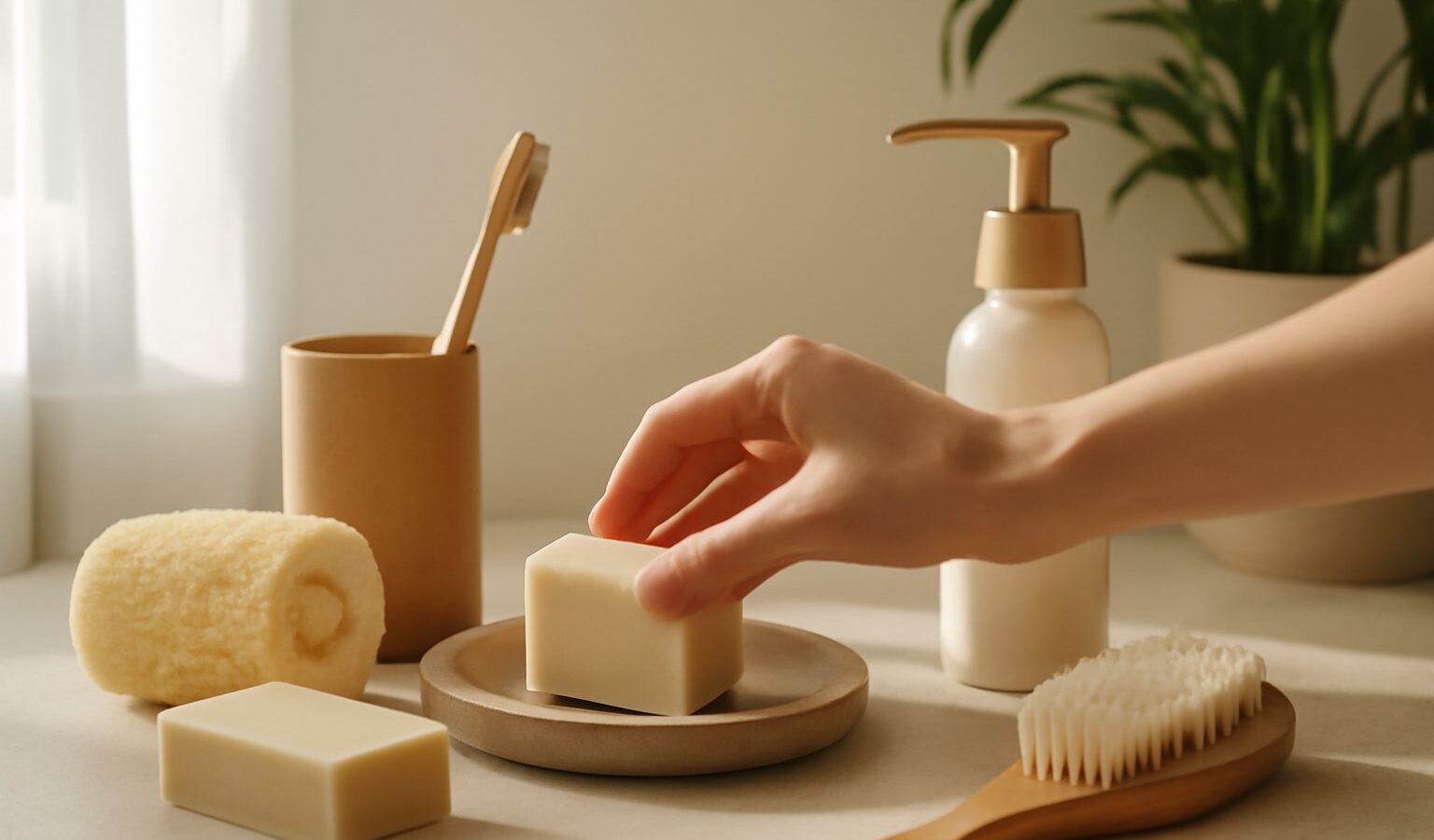
Open the cabinet under most Singapore bathroom sinks and you will find the same story: half-used bottles, a graveyard of old toothbrushes, disposable razors and a bag of cotton pads. The bathroom quietly produces some of the most stubborn plastic waste in an HDB flat, because so much of it is small, mixed-material and used up fast. The good news is that building a plastic-free bathroom does not mean throwing everything out tomorrow or spending a fortune. It means swapping items thoughtfully as they run out, choosing things that last, and being honest about what genuinely helps.
This guide walks through practical swaps for our climate and our homes, where to start if you are new to this, and how to deal responsibly with the plastic you already own.
Why the Bathroom Is a Plastic Hotspot
Bathroom products are designed for convenience, and convenience usually means plastic. Shampoo, shower gel, cleanser and lotion nearly all come in plastic bottles. Toothbrushes, razors, cotton buds and packaging add more. A lot of it is the kind of small, greasy or mixed-material plastic that is hard to recycle well, so it often ends up as general waste heading to a waste-to-energy plant and then to Semakau, our offshore landfill. If you have ever wondered where it all goes, our pieces on how waste-to-energy works in Singapore and why Semakau matters are worth a read.
The heat and humidity here matter too. Bar products, refills and natural materials all behave differently in a steamy Singapore bathroom than in a cooler climate, so a few of the swaps below come with a local tip on keeping things dry and mould-free.
Easy Swaps to Start With
If you are just beginning, do not try to change everything at once. Pick two or three items you use daily and switch those first when they run out. Buying replacements for things you already have simply creates more waste.
Good starting points:
- A bamboo or recycled-handle toothbrush in place of a fully plastic one. Bamboo is not a miracle material, so it is worth understanding the trade-offs in our look at whether bamboo is really sustainable, but it does keep a small daily plastic item out of the bin.
- A shampoo bar or soap bar instead of bottled products. This is one of the highest-impact swaps because bottles are bulky and frequent. We cover it in depth in switching to shampoo and soap bars.
- A safety razor with replaceable blades instead of disposable plastic razors. It lasts for years, though it needs a little care to use safely.
- Reusable cotton rounds or a face cloth in place of single-use cotton pads. Just rinse, wash and reuse.
None of these require special skills. They simply shift you from throwaway to reusable, one habit at a time.
A Swap-by-Swap Guide
Here is a quick reference for common bathroom plastics, a lower-waste alternative, and what to keep in mind in our climate. Treat product specifics as generic guidance and check current details yourself, since brands and formulations change.
| Plastic item | Lower-waste swap | Keep in mind |
|---|---|---|
| Bottled shampoo and shower gel | Shampoo and soap bars, or refill in your own bottle | Let bars dry between uses on a draining dish so they last |
| Plastic toothbrush | Bamboo or recycled-handle brush | Stand it upright to dry; compost or bin the head separately |
| Disposable razor | Safety razor with metal blades | Handle blades carefully; used blades go in a sealed sharps container |
| Cotton pads and buds | Washable rounds; paper-stem or reusable buds | Wash reusables regularly to avoid bacteria build-up |
| Liquid hand soap bottle | Bar soap or a refilled dispenser | A soap dish with drainage keeps bars firm in the humidity |
| Plastic-wrapped cotton | Loose or paper-packaged options | Store in a dry, covered container |
What to Do With What You Already Have
The greenest choice is almost always to use up what you own before replacing it. A cupboard of half-finished bottles is not a failure; finishing them is the low-waste move. Once a bottle is genuinely empty, rinse it and recycle it in the blue bin if it is accepted, but do not assume everything qualifies. Pump tops, small caps and heavily contaminated containers often cause problems. Putting the wrong things in the bin can spoil a whole batch, so it is worth reading how to avoid recycling contamination and following the current NEA blue-bin guidance rather than guessing.
A few pointers:
- Empty and rinse bottles so leftover product does not contaminate other recyclables.
- Check the material. Rigid plastic bottles are generally more recyclable than soft films, pumps and multi-material tubes.
- Do not wish-cycle. If you are unsure whether something is accepted, check NEA’s current list rather than tossing it in hopefully.
- Pass on unopened extras. Unused toiletries you will never finish can go to someone who will, through a buy-nothing group or a friend.
Refills are another halfway step that keeps bottles in use longer. Some stores let you top up detergent, hand wash or shampoo into your own container. It is not available everywhere, but where it is, refilling one sturdy bottle many times beats buying a new one each round.
Keeping It Realistic, Safe and Affordable
A plastic-free bathroom is a direction, not a finish line, and it should not cost you more or compromise your health. Some swaps save money over time. A safety razor and a bar of soap can be cheaper per use than disposables, while others cost a little more upfront and pay back slowly. Buy as things run out, not all at once, and you will spread the cost naturally.
Keep a few sensible limits in mind:
- Skin and health come first. If a bar shampoo, natural deodorant or new cleanser irritates your skin, stop and go back to what works, or see a doctor for any persistent concern. Greener does not mean tolerating a rash.
- Store products safely. Wash reusable cloths and rounds regularly, and keep bars and brushes dry to prevent mould in our humidity.
- Watch for standing water. Any open jar, dish or container that collects water should be emptied or covered, in line with NEA guidance, so it never becomes a mosquito breeding spot.
- Ignore the perfection trap. You do not need a matching set of aesthetic jars. Reusing the containers you already have is more sustainable than buying a new “zero-waste” kit.
If you want to carry the same mindset into related routines, our guides to a greener beauty and skincare routine and sustainable period products pick up where this one leaves off.
The bathroom is one of the easiest rooms to green, precisely because the swaps are small, daily and repeatable. Change one thing this month, another when the next bottle empties, and within a year your under-sink cabinet will look, and waste, a great deal less.
Related across Sky Media: Healthy Home Cooking Swaps That Actually Work in Singapore · Do Massage Guns Actually Work?