
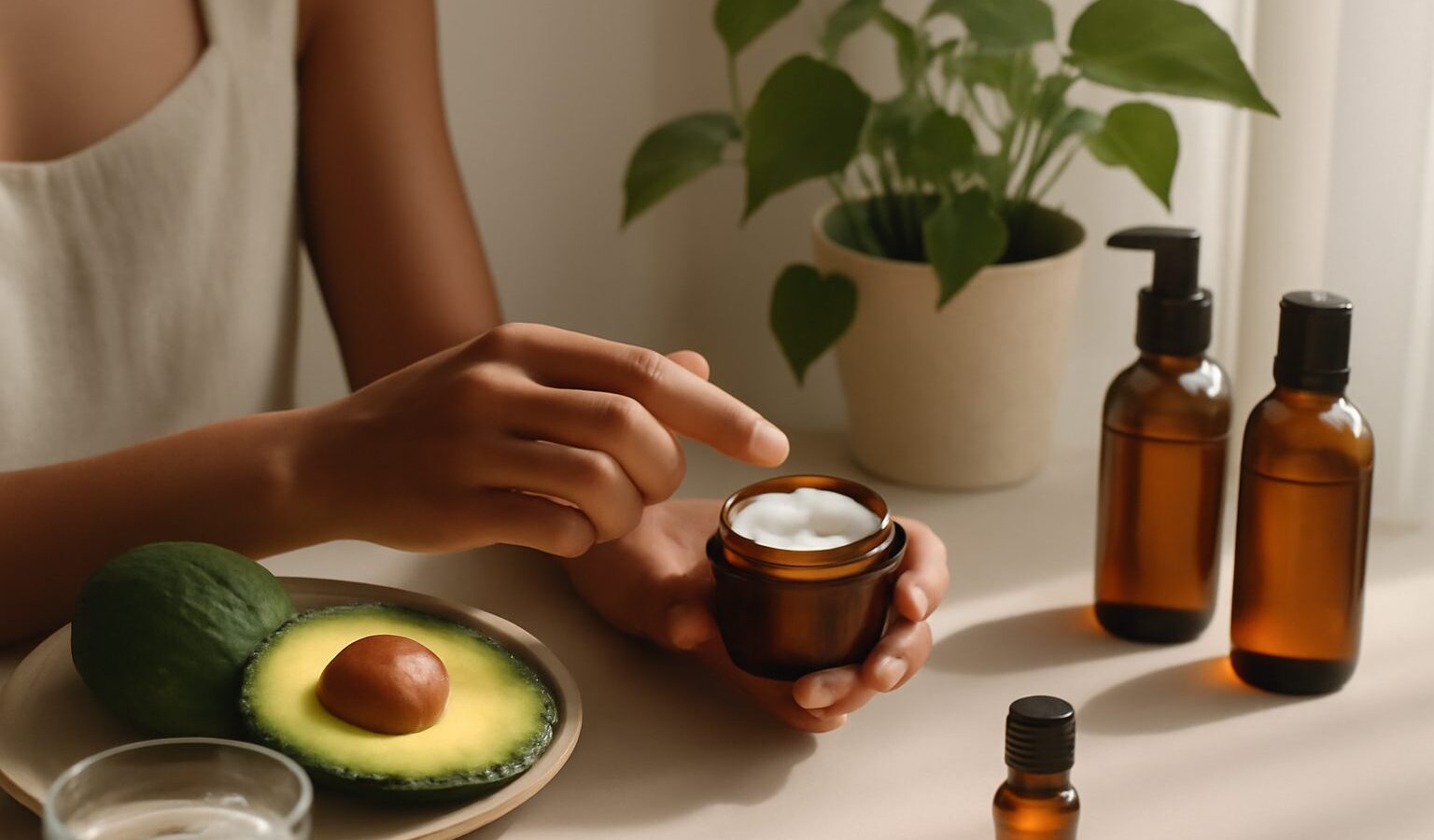
A greener beauty routine is not about throwing out your bathroom shelf and starting again with a set of expensive “eco” products. That would be wasteful and costly. It is about using what you have, buying less, choosing formats with less packaging, and reading labels with a clearer eye. In Singapore’s heat and humidity, a pared-back routine often works better anyway, because heavy layers of product tend to sit and clog rather than sink in.
This guide keeps things practical and low-pressure. Start with one or two swaps, keep what already works for your skin, and build from there.
Use It Up and Buy Less
The most sustainable product is the one you already own. Before buying anything new, finish what is open. Half-used bottles and abandoned samples are the biggest hidden waste in most bathrooms, and using them up costs nothing.
From there, the single most effective habit is simply buying less. A shorter routine means less packaging, less spending and, for many people, calmer skin. A gentle cleanser, a moisturiser and a daily sunscreen cover the essentials for most people in our climate. The endless multi-step routines sold online are optional, and piling on products in humid weather can do more harm than good.
A few ways to buy less without feeling deprived:
- Choose multi-taskers. A tinted moisturiser with sun protection replaces three products. A plain oil can serve as a cleanser and a moisturiser.
- Finish before you replace. Keep one of each open at a time rather than a backup shelf that expires unused.
- Buy full size only after a sample. This avoids the graveyard of nearly full bottles that did not suit you.
Switch to Refills, Bars and Better Formats
Packaging is where beauty waste really adds up: small plastic tubes, pumps and pots that are hard to recycle because they are tiny, mixed-material or still full of residue. Choosing better formats cuts that waste at the source.
- Bars instead of bottles. Shampoo, conditioner and soap bars skip the plastic bottle entirely and last a surprisingly long time. See our guide to switching to shampoo and soap bars.
- Refills and refill stations. More brands and shops now sell pouches or let you refill a bottle you already own, which uses far less plastic per millilitre than a fresh bottle each time.
- Solid and concentrated formats. Solid cleansers and concentrates that you mix with water at home mean you are not paying to ship water in plastic.
- Bigger sizes for staples. For a product you use daily and know suits you, one large bottle beats several small ones.
These changes sit naturally alongside wider plastic-free bathroom swaps. And where a product is genuinely finished, recycle the packaging correctly. Beauty packaging is often too small, greasy or mixed to be recycled through the blue bin, so rinse what you can, and when in doubt, keep it out rather than contaminate the rest. Some brands run their own take-back schemes, which fits the idea of extended producer responsibility that is slowly reaching more products here.
Read Labels Without the Hype
“Natural”, “clean” and “green” are marketing words with no fixed meaning, and plenty of products lean on leafy packaging rather than genuinely better contents. A greener beauty routine means looking past the front of the pack. Two things are worth real attention.
The first is palm oil and its derivatives, which appear in a huge range of cleansers, soaps and creams under many names. The issue is not the ingredient itself but the deforestation and haze linked to unsustainable production. Where you can, favour certified sustainable palm oil; our guide to palm oil and what to look for explains the labels. The second is not falling for material myths. A bamboo lid or handle is not automatically better, as our look at whether bamboo is really sustainable explains; buying less still beats buying “greener” versions of things you do not need.
Here is a quick way to cut through common claims:
| Claim on the pack | What it can mean | A greener read |
|---|---|---|
| “Natural” or “clean” | No agreed definition, often marketing | Judge the ingredients and packaging, not the word |
| “Eco” packaging | Sometimes just a leaf logo | Look for refillable, recyclable or take-back |
| “Biodegradable” | May need industrial conditions | Better, but using less still beats it |
| “Bamboo” component | Renewable, but often mixed with plastic | Fine if durable; do not buy just for the label |
| “Vegan” or “cruelty-free” | About animals, not the environment | A separate value, not a green guarantee |
The point is not suspicion but perspective. Buy what genuinely suits your skin and your values, and let the label guide you rather than sell you.
Gentle Care for a Hot, Humid Climate
Singapore’s weather shapes what a sensible routine looks like. Heat and humidity mean most skin needs less rather than more, and lighter formats often outperform rich ones that simply sit on the surface. A greener routine and a comfortable one line up here.
- Keep it light. Gel and water-based moisturisers feel better in humidity and stretch further, so you buy and waste less.
- Do not skip sunscreen. Sun protection is the one non-negotiable in our climate. Choose a formula you will actually reuse daily, buy it in a sensible size, and finish the bottle.
- Simplify make-up. Fewer, better products beat a full drawer. A tinted balm, a single neutral shade and a good cleanser go a long way.
- Care for tools, not just products. Wash and reuse cloths and applicators rather than buying disposable pads and wipes. A washable face cloth replaces a stream of single-use ones.
This is general guidance, not medical advice. Skin is personal, so patch-test anything new, introduce one change at a time, and see a doctor or a pharmacist for persistent irritation, acne or any skin concern rather than chasing a “natural” fix online.
Build the Routine That Sticks
The greenest routine is the one you will actually keep, so make it easy. Start with a single swap, perhaps a shampoo bar or a refillable cleanser, and let it become a habit before adding the next. Use up what you own, resist the pull of a ten-step routine, read labels with a clear head, and choose formats that leave less behind.
The same low-waste thinking runs through the rest of the bathroom, from sustainable period products to the wider swaps above. None of it demands perfection or a bathroom refit. A few steady choices, repeated daily, quietly cut your spending, your clutter and your waste, and usually leave your skin the better for it.
Related across Sky Media: A Men’s Skincare Routine in Singapore · A Korean Skincare Routine in Singapore