

For a lot of us, Taiwanese food in Singapore begins and ends with a cup of bubble tea. That is a shame, because Taiwan’s cooking is one of the most comforting and characterful in the region, built on braised meats, clear rich broths, fermented touches and a night-market culture devoted to snacking. From a bowl of beef noodle soup to a plate of glossy braised pork over rice, there is a whole world here waiting past the tea queue. This guide covers the dishes worth ordering, what makes them tick, and where to track them down across the island.
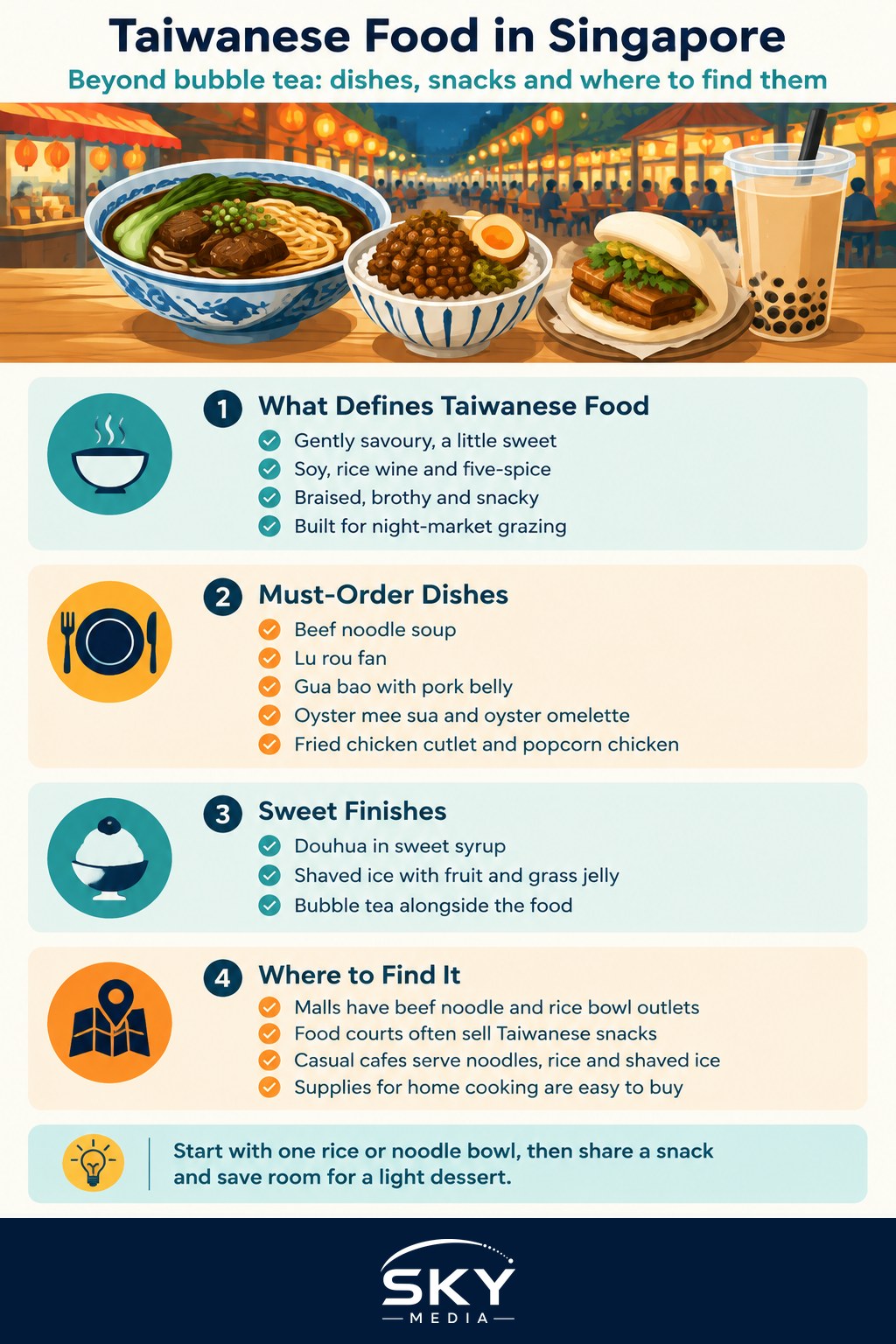
More Than Bubble Tea
Bubble tea, or zhen zhu nai cha, genuinely is a Taiwanese gift to the world, and Singapore embraced it wholeheartedly. But it is a drink, not a cuisine. Taiwanese food proper is shaped by the island’s history and its famous night markets, where hawker-style stalls turn out small, moreish plates late into the evening. The flavours tend to be gently savoury and a little sweet, leaning on soy, rice wine, five-spice, fried shallots and preserved vegetables rather than heavy chilli.
Because Singapore already loves braised, brothy and snacky food, Taiwanese dishes slot in naturally. Once you look past the tea shop, you will spot beef noodle houses, lu rou fan specialists and casual Taiwanese cafes across our malls and heartland neighbourhoods.
The Dishes Worth Ordering
Begin with the two icons. Beef noodle soup, niu rou mian, is Taiwan’s national comfort bowl: tender braised beef and springy noodles in a deep, soy-scented broth, sometimes clear and sometimes richly braised. Lu rou fan, braised minced pork over rice, is the everyday hero, a small bowl of fatty, savoury-sweet pork that you could happily eat every day. Its cousin, gua bao, tucks braised pork belly into a soft steamed bun with pickled mustard greens, crushed peanuts and coriander.
From the night-market side come the snacks. Oyster mee sua, wa mi sua, is a thick, glossy bowl of fine wheat vermicelli with plump oysters, comforting and slightly gloopy in the best way. Fried chicken cutlet, the giant crispy da ji pai dusted with pepper and five-spice, is a hand-held favourite. Oyster omelette, or o a jian, turns up here too, sharing roots with our own version. Look also for braised pork belly buns, stinky tofu for the adventurous, salt and pepper popcorn chicken, and scallion pancakes hot off the griddle.
Do not skip the sweets and drinks. Douhua, silky tofu pudding in sweet syrup, is a soothing finish, while shaved ice piled with fruit, grass jelly and condensed milk is perfect for our climate. And yes, order the bubble tea, ideally alongside the food rather than instead of it.
A Quick Guide to Taiwanese Favourites
If the menu names run together, this table sorts the big ones by what they are and when to reach for them.
| Dish | What it is | Flavour profile | Good for |
|---|---|---|---|
| Beef noodle soup | Braised beef and noodles in soy broth | Deep, savoury, warming | A proper sit-down meal |
| Lu rou fan | Braised minced pork over rice | Rich, sweet-savoury, moreish | A quick, satisfying bowl |
| Gua bao | Steamed bun with pork belly and pickles | Soft, fatty, tangy | A hand-held snack |
| Oyster mee sua | Fine vermicelli with oysters | Glossy, briny, comforting | A light, slurpable bowl |
| Fried chicken cutlet | Giant crispy peppered chicken | Crunchy, spiced, juicy | Snacking on the go |
| Douhua | Silky tofu pudding in syrup | Soft, gently sweet | A cooling dessert |
Where to Find Taiwanese Food in Singapore
Taiwanese chains and independents have spread widely, so you rarely need to travel far. Malls across the island host beef noodle and lu rou fan outlets, food courts often have a Taiwanese snack counter doing fried chicken cutlet and popcorn chicken, and casual Taiwanese cafes serve the full spread of braised rice bowls, noodles and shaved ice. Neighbourhoods with a strong student and cafe scene, and the busier shopping belts, tend to have the widest choice, while bubble tea shops are, of course, everywhere.
If you want to cook at home, larger supermarkets and Chinese provision shops stock the building blocks: soy sauce, rice wine, five-spice powder, rock sugar, mee sua, dried shallots and preserved mustard greens. That is most of what a decent lu rou fan or braised beef needs. Delivery apps list plenty of Taiwanese options if you would rather eat in. Prices range from very affordable snack plates to pricier restaurant bowls, so check the stall, venue or app for current figures, since they change.
A note on dietary needs. Much Taiwanese food centres on pork and beef, so vegetarians should ask what a broth or braise is made from, and anyone with an allergy should confirm ingredients and cross-contamination directly, as this is general guidance rather than medical or nutrition advice. If you need halal food, note that many Taiwanese eateries here are not certified, so verify halal status yourself by looking for MUIS certification or asking the stall, since practices vary from place to place.
Ordering With Confidence
A few simple habits make the first visit easy:
- Anchor your meal with a rice or noodle bowl, then add one or two snacks to share rather than over-ordering.
- Try the pickles and preserved greens that come with gua bao and rice bowls; they cut the richness beautifully.
- Ask for the fried chicken cutlet freshly cooked if you can, since it is best straight off the fryer.
- Save room for douhua or shaved ice, which are light enough to finish even after a big bowl.
Approach it this way and Taiwanese food in Singapore becomes a proper little adventure, far richer than a single sweet drink.
Explore more
Hungry for more regional cooking close to home? Our guide to Hong Kong cha chaan teng food covers another comforting, cafe-style cuisine, and our look at Indonesian food beyond nasi padang opens up the archipelago’s dishes. For a wok-fried noodle classic to try next, see our beef hor fun guide.
Frequently Asked Questions
What is the difference between beef noodle soup and lu rou fan? Beef noodle soup is a bowl of braised beef and springy noodles in a deep soy-scented broth, a sit-down meal. Lu rou fan is braised minced pork over rice, a smaller, quicker bowl. Both are comforting, so choose by how hungry you are.
Is stinky tofu worth trying for a first-timer? It is for the adventurous, as the article puts it. The smell is strong, but many people find the taste milder than expected. If you are unsure, share a portion with a friend and order a safer snack alongside.
Which Taiwanese dishes are suitable for vegetarians? Options are limited because much Taiwanese food centres on pork and beef, so ask what a broth or braise is made from. Scallion pancakes and desserts such as douhua or shaved ice are easier. Check ingredients with the stall.
Is Taiwanese food in Singapore halal? Many Taiwanese eateries here are not halal-certified, so do not assume. Much of the cooking centres on pork and beef. Look for MUIS certification on display or ask the stall directly, since practices differ from place to place.
What should I order if I only have one meal to try Taiwanese food? Pair one bowl, such as beef noodle soup or lu rou fan, with one or two snacks to share. Add pickled greens with gua bao to cut the richness. Finish with douhua or shaved ice, which are light enough after a big bowl.